How Do Blue Veins and Mold Form in Blue Cheese, and What Is the Science Behind It?
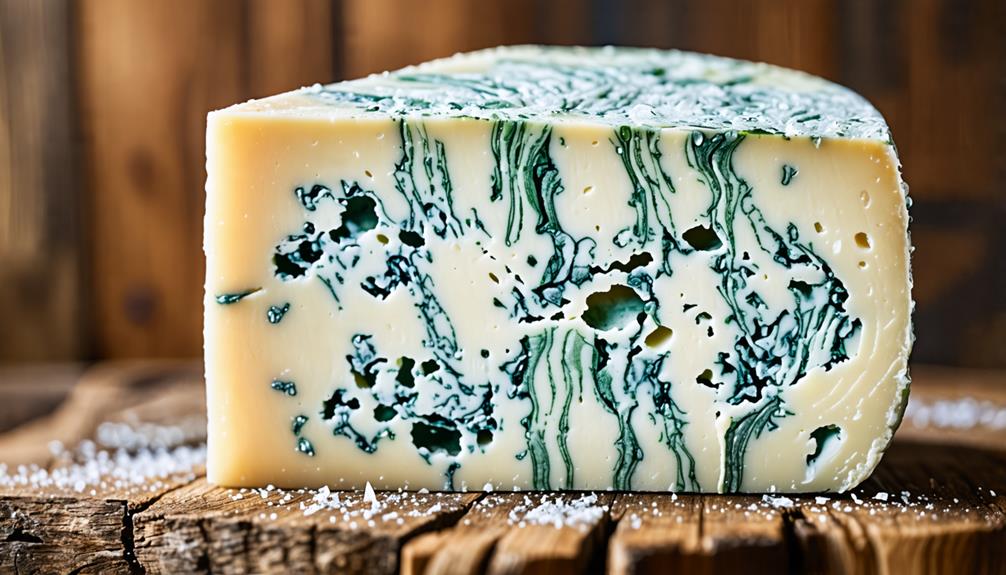
The distinctive blue veins in blue cheese are not mere random occurrences; they result from a precisely controlled process involving the mold Penicillium roqueforti. Cheesemakers create specific conditions that allow this mold to thrive, transforming the cheese over time. During the maturation process, the mold grows within the cheese, producing enzymes that break down fats and proteins. This enzymatic activity contributes to the unique flavor profile and texture of blue cheese. Understanding the science behind this process can deepen your appreciation for the complexity and craftsmanship involved in creating blue cheese.
Characteristics of Blue Cheese
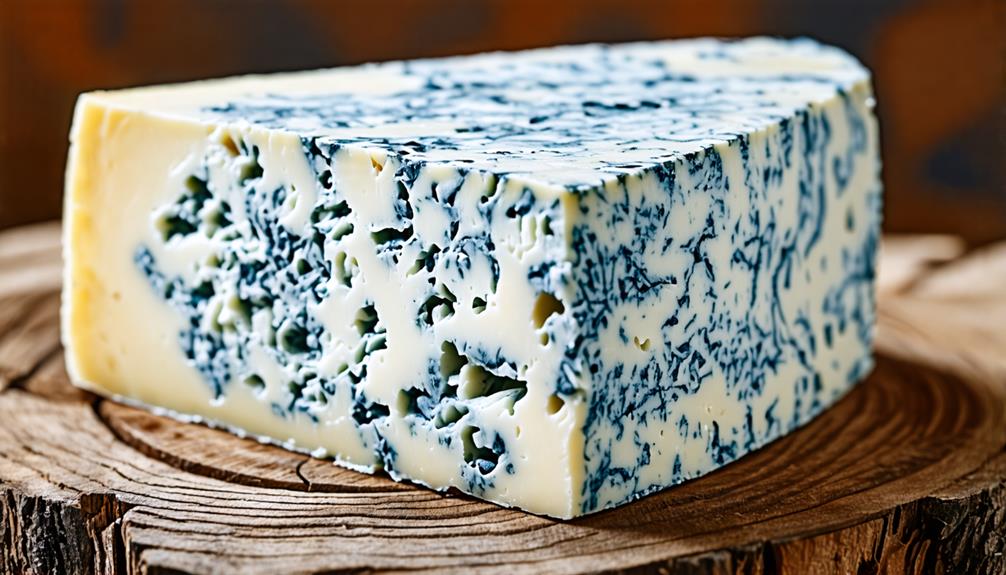
Blue cheese is notable for its blue or green veins, created by the mold Penicillium roqueforti, which gives it a distinctive appearance and flavor. A key characteristic of blue cheese is its open texture, allowing for optimal oxygen flow during the cheese-making process. This structure is essential for the mold to flourish and develop the characteristic blue veins.
The flavor profile of blue cheese is typically sharp, strong, and piquant, with notable variations among types such as Gorgonzola, Roquefort, and Stilton. These differences arise from the milk source and specific production techniques used. The production process involves minimal pressing and deliberate piercing to promote the growth of Penicillium roqueforti.
Furthermore, this process results in high levels of free fatty acids, which enhance the cheese's rich flavors and aromas. As the cheese matures, extensive lipolysis and proteolysis occur, contributing to its complex flavor profile. Understanding these characteristics allows for a greater appreciation of the art and science behind blue cheese, making it a unique culinary experience.
The Role of Penicillium Roqueforti
Penicillium roqueforti is essential in defining the flavor and texture of blue cheese. During production, this mold strain is introduced into the cheese matrix, where it requires oxygen to grow. Cheesemakers achieve this by piercing the cheese, allowing the mold to develop its signature blue veins.
As P. roqueforti metabolizes fats and proteins, it produces flavor compounds like methyl ketones, which enhance the aroma and taste of blue cheese. The mold's proteolytic and lipolytic activities break down proteins and fats, generating free fatty acids that add complexity to the cheese's flavor profile.
Critical environmental factors such as temperature and humidity directly influence the growth of P. roqueforti, affecting the intensity of the blueing and overall flavor development. By meticulously controlling these conditions, cheesemakers can craft a variety of flavors and textures, highlighting the distinctive qualities of blue cheese.
Production Techniques and Processes
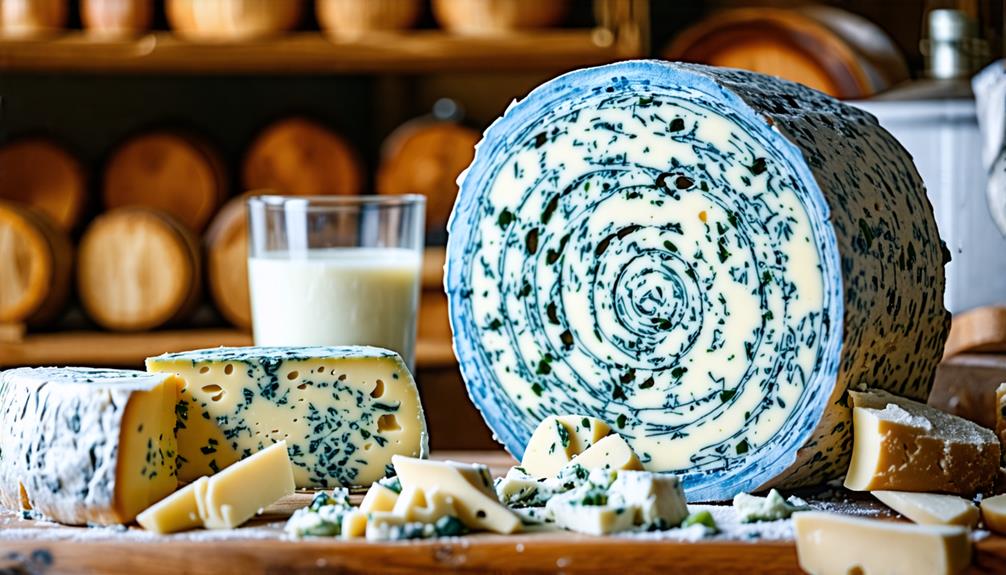
In the production of blue cheese, the process begins by adding Penicillium roqueforti spores to milk, initiating fermentation and the development of the characteristic blue veins. This step is crucial for establishing the blue mold that defines the cheese.
Around eight weeks into the process, the curds are cut and pierced to allow oxygen to enter. This promotes the growth of blue mold and maintains a balanced development for an optimal flavor profile. Salting the cheese, either by surface application or brining, affects moisture content and influences microbial activity, including the growth of lactic acid bacteria and Penicillium roqueforti.
The ripening stage, lasting 60-90 days, involves lipolysis and proteolysis, which break down fats and proteins to enhance the cheese's distinctive flavor and aroma.
Here's a summary of the production techniques:
| Step | Description | Key Factors |
|---|---|---|
| Fermentation | Adding Penicillium roqueforti to milk | Initiates blue mold growth |
| Piercing & Salting | Cutting curds and applying salt | Controls moisture and microbial activity |
| Ripening Process | Aging cheese for flavor development | Duration and environmental factors |
These steps are integral to creating the unique characteristics of blue cheese.
Environmental Factors Influencing Mold Growth
Understanding the environmental factors that influence mold growth is crucial for mastering blue cheese production. The growth of blue mold, specifically *Penicillium roqueforti*, thrives under precise conditions. Maintaining an ideal temperature between 50°F to 70°F (10°C to 21°C) is vital, as this range supports effective fermentation and promotes the development of the cheese's unique flavors.
Moisture plays a significant role as well. High relative humidity, ideally around 40-50%, creates the perfect environment for mold expansion and texture development in blue cheese. It's not just about moisture and temperature; oxygen availability is also essential. Piercing the cheese allows air to penetrate, encouraging mold activity and forming the desirable blue veins.
Acidity levels further influence this process. A slightly alkaline environment, with a pH around 6.5-7.0, supports *Penicillium roqueforti* growth while keeping spoilage bacteria at bay. By carefully managing these factors—temperature, moisture, oxygen availability, and acidity—you can significantly improve the mold growth and overall quality of your blue cheese.
Ripening and Flavor Development
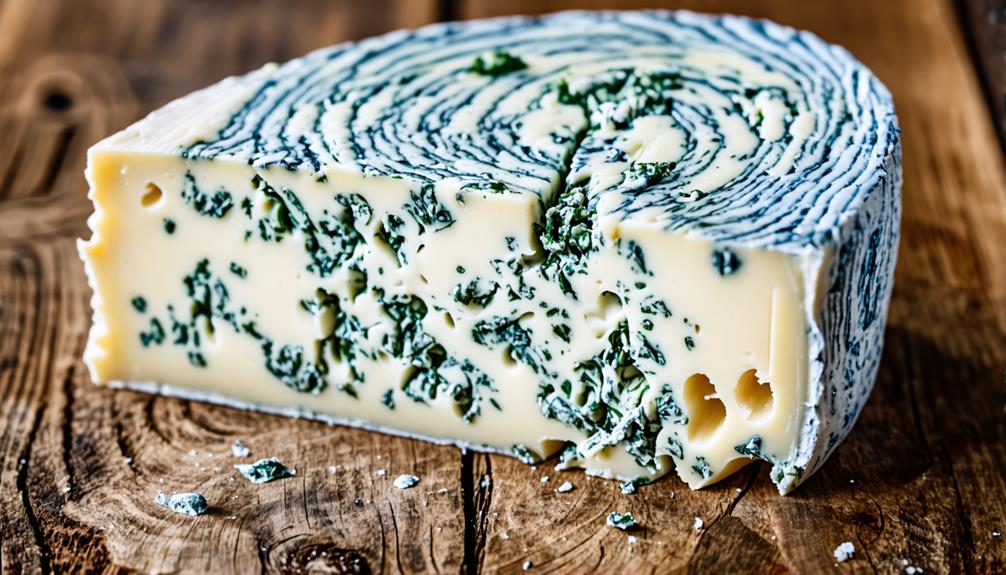
Ripening and Flavor Development in Blue Cheese
How does the ripening process transform blue cheese into a complex flavor experience? During ripening, the magic unfolds through extensive lipolysis and proteolysis, breaking down fats and proteins. This results in a flavor development that's rich and nuanced, thanks to the activity of *Penicillium roqueforti*.
Imagine the transformation as you savor:
- Creamy richness from fats that melt in your mouth.
- Savory umami notes emerging from matured proteins.
- Earthy undertones influenced by the blue mold.
As blue cheese matures over 2-3 months, the balance of salt is crucial. Higher salt levels control blue mold, preventing an overly sharp taste while allowing desirable flavors to shine. Controlled oxygen flow, through techniques like piercing, promotes consistent blue vein development. This not only enhances the aroma but also ensures a delightful texture.
Ultimately, the ripening process is a delicate dance, where every element influences the final flavor profile, creating a cheese experience that is complex, rich, and unforgettable.
Nutritional Aspects of Blue Cheese
Blue cheese is a nutrient-dense food that provides healthy fats, protein, and essential minerals, contributing to overall well-being. With approximately 28-35% fat by weight, it is calorie-rich, delivering around 100-120 calories per ounce. This high fat content supplies substantial energy, making it a suitable option for quick energy replenishment.
In terms of protein content, blue cheese offers about 6-8 grams per ounce, aiding in meeting your daily nutritional requirements. It is also an excellent source of calcium and phosphorus, crucial for maintaining strong bones and dental health. These minerals work synergistically to support the structural integrity of your body's framework.
Moreover, blue cheese includes fat-soluble vitamins A and B12, which are vital for nutrient absorption and various bodily functions. However, its sodium content can exceed 400 mg per ounce, so it is essential to consume it in moderation to avoid excessive sodium intake.
While blue cheese offers several nutritional benefits, incorporating it into a balanced diet is key to maximizing its health advantages.
Historical Significance and Evolution
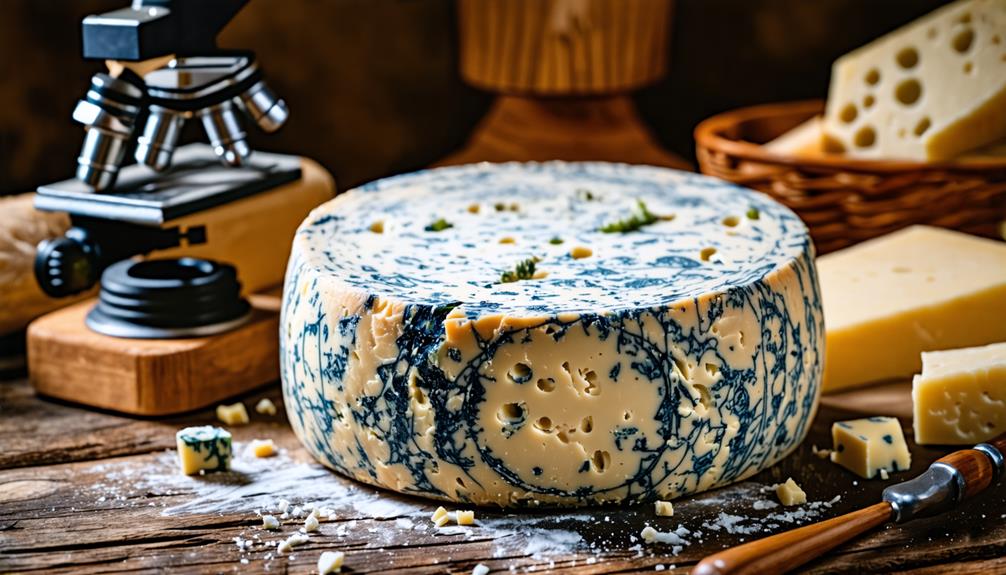
Blue cheese's rich nutritional profile is just one aspect of its fascinating journey through history, underscoring its significance in various cultures and culinary traditions. Since ancient times, the evolution of blue-veined cheese has captivated palates worldwide. Historical milestones include:
- Hallstatt miners enjoying the earliest forms of blue cheese around 800-400 BC.
- A young shepherd in France who inadvertently created Roquefort cheese by leaving his cheese in a cave, where mold transformed it.
- Stilton cheese, which emerged in the early 1700s and gained recognition for its distinctive production methods.
Gorgonzola, believed to have been crafted around AD 879, evolved significantly, with its blue veining becoming prominent by the 11th century. These cheeses reflect regional practices and traditions, highlighting their cultural significance. Since 1982, the variety of blue cheeses has expanded dramatically, each offering unique flavors and stories. This evolution underscores the craftsmanship involved and the enduring appeal of blue cheese in modern culinary landscapes.
Market Challenges and Cultural Heritage
Market challenges for unique blue cheeses often stem from their deep-rooted cultural heritage, which struggles to compete against the overwhelming presence of mass-produced varieties. Traditional cheeses like Cherni Vit exemplify local culinary pride but often face strict production standards that hinder commercial sale and export. This disconnect limits their exposure and appreciation in broader markets.
To foster interest in artisanal cheeses, it's crucial to highlight their sustainability and historical significance. Here's a breakdown of the key factors impacting blue cheese in the market:
| Factor | Impact on Blue Cheese | Importance |
|---|---|---|
| Cultural Heritage | Limited recognition | Preserves local identity |
| Production Standards | Hinders commercial sales | Guarantees quality and authenticity |
| Sustainability | Encourages local movements | Supports eco-friendly practices |
Technological Advances in Cheese Analysis
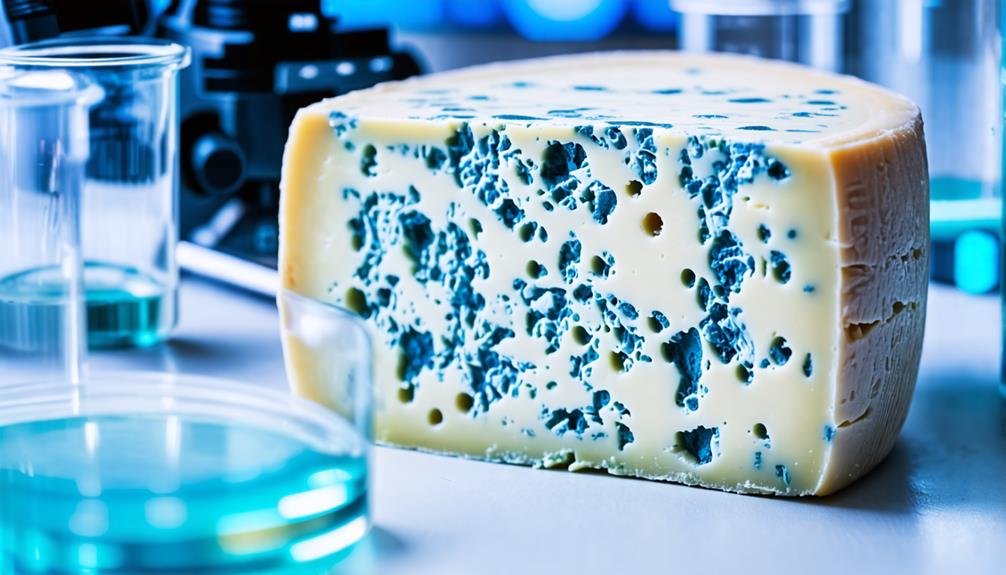
Leveraging cutting-edge technologies, researchers are revolutionizing the analysis of blue cheese varieties, significantly enhancing classification and quality control. Advanced analytical techniques now enable a deeper appreciation of the nuances in blue-veined cheeses. Here are three pivotal advancements:
- Nanomaterials-based optoelectronic noses: These devices achieve high prediction accuracy in classifying blue cheese varieties, enabling the effortless identification of specific types.
- PCR-DGGE: This technique uncovers diverse microbial communities in blue cheese, elucidating how these interactions influence flavor profiles and texture.
- Color data analysis: An optoelectronic array captures color changes during the ripening process, highlighting significant variations in cheese characteristics.
These innovations enhance our understanding of microbial activity and chemical composition during the ripening process while strengthening quality control measures. By integrating chemical composition analysis with microbial studies, producers can refine flavor profiles and ensure consistency in blue cheese production. Consequently, consumers can enjoy a more refined and predictable tasting experience with each bite of their favorite blue cheese.
Conclusion
In summary, the distinctive blue veins and mold in blue cheese are a result of introducing the fungus Penicillium roqueforti under controlled conditions. Production techniques, such as piercing the cheese to allow air to penetrate, and specific environmental factors, like temperature and humidity, are crucial in its development. These elements significantly influence the flavor and texture of blue cheese. As you savor this complex cheese, consider its rich history and the scientific processes behind its creation, which continue to evolve with technological advancements. Whether you adore it or dislike it, blue cheese remains a fascinating culinary delight.