Is Gouda a Wet Cheese?
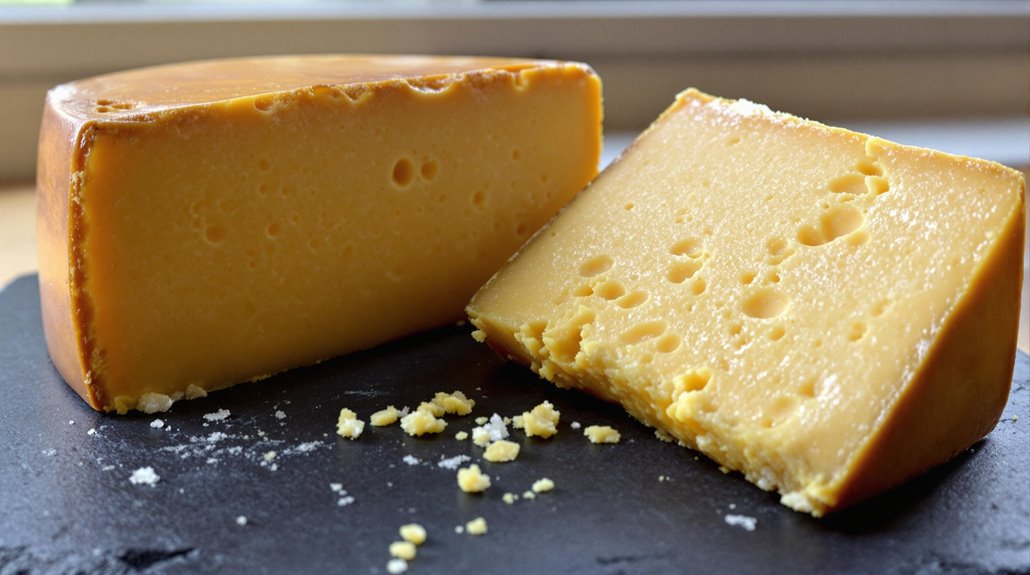
Gouda isn't a wet cheese, but rather falls into the semi-hard category with 40-50% moisture content. You'll find young Gouda has a higher water content, making it creamy and fudgy, while aged varieties become firmer and drier. The traditional Dutch production method uses brining and wax coating to maintain the perfect moisture balance. There's much more to uncover about how Gouda's unique moisture levels create its distinctive texture and flavor.
Understanding Moisture Content in Gouda
When examining Gouda's moisture content, you'll find it falls into the semi-hard cheese category with 40-50% water content. This characteristic moisture level plays a pivotal role in determining the cheese's texture and overall eating experience.
You'll notice that young Gouda has a higher moisture content, which creates its signature creamy, fudgy texture. During production, the cheese undergoes a brining process that helps regulate moisture levels and develop its distinctive characteristics. As lactic acid develops and the cheese ages, it gradually loses moisture, resulting in a firmer, more crystalline structure.
The moisture content isn't fixed across all Gouda varieties - it can vary depending on how the cheese is made and aged. You'll find that younger versions are significantly wetter, while aged Gouda becomes progressively drier and more concentrated in flavor. The washing the curds process, where whey is replaced with warm water, is crucial in establishing the initial moisture content of the cheese.
The Traditional Dutch Production Method
Through centuries of refinement, the traditional Dutch method of producing Gouda has evolved into a precise process that begins with scalding and washing the curds. You'll find that hot water is used to quickly release moisture from the milk solids, creating the foundation for Gouda's distinctive sweet flavor by reducing lactose content.
After pressing the cheese into its iconic wheel shape, you'll notice the vital brining step, where the cheese is soaked in a salt solution. This process helps develop Gouda's firm yet supple texture. Once the initial drying period is complete, you'll see the cheese makers coat each wheel with wax or plastic. This protective layer is essential for maintaining proper moisture levels as the aged cheese develops, ensuring that your Gouda achieves its characteristic semi-hard consistency with 40-50% moisture content. The aging process length determines how intense the final flavor of the Gouda becomes.
Aging Process and Texture Development
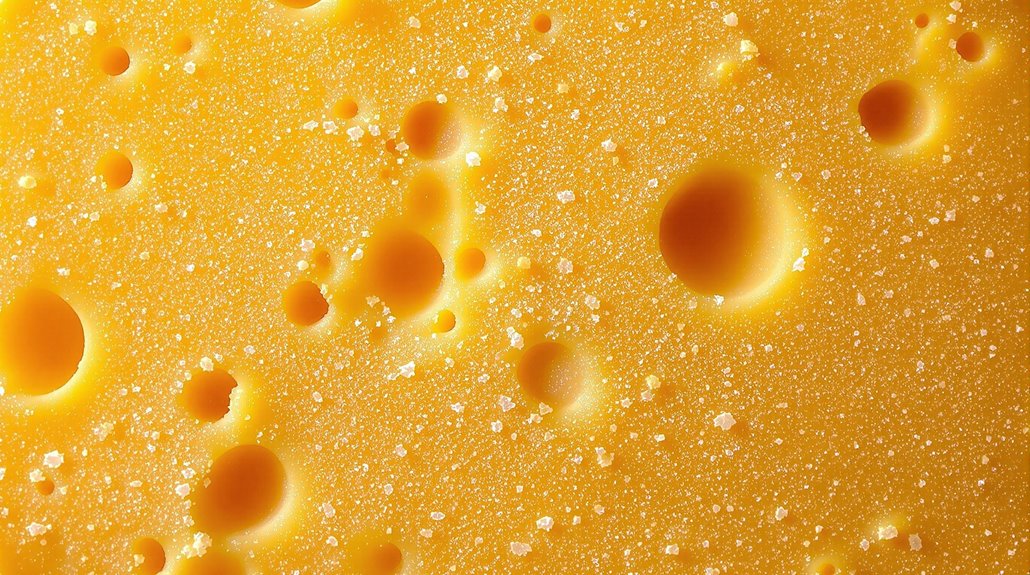
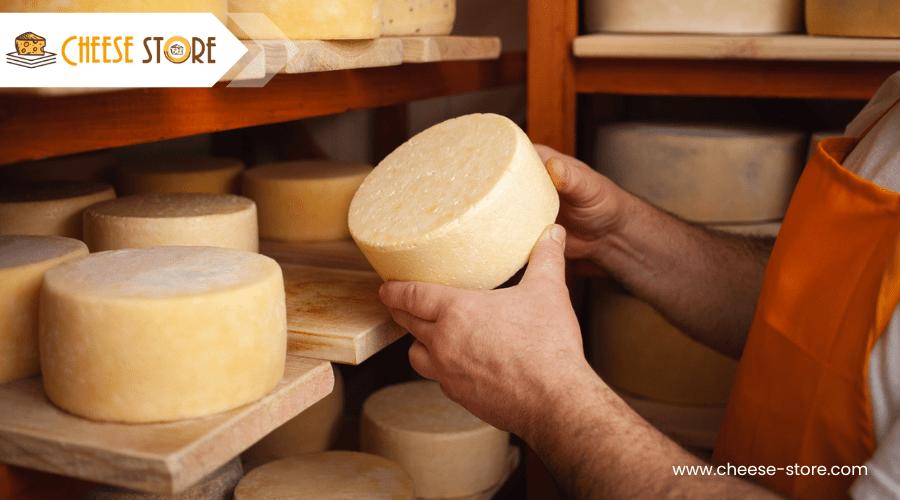
As Gouda wheels rest peacefully on aging room shelves, they undergo a stunning transformation that affects both texture and moisture content. During this aging process, you'll notice the cheese gradually release moisture, losing about 10-15% of its initial water content.
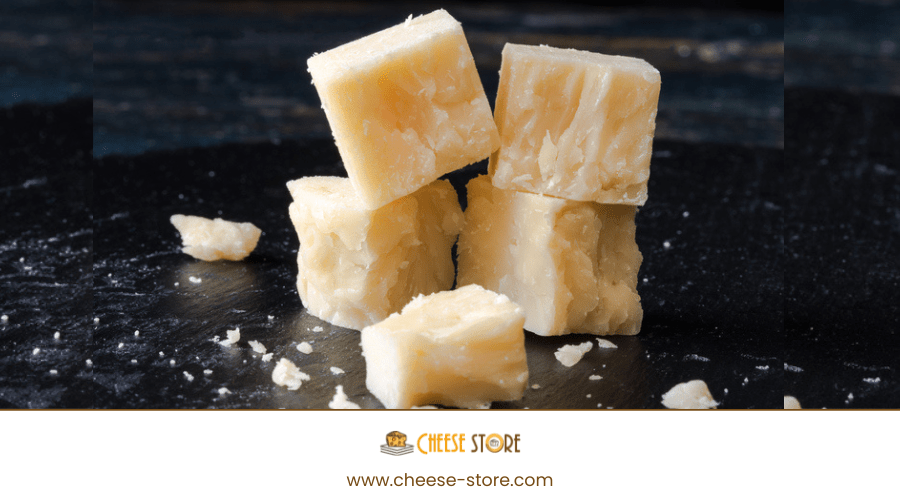
When you try young Gouda, you'll experience a fudgy, semi-soft texture with 45-50% moisture. However, as the cheese matures over weeks or years, it becomes firmer and more concentrated. Aged Gouda transforms into a drier, more complex cheese with 40-45% moisture content. You'll uncover delightful cheese crystals forming throughout, creating a satisfying crunch. The protective rind plays an essential role in controlling this moisture loss, helping develop those distinctive nutty and caramelized flavors you've come to expect from well-aged Gouda. Enzymatic breakdown of proteins and fats contributes significantly to the development of these crystalline structures and harder texture.
Types of Gouda Based on Water Content
The varying moisture levels in Gouda create distinct categories that you'll find in cheese shops worldwide. This classic cow's milk cheese shifts dramatically as its water content changes. When young, cultured milk produces a Gouda with roughly 50% moisture content, giving you a creamy, fudgy cheese that's perfect for melting and everyday enjoyment.
As the cheese is aged, you'll notice the moisture content drops to around 40%, resulting in a firmer, more complex product. The aging process causes the cheese to develop a denser texture with tiny crystals throughout. You can easily identify these variations by texture alone - young Gouda yields easily to the touch, while aged Gouda offers more resistance and a distinctive crunch that many cheese enthusiasts seek out.
The Role of Brining and Wax Coating
Both brining and wax coating play essential roles in converting Gouda from fresh curds into the semi-hard cheese you'll find at your local market. When you first encounter the brining process, you'll notice how the brine solution works to draw out excess moisture from the cheese while simultaneously controlling unwanted bacterial growth. This step is vital in developing Gouda's distinctive flavor profile.
After brining, you'll see the cheese receive its protective wax coating or plastic rind. This wax rind serves as a shield during the aging process, helping maintain the perfect balance of moisture within the cheese. Together, these two processes work in harmony - the brining removes unnecessary moisture, while the wax coating prevents the cheese from drying out completely, resulting in Gouda's characteristic semi-hard, dense texture.
Chemical Structure and Moisture Balance
Understanding Gouda's internal composition helps explain why it's classified as a semi-hard cheese. At its core, Gouda cheese maintains a precise moisture content between 40% and 50%, giving it that perfectly balanced texture you've come to expect.
When you examine its chemical structure, you'll find that the water activity plays a vital role in developing both flavor compounds and the cheese's signature consistency. This careful moisture balance creates Gouda's distinctive fudgy quality while maintaining enough firmness to hold its shape. You can credit the cheesemakers' proficiency during pressing and brining for achieving this ideal moisture level. It's this precise control that gives you the creamy mouthfeel and firm-yet-pliable texture that sets Gouda apart from both wetter and drier cheese varieties.
Comparing Gouda to Other Semi-Hard Cheeses
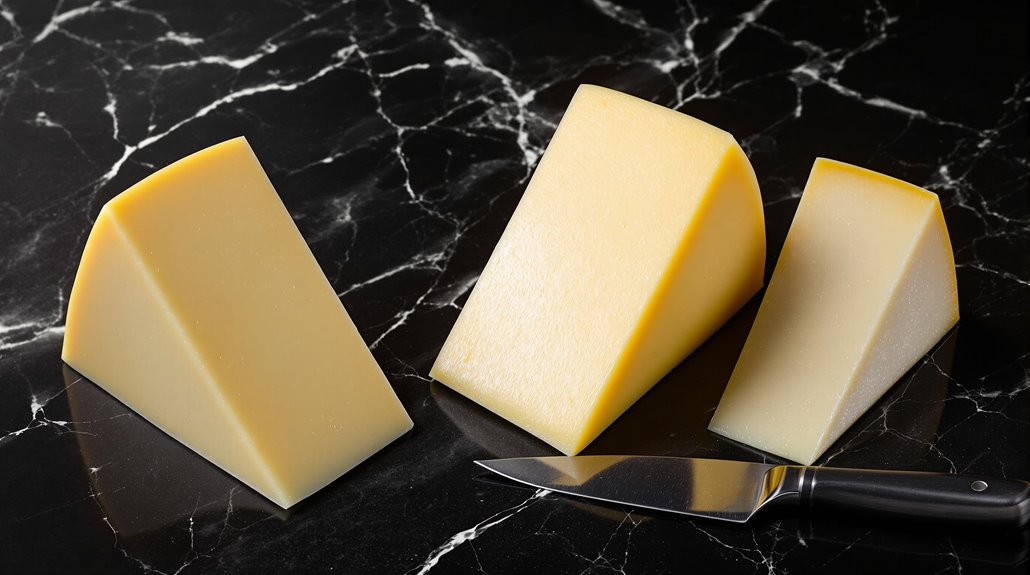
Semi-hard cheeses each have their own distinct personalities, and Gouda stands out among its peers. You'll find that Gouda's moisture content falls between 40-50%, positioning it uniquely among other semi-hard cheese varieties. When you compare it to emmental and gruyère, you'll notice Gouda maintains a higher moisture level, giving you a smoother, more pliable texture to work with.
The brining and aging process plays an essential role in developing Gouda's characteristic texture, setting it apart from drier varieties. As a versatile cooking cheese, its balanced moisture content makes it perfect for melting into your favorite dishes. You'll uncover that younger Goudas offer a creamier, milder taste, while aged versions develop more complex flavors - all thanks to this perfect moisture balance.
Storage and Preservation Techniques
Keeping your Gouda fresh requires proper storage techniques that protect its unique moisture content and flavor profile. While Gouda has a rich texture and moderate moisture level, you'll want to wrap it in wax paper or parchment paper before refrigerating to maintain its quality. Unlike Washed Rind cheeses, Gouda's natural rind helps protect it, but proper storage is still essential.
You can store young Gouda for 4-6 weeks, while aged varieties last 2-3 months when refrigerated properly. If you've bought Cheese online or want to extend its shelf life, consider freezing it. For best results, grate or shred your Gouda before freezing, as it maintains better texture than frozen blocks. When you're ready to use it, thaw it slowly in your refrigerator to preserve its original characteristics.
Culinary Applications and Melting Properties
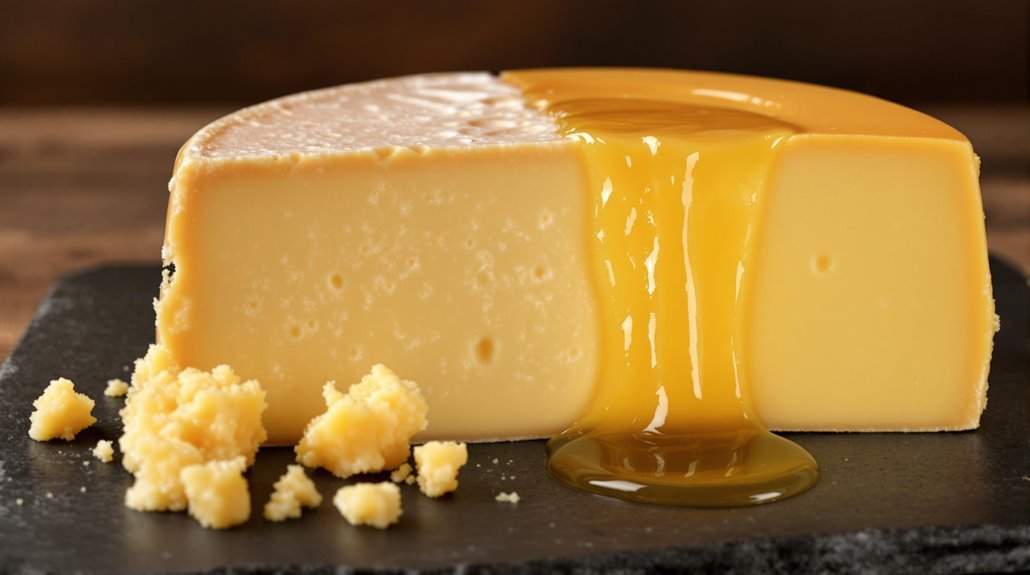
Ever wonder why Gouda is a favorite choice for both cooking and snacking? In the world of cheese, Gouda's high moisture content of 40-50% and rich fat content make it incredibly versatile. Whether you're working with young farmhouse Gouda or its aged counterpart, you'll find it melts beautifully for all your culinary creations.
Cheese lovers particularly appreciate Gouda's adaptability in the kitchen for these reasons:
- Its creamy, fudgy texture creates a smooth melt perfect for sauces and gratins
- The balanced moisture-to-fat ratio guarantees even melting without separation
- Its versatility allows you to serve cheese in both hot and cold dishes with consistent results
The combination of moisture, fat, and protein makes Gouda an excellent choice for everything from grilled sandwiches to decadent desserts.