Monte Cristo Sandwich: History, Signature Cheeses & Regional Variations
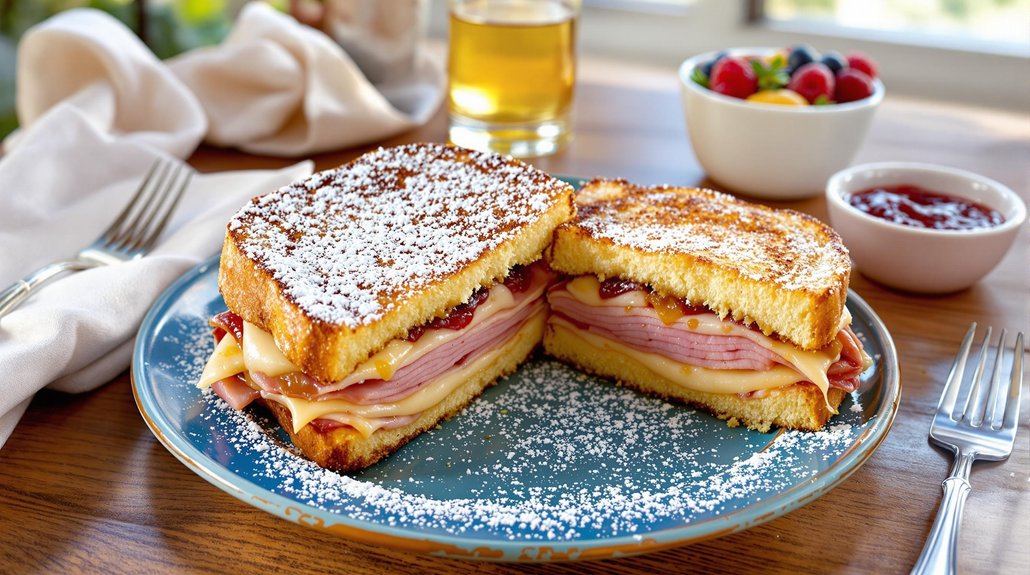
The Monte Cristo sandwich evolved from France's croque monsieur, appearing in American cookbooks by the 1940s. You'll find this indulgent treat featuring white bread layered with ham, turkey, and Swiss or Gruyère cheese, dipped in egg batter, then fried until golden. It's traditionally dusted with powdered sugar and served with fruit preserves for that distinctive sweet-savory contrast. Regional variations include open-faced Northeastern versions and deep-fried New Orleans interpretations. Discover how different cooking techniques transform this beloved sandwich.
The French Origins: From Croque Monsieur to Monte Cristo
While many American food creations claim European ancestry, the Monte Cristo sandwich has legitimate French roots. This delicious creation evolved from the croque monsieur, a classic French sandwich that emerged in the early 20th century. The traditional French dish features a simple yet satisfying combination of grilled ham and cheese.
The Monte Cristo takes this concept further by dipping the sandwich in egg batter before being fried in butter, creating a rich, indulgent meal. First appearing in American cookbooks during the 1930s and 1940s, the Monte Cristo transformed the humble croque monsieur into something more elaborate. It wasn't until the 1950s that the sandwich gained widespread popularity, particularly in southern California, where it became a menu staple at many restaurants.
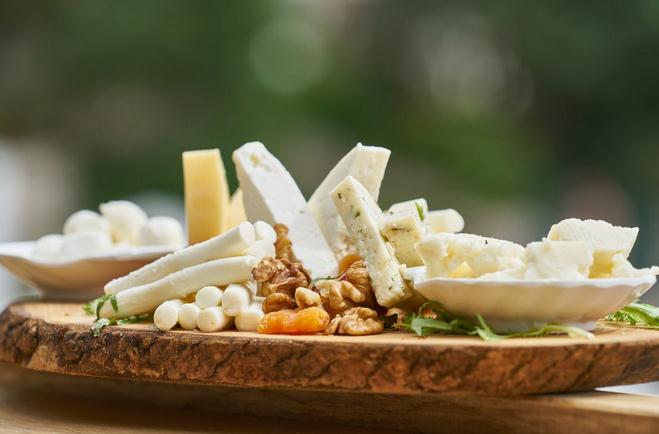
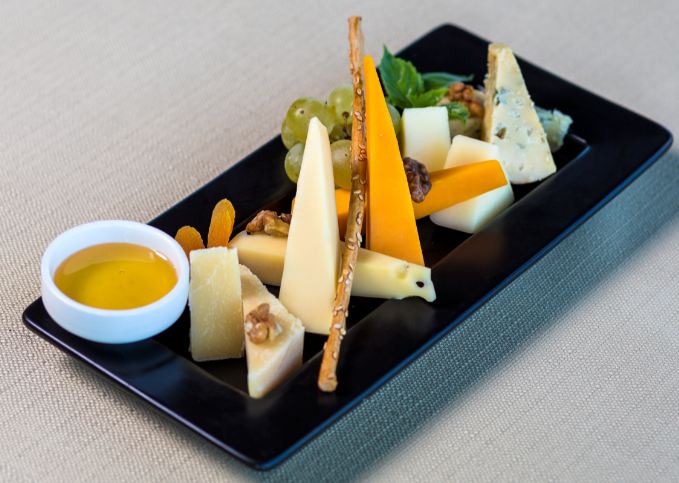
The adaptation of cheese-based dishes across cultures mirrors how Roman cheesemaking skills were passed down to local populations throughout Europe, evolving into regional specialties.
Anatomy of a Classic Monte Cristo: Bread, Meats & Signature Cheeses
The hallmark of any great sandwich lies in its components, and the Monte Cristo exemplifies this principle perfectly. You'll find this culinary masterpiece built on a foundation of white bread, layered with ham and turkey, then crowned with either Swiss or Gruyère cheese before its transformative cooking process.
What makes a Monte Cristo truly special:
- The sandwich is completely dipped in egg batter, creating its distinctive custard-like interior
- It's either pan-fried or deep-fried until the exterior turns golden and crispy
- A light dusting of powdered sugar adds the signature sweet-savory contrast
- Raspberry jam serves as the traditional dipping sauce, enhancing the flavor complexity
This careful balance of ingredients creates a sandwich that's simultaneously crispy, creamy, savory, and sweet. The quality of cheese used significantly impacts the final flavor profile, with artisanal varieties offering complex flavor profiles that develop through careful aging processes.
Sweet Meets Savory: the Art of Serving With Powdered Sugar & Preserves
What truly elevates the Monte Cristo beyond ordinary sandwich status is its distinctive sweet-savory presentation. Unlike a standard grilled cheese sandwich, the deep-fried Monte Cristo is dusted with powdered sugar after cooking, creating a delicate contrast to the savory white bread containing ham and cheese inside.
You'll typically find this culinary marvel served with raspberry, strawberry, or apricot preserves on the side. The sweet jelly provides the perfect counterpoint to the lean ham and melted cheese nestled between slices of crust-less bread. Some establishments prefer their Monte Cristos fried in clarified butter rather than deep-fried, but the sweet elements remain consistent.
For a modern twist, you might encounter variations featuring maple syrup instead of the traditional side of jelly.
Coast-to-Coast Variations: Regional Takes on an American Favorite
From coast to coast, America's culinary landscape showcases distinct regional interpretations of the beloved Monte Cristo sandwich. You'll find impressive regional variations that reflect local tastes and traditions:
- In New Orleans Square, you might encounter deep-fried versions served with powdered sugar and fruit preserves, creating the quintessential sweet-savory combination
Northeast delis often feature open-faced interpretations using French bread, where only the bottom slice gets the egg treatment
Midwest versions frequently incorporate turkey or chicken alongside lean ham for a heartier protein profile
West Coast adaptations might substitute traditional Swiss with Gruyere cheese, adding a nutty complexity that pairs beautifully with maple syrup
Whether grilled instead of fried or dressed with caramelized onions, these regional takes demonstrate the Monte Cristo's remarkable adaptability across American cuisine.
Crafting the Perfect Monte Cristo: Essential Techniques & Tips
Mastering the Monte Cristo sandwich requires attention to specific techniques that transform simple ingredients into a culinary masterpiece. Start with thick slices of white bread for the ideal foundation of this French toasted cheese indulgence. Create your sandwich consisting of Gruyere or Swiss cheese layered with sliced turkey and lean ham.
The magic happens in the coating process—dip your assembled sandwich in a beer-based batter, then into beaten egg and fry until golden brown. The exterior should develop a crunchy crust while maintaining a soft interior. Finish with a dusting of powdered sugar and served alongside fruit preserves or maple syrup for dipping.
Monte Cristo sandwiches balance savory and sweet elements perfectly—the powdered sugar counters the richness of the ham and cheese, creating an irresistible contrast you'll crave repeatedly.