Regional European Cheeses You’ve Never Heard Of (But Should Try)
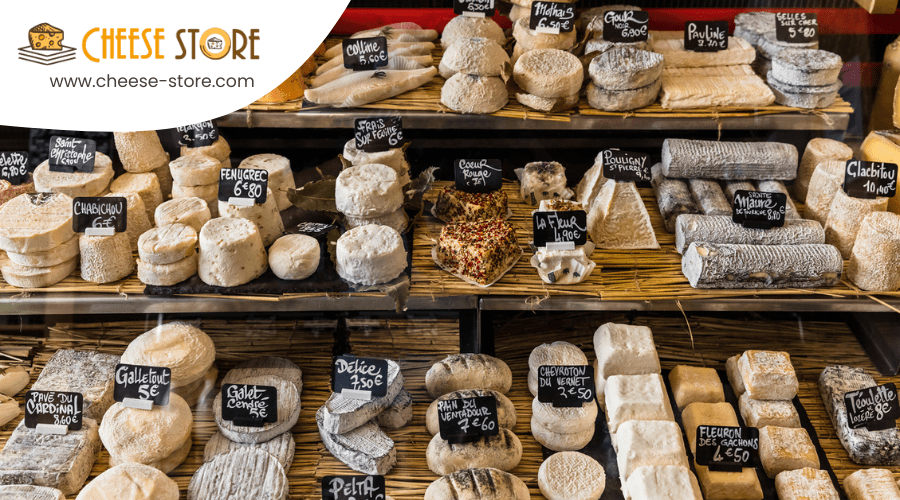
Europe's cheese landscape extends far beyond familiar favorites. You'll discover treasures like Ossau-Iraty from the French Pyrenees with its almond notes, smoky hand-shaped Oscypek, or creamy Dolcelatte offering a gentle introduction to blue cheese. Coastal gems like Halloumi and mountain specialties like Serra da Estrela showcase centuries-old traditional methods. These lesser-known varieties tell fascinating stories of regional traditions and ancient techniques waiting to be savored.
Mountain Treasures: Hidden Gems From Europe's Alpine Regions
While mainstream cheeses dominate supermarket shelves, Europe's mountainous regions harbor extraordinary dairy treasures that deserve your attention. The French Pyrenees offer Ossau-Iraty, a sheep's milk masterpiece with a satin-like texture and distinctive notes of toasted almonds and summer grasses.
From Switzerland comes Sbrinz, a grateable cow's milk cheese that develops crunchy amino acid crystals as it ages, delivering sweet, tangy, and nutty complexity.
Portugal's Serra da Estrela follows protected traditional methods, creating a pungent delicacy that represents generations of mountain cheesemaking expertise.
Don't overlook Italy's creamy Robiola, particularly the lemon-fresh La Tur variety with its alluring textural contrasts and flavorful edible rind. These alpine treasures reveal how geography, tradition, and craftsmanship combine to create unforgettable cheese experiences.
The quintessential Alpine cheese gruyère has faced an identity crisis due to its creation near borders between Switzerland, France, and Austria, though it ultimately received its official Controlled Designation of Origin in 2001.
The Smoky and Peculiar: Unconventional Cheese Processing Techniques
Beyond the familiar aging processes that create standard cheeses, Europe's traditional cheesemakers have developed extraordinary techniques that transform milk into smoky, aromatic, and sometimes challenging flavor experiences.
You'll encounter this innovation with Oscypek, where cheesemakers painstakingly shape the curd by hand before smoking it to achieve its distinctive spindle form. Olomoucké sýrečky's pungent aroma comes from unique ripening techniques that you'll either love or find overwhelming. Try it fresh or experience its transformation when fried in batter.
Bryndza's tangy character emerges from varying moisture retention methods across Slovakia and Poland, while Appenzaler's signature bitterness develops during extended aging. These unconventional processes represent centuries of regional innovation, creating flavors you simply won't find in standardized commercial varieties.
Many European smoked cheeses undergo cold smoking techniques that impart rich flavors without melting the cheese, allowing its distinctive texture to remain intact while developing complex taste profiles.
Beyond the Blue: Lesser-Known Veined Varieties With Character
When you think of European blue cheeses, Roquefort, Stilton, and Gorgonzola likely come to mind first. But the continent offers several different kinds of veined treasures worth exploring.
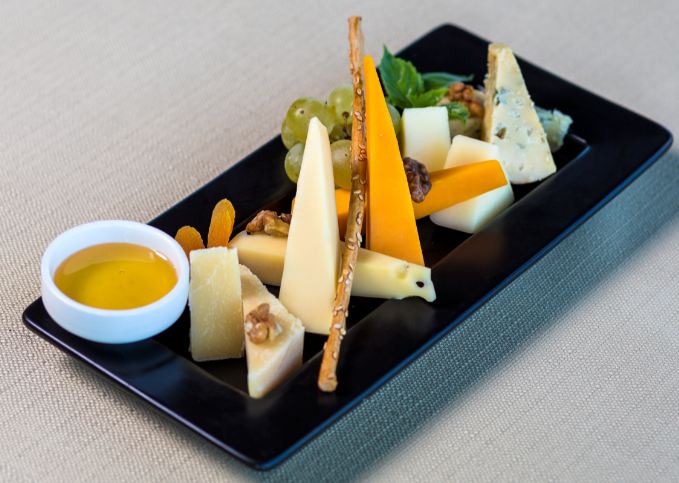
Italy's Dolcelatte presents a gentler introduction to blue cheese, offering a creamy texture and milder flavor than its cousin Gorgonzola. It's often served with fresh fruits or drizzled with honey to balance its subtle tanginess.
While not technically a blue, Vignotte's pungent profile delivers similar complexity with its soft-ripened character. Made from the milk of carefully raised cattle, this French delicacy evolves dramatically as it ages.
For something completely different, try Appenzeller from Switzerland. Its distinctive bitterness and complex flavor notes make it an intriguing alternative when you're craving character without the blue mold.
Coastal Delicacies: Sea-Influenced Cheese Traditions
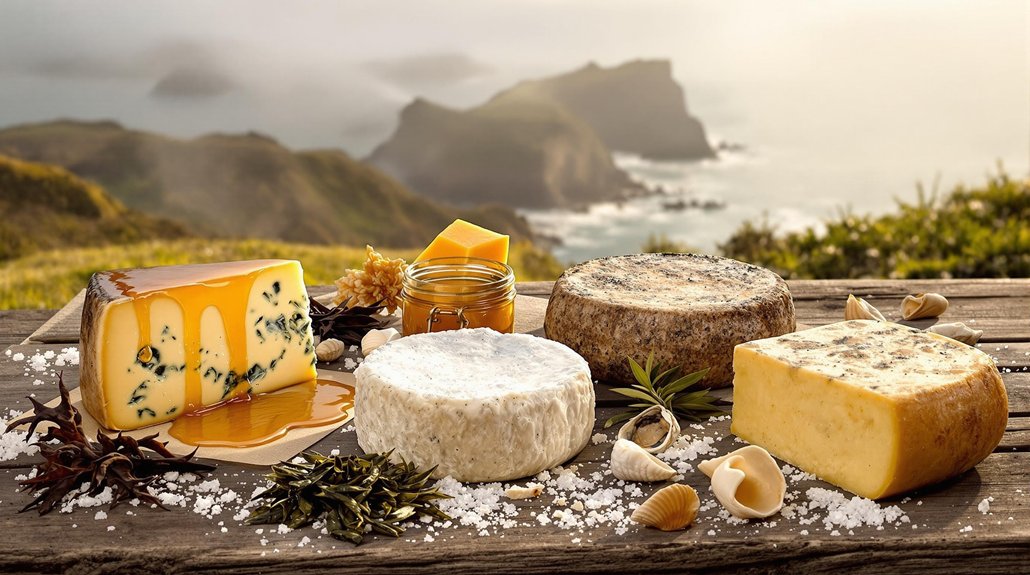
The salty air of Europe's coastal regions infuses local cheese-making with distinctive character. Coastal European cheeses often reflect their maritime environments, with unique aging processes and flavor profiles you won't find inland.
Halloumi from Cyprus exemplifies Mediterranean coastal cheese traditions - its high salt content and firm texture developed as practical preservation methods in warm coastal climates before refrigeration was available.
Serra da Estrela, made exclusively in Portugal's mountainous coastal region, absorbs the unique microflora from Atlantic winds that sweep across the pastures where the sheep graze.
Spanish Cabrales develops its distinctive blue-green veins and complex flavor profile from the humid coastal caves of Asturias, where the cheese interacts with the moisture-laden air from the Bay of Biscay.
From Shepherd's Hands: Nomadic Herding and Seasonal Cheese Making
While coastal regions harness sea-influenced flavors, Europe's remote highlands and valleys tell a different cheese story altogether. Here, traditional cheese production remains intimately tied to nomadic herding practices that have endured for centuries.
In the rugged Pyrenees and Alpine meadows, shepherds guide their flocks to high-altitude pastures during summer months, where diverse wildflowers and herbs infuse sheep's milk cheese with complex terroir. The unpasteurised milk captures these distinctive flavors, transformed through time-honored techniques passed down through generations.
Treasures like Serra da Estrela from Portugal and Switzerland's Sbrinz represent living cultural heritage, with production methods deliberately unchanged for centuries. When you taste these protected regional specialties, you're experiencing more than cheese—you're savoring the biodiversity of specific pastoral landscapes and the wisdom of ancient cheesemaking traditions preserved by dedicated artisans.
Monastery Secrets: Cheeses With Religious Origins
Throughout medieval Europe, monasteries served as unexpected epicenters of culinary innovation, with monks perfecting cheese recipes that would endure for centuries. You'll find this religious influence particularly evident in Eastern European cheeses, where monks in Wallonia, Belgium, shaped the distinctive character of regional specialties we still enjoy today.
Don't miss these monastery-influenced European cheeses:
- Maredsous Abbey's pungent cheese, aged in Belgian cellars since 1953
- Bryndza, the tangy sheep's milk cheese that forms the backbone of Slovakia's national dish
- Oscypek, the decorative smoked sheep's cheese from the Tatra mountains, crafted since the 14th century
The monastic tradition of cheesemaking transformed simple milk into cultural treasures, preserving techniques that might otherwise have been lost to time.
Boundary Crossers: Cheeses That Defy National Categorization
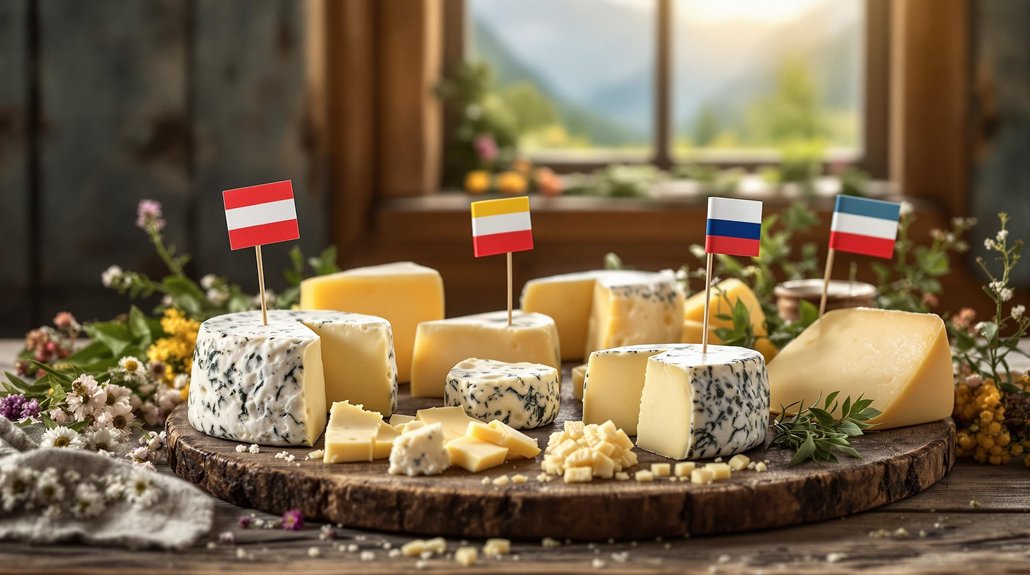
When we carve up Europe into culinary territories, certain cheeses simply refuse to stay within the lines. You'll find mozzarella not just in Emilia Romagna, but throughout southern Italy's neighboring regions like Campania and Molise, each claiming their distinctive touch.
The Basque Country exemplifies this border-blurring, with Spanish cheese varieties like Idiazabal sharing heritage with their French counterparts across an artificial boundary. Even the famous blue cheese tradition connects Roquefort from France with Italy's Gorgonzola and Cabrales from northern Spain.
Perhaps most telling are the alpine traditions where Swiss cheese like Emmentaler bears unmistakable similarities to French Comté and other mountainous varieties. These shared cheese-making methods extend eastward too, with Eastern European regions adopting and adapting techniques from their western neighbors over centuries.
The Lost Art: Reviving Nearly Extinct Cheese Varieties
Beyond these geographic border-blurs lies an even more pressing concern in Europe's cheese landscape: preservation. Many traditional cheesemaking techniques face extinction as industrialization threatens centuries-old practices. You'll find passionate artisans working tirelessly to save endangered varieties, from crumbly sheep's milk cheese in remote mountain villages to aged hard cheese from heritage cow's breeds.
Three key developments driving this renaissance:
- EU protection through PDO and PGI labels, safeguarding traditional methods for cheeses made from cow's milk and other sources
- Growing consumer interest in authentic, terroir-driven foods with genuine provenance stories
- Collaborative efforts between cheesemakers, academics, and food historians documenting ancient techniques before they disappear