Regional Italian Cheeses: A Tour of Italy’s Local Specialties
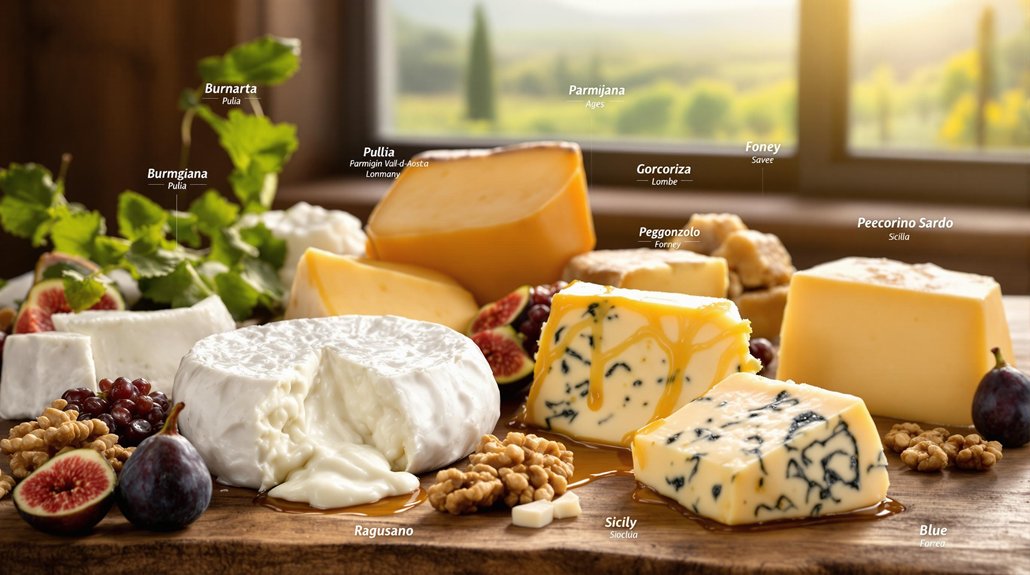
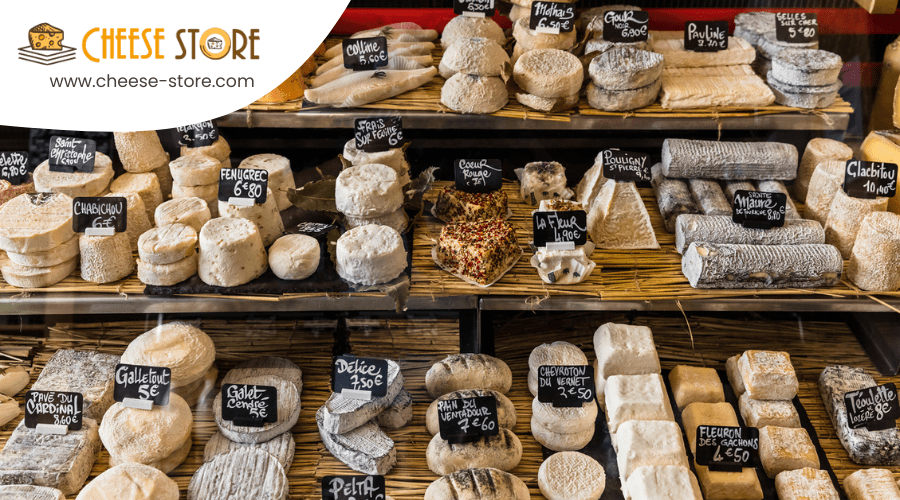
Italy's regional cheeses showcase the country's diverse culinary heritage. You'll find northern treasures like Castelmagno and Fontina with their alpine character, iconic wheels of Parmigiano-Reggiano and Grana Padano from Emilia-Romagna, creamy fresh mozzarella and burrata from the south, distinct pecorino varieties across different regions, and bold blue-veined Gorgonzola from Piedmont and Lombardy. Each cheese tells a story of local traditions, milk sources, and centuries-old production methods.
Northern Italian Treasures: Alpine Cheeses of Lombardy and Piedmont
While Italy's culinary reputation often spotlights pasta and wine, the northern regions of Lombardy and Piedmont boast an extraordinary cheese heritage shaped by Alpine traditions. You'll discover Castelmagno, produced exclusively from Piemontese cow's milk in the Piedmont region, offering a unique flavor profile that cheese connoisseurs treasure.
Don't overlook Fontina from the Aosta Valley, with its distinctive mild, nutty, and buttery character that reflects French influences. This semi-soft cheese pairs beautifully with the region's robust wines.
Meanwhile, Grana Padano, the cousin of Parmigiano Reggiano, brings its hard, aged character to tables throughout Northern Italy's plains. For blue cheese enthusiasts, Blu del Moncenisio showcases the rich Alpine dairy traditions, while Bra cheese proudly represents Piedmont's connection to the Slow Food Movement.
Like Swiss gruyère which developed in the Alpine cheese region since the 12th century, these Italian cheeses share similar sweet, creamy, and nutty flavor profiles.
The Sacred Wheels: Parmigiano-Reggiano and Grana Padano
The crowning jewels of Italian cheesemaking, Parmigiano-Reggiano and Grana Padano represent centuries of tradition crystallized into magnificent wheels of flavor. Often called the "king of cheeses," authentic Parmigiano-Reggiano must age at least 12 months, developing its distinctive nutty depth.
You'll find these iconic hard cheeses in Northern Italy's Emilia-Romagna and Lombardy regions, respectively. Both start with raw cow's milk and follow strict production regulations that preserve their heritage.
While many call it parmesan cheese, true Parmigiano-Reggiano bears little resemblance to its imitators. Grana Padano offers a similar granular texture and sweet-savory profile at a more accessible price point.
Try them grated over pasta, incorporated into recipes, or simply broken into chunks as a snack.
A full wheel of authentic Parmigiano-Reggiano requires an impressive 600 liters of milk to produce its distinctive fruity and nutty flavor profile.
Fresh Delights: Mozzarella, Burrata, and Buffalo Milk Varieties
Southern Italy's warm climate provides the perfect setting for its celebrated fresh cheeses, where milky treasures like mozzarella and burrata have captured palates worldwide. These delicate specialties showcase Italy's mastery of transforming simple milk into extraordinary culinary experiences.
When exploring these fresh delights, you'll discover:
- Mozzarella di Bufala Campana - A PDO-protected treasure from Campania with unparalleled creaminess and distinctive flavor from water buffalo milk
- Burrata - Puglia's indulgent creation featuring a mozzarella shell filled with creamy interior, perfect with tomatoes or drizzled with olive oil
- Fresh Mozzarella Fiordilatte - Made from cow's milk with a slightly firmer texture, this versatile cheese appears in countless Italian dishes
These cheeses are best enjoyed simply, allowing you to appreciate the quality milk and traditional methods behind these regional specialties.
Sheep's Milk Wonders: Pecorino Variations Across Regions
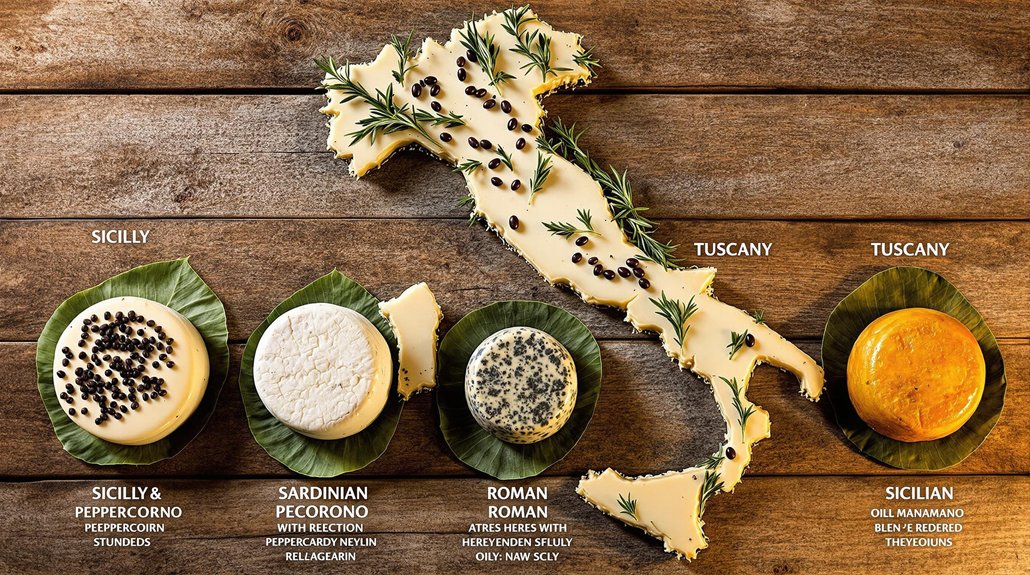
From the milky freshness of southern specialties, we turn to Italy's remarkable sheep's milk cheeses, where pecorino reigns supreme across diverse regions.
You'll find each pecorino cheese reflects its territory's distinctive character. In Rome, the hard, salty Pecorino Romano adds punch to cacio e pepe, while Tuscany's semi-soft variation complements ribollita and bistecca alla fiorentina.
Journey to Sardinia, and you'll encounter Pecorino Sardo with its nutty, grassy profile that speaks to the island's unique terroir.
Sicily's offering, Pecorino Siciliano, pairs perfectly with the island's eggplant, tomato, and seafood dishes. These regional differences aren't accidental—they represent centuries of local culinary traditions being passed down through generations.
The variations in texture, aging, and flavor demonstrate how Italian cheesemakers transform local ingredients into edible geography, telling the story of their homeland through taste.
Blue-Veined Masterpieces: Gorgonzola and Other Italian Blue Cheeses
Among Italy's most distinctive contributions to world cheese, blue-veined varieties offer a bold contrast to their milder counterparts. Gorgonzola, with its iconic blue-green veins, stands as the champion of Italian blue cheeses, traditionally crafted in the northern regions of Piedmont and Lombardy.
You'll discover Gorgonzola in two delightful variations:
- Piccante Gorgonzola - sharper and more pungent for those seeking intensity
- Dolce Gorgonzola - creamier and milder, perfect for cheese newcomers
- Regional specialties from Piedmont and Lombardy that age for several months
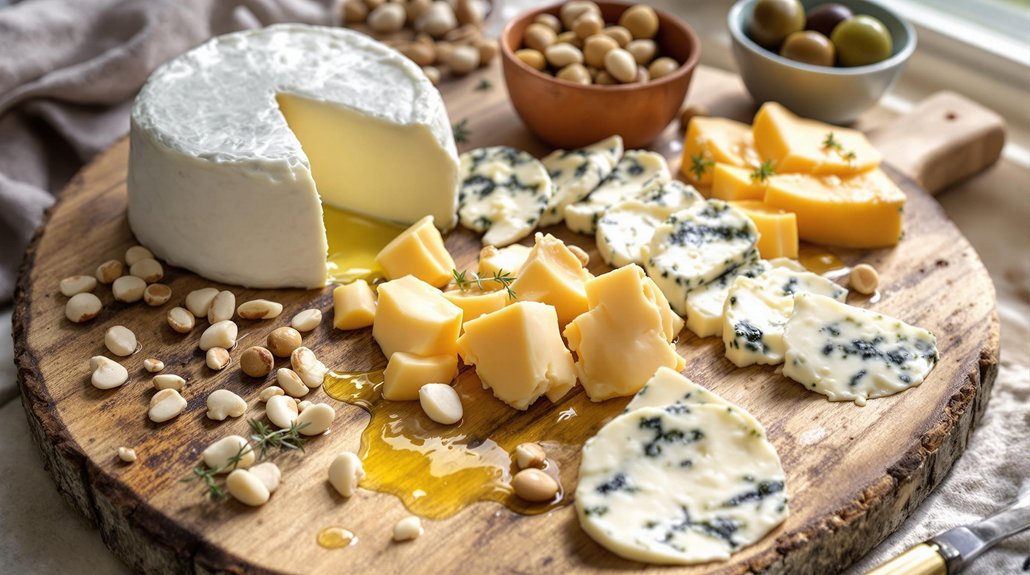
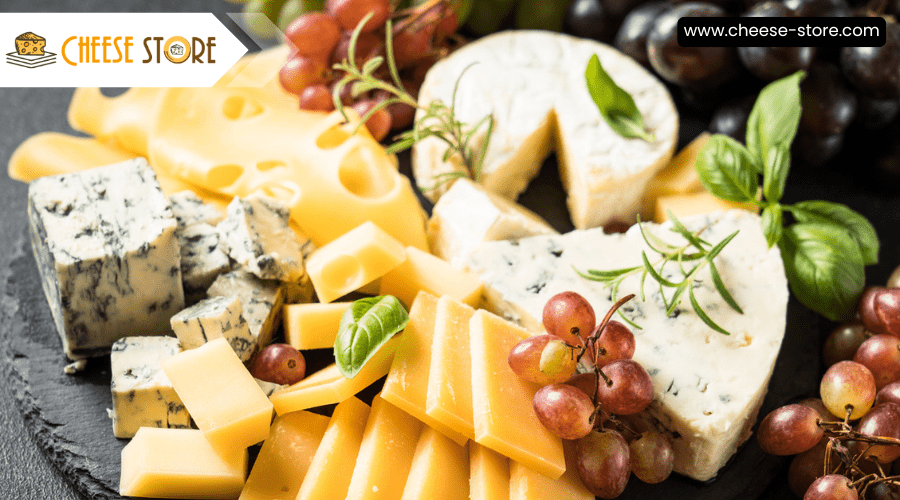
These versatile masterpieces can transform your culinary experiences, whether enjoyed with full-bodied red wines like Barolo, incorporated into risottos and pasta sauces, or paired with fruits and nuts for a simple yet sophisticated treat.
Island Specialties: Sardinian and Sicilian Cheese Traditions
While northern Italy captivates with bold blue veins, the Mediterranean islands of Sardinia and Sicily have cultivated their own remarkable cheese-making heritage.
Sardinia's contribution to Italian cheese is exemplified by Pecorino Sardo, the island's most exported variety, and Fiore Sardo, a firm, savory sheep's milk cheese aged between one and six months. You'll also discover unique Sardinian ricotta variations, including the smoked Ricotta Affumicata Sarda.
Sicily offers equally distinctive creations. Piacintinu stands out with its striking saffron color, made exclusively between October and June from sheep's milk. From the city of Ragusa comes Ragusano, aged from three months to a year and crafted from Modicana cow's milk. Sicily is also home to Ricotta Infornata and other specialty ricotta variations that showcase the island's innovative approach to cheese-making.
Artisanal Mountain Cheeses of the Dolomites and Alps
The majestic peaks of the Dolomites and Alps cradle some of Italy's most distinctive cheese-making traditions, where altitude and isolation have preserved artisanal methods for centuries. When you explore Northern Italy's cheese heritage, you'll discover flavors shaped by alpine terroir and generations of dairy craftsmanship.
Three standout mountain cheeses you shouldn't miss:
- Castelmagno - A celebrated blue-veined treasure from Grana Valley made from Piemontese cow's milk, offering complex, nutty flavors that intensify with age
- Blu del Moncenisio - An exquisite alpine blue cheese with characteristic streaked interior, produced around the Moncenisio mountain range
- Fontina - A semi-soft, buttery delight from the French-influenced Aosta Valley, prized for its mild, nutty profile and exceptional melting properties
Central Italy's Cheese Heritage: Tuscany, Umbria, and Lazio
Central Italy's fertile pastures and ancient farming traditions have given rise to a remarkable array of cheeses that reflect the distinct cultural and geographical characteristics of Tuscany, Umbria, and Lazio.
In Tuscany, you'll discover Pecorino Toscano, a versatile semi-soft sheep's milk cheese perfect for pasta dishes and savory pies. The region's Chianti area produces Marzolino, a creamy, delicate cheese with distinctive grassy notes.
Umbria's cheese tradition features ricotta prominently, essential for the region's beloved torta al testo and numerous local specialties.
Lazio contributes the iconic Pecorino Romano, a hard, salty sheep's milk cheese that forms the backbone of Rome's celebrated pasta dishes like cacio e pepe and carbonara. When visiting central Italy, these regional cheeses offer a direct taste of centuries-old culinary heritage.
Calabria and Puglia: Southern Stretched Curd Specialties
Southern Italy's rich cheese-making traditions shine most brilliantly in the stretched curd specialties of Calabria and Puglia. As you explore these regions, you'll discover cheeses that have defined local cuisine for centuries.
Three standout southern cheeses you shouldn't miss:
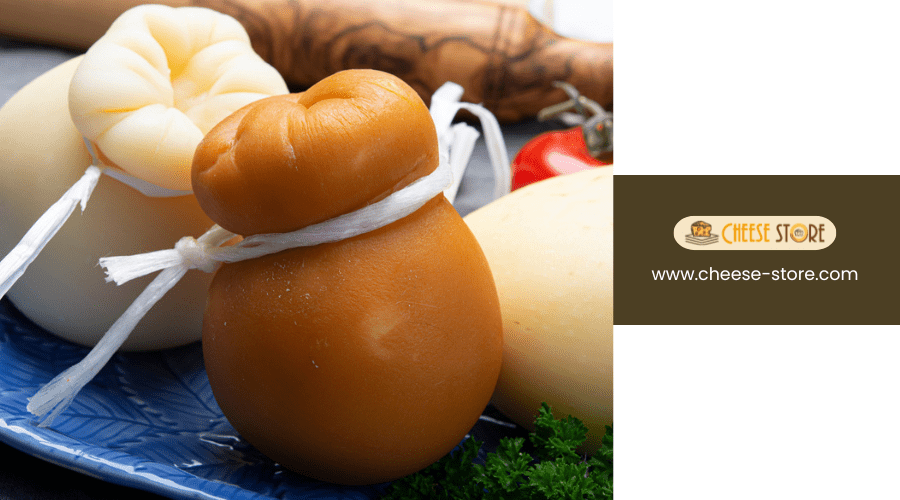
- Caciocavallo - This Campanian specialty brings depth to classic eggplant parmesan with its distinctive flavor and melting properties
- Burrata - Puglia's creamy delight pairs perfectly with orecchiette pasta and fresh tomatoes, offering a luxurious texture
- Ragusano - One of Sicily's oldest cheeses, also known as Caciocavallo Ragusano, features a characteristic parallelepiped shape and represents the region's dairy heritage
These stretched curd masterpieces embody southern Italy's gastronomic identity, each telling a story of regional expertise and tradition.
Wine and Cheese Pairings: Regional Italian Combinations
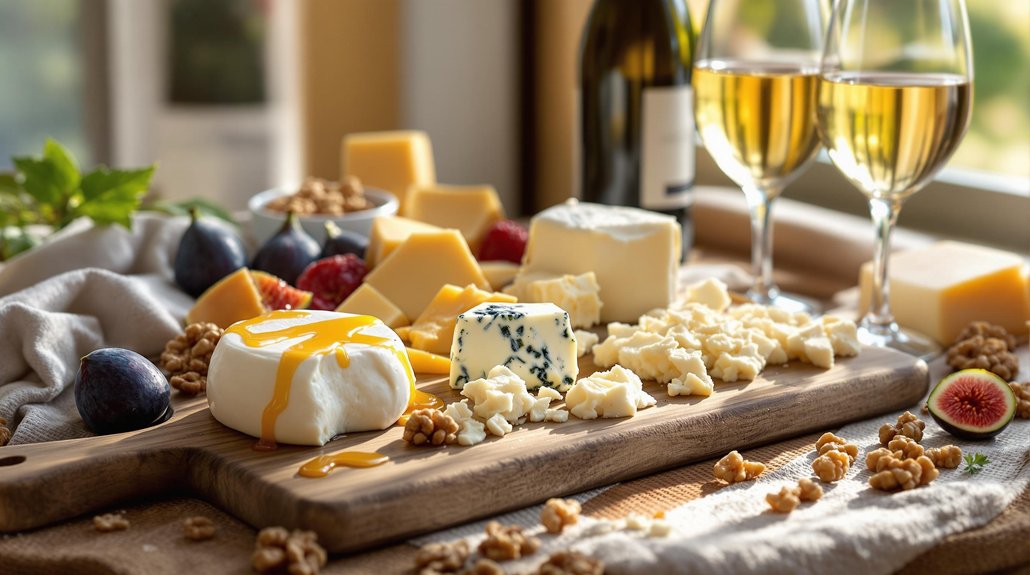
Every great Italian meal deserves a harmonious wine and cheese pairing that honors regional traditions. Italy's rich culinary landscape offers perfect matches across its diverse territories.
When enjoying robust regional dishes, try bold red wines like Barolo or Barbaresco with cheeses from Northern Italy such as Parmigiano-Reggiano or Grana Padano. For lighter fare, Central Italy's crisp Pinot Grigio beautifully complements the creamy textures of Pecorino.
Southern Italy's fresh Mascarpone and Burrata shine alongside sweet Moscato d'Asti from Piedmont, while the buttery Fontina and Robiola from the north dance perfectly with sparkling Prosecco from Veneto.
These pairings aren't random—they reflect centuries of local traditions where wines and cheeses evolved together, creating natural harmony that celebrates Italy's remarkable terroir.
Related posts