The Use of Blockchain in Tracking Cheese Supply Chains for Quality Assurance

Maintaining quality assurance in cheese supply chains is crucial due to their inherent complexities. Blockchain technology offers a robust solution by creating an immutable record of each step, from farm to table. This real-time traceability empowers consumers to verify the authenticity and quality of their cheese, thereby fostering trust in the product. However, the industry faces several challenges in adopting this innovation, including technological integration, cost implications, and the need for standardized protocols. What specific obstacles do you foresee in the widespread adoption of blockchain technology in cheese supply chains?
Overview of Blockchain Technology

Blockchain technology is a decentralized digital ledger that securely records transactions across multiple computers, making it nearly impossible to alter data without consensus from all network participants. This innovative technology is revolutionizing food supply chains by enhancing traceability and transparency. In cheese production, each transaction creates an immutable record, documenting every step from farm to table.
Smart contracts, built on blockchain, automate processes, ensuring compliance and facilitating real-time monitoring for quality assurance. When combined with IoT devices like temperature and humidity sensors, blockchain captures essential data points that help maintain safety standards throughout the cheese supply chain.
This integration allows stakeholders—including producers, distributors, and consumers—to trace the path of each cheese product, promoting food safety and trust. By providing detailed information about sourcing and handling, blockchain enables informed decision-making about the cheese you consume. The ability to verify the quality and origin of cheese products through this technology not only enhances transparency but also strengthens the overall integrity of the food supply chain. Ultimately, blockchain serves as a crucial tool in ensuring that the cheese you enjoy meets the highest standards of quality and safety.
Benefits for Cheese Supply Chains
Enhanced traceability in cheese supply chains ensures the ability to verify the product's journey from farm to consumer with confidence. Blockchain technology significantly boosts this traceability by offering an immutable record of each transaction, ensuring the authenticity and integrity of the cheese.
With real-time monitoring capabilities, blockchain allows for the tracking of critical quality parameters such as temperature and humidity during transportation and storage. This ensures that the cheese is maintained under optimal conditions. In the event of contamination, producers can quickly identify and address the issue, significantly reducing food safety risks and improving consumer confidence.
Furthermore, smart contracts automate compliance checks and payments, streamlining operations and improving efficiency. Implementing blockchain technology can lead to cost reductions of up to 63% in managing non-compliance issues. This benefits all stakeholders in the cheese supply chain—from farmers to retailers—enhancing overall quality assurance.
Enhancing Quality Assurance
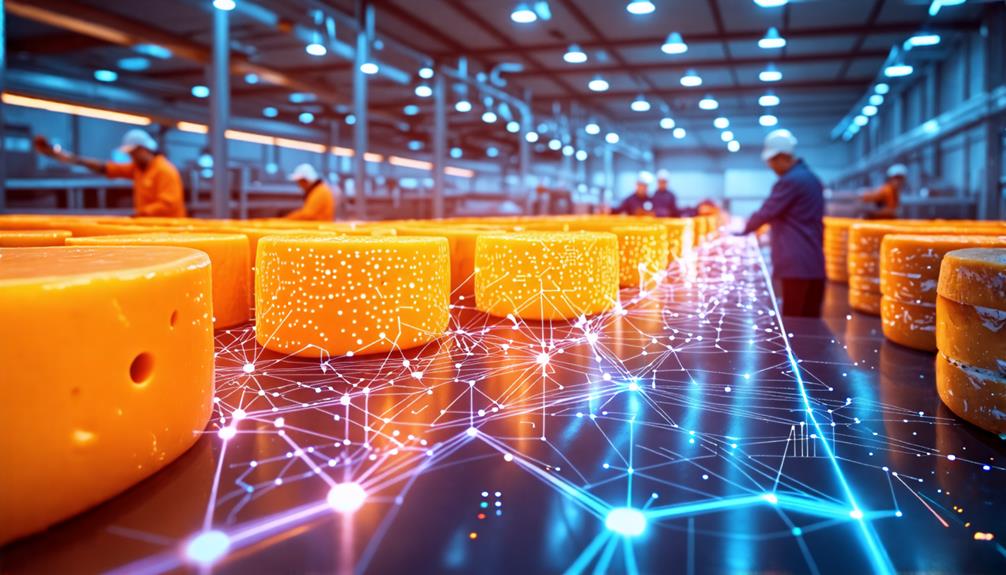
Integrating advanced technology into cheese supply chains significantly enhances quality assurance by providing accurate and easily traceable records of every transaction. Utilizing blockchain technology ensures an immutable log of each step in the process, thereby improving traceability from production to distribution. This adherence to quality assurance standards fosters greater consumer confidence.
Smart contracts automate compliance checks for quality standards, thereby reducing human error and enhancing the reliability of quality assurance processes. Incorporating QR codes linked to blockchain records allows consumers to access detailed information regarding the cheese's origin and production methods, increasing transparency and trust.
Blockchain implementation also minimizes contamination and fraud through a clear audit trail, thereby strengthening quality assurance protocols. Economic analysis reveals that integrating blockchain in the cheese supply chain can reduce costs associated with product recalls and quality failures by up to 63%. This demonstrates that robust quality assurance measures not only improve safety but also enhance profitability.
Challenges in Implementation
Cheese producers face several hurdles when attempting to adopt blockchain technology in their supply chains, making the implementation process complex and multifaceted. One primary challenge is the high initial investment required, which can be a significant barrier for small-scale producers. Additionally, the highly fragmented nature of the cheese supply chain, which involves a multitude of stakeholders such as farmers, processors, and retailers, complicates the development of a cohesive blockchain system for tracking.
Here is an overview of the main challenges:
| Challenge | Description |
|---|---|
| High Initial Costs | Small producers may struggle with the financial investment needed for technology integration. |
| Fragmented Supply Chain | The involvement of multiple stakeholders complicates the creation of a unified tracking system. |
| Data Standardization | Diverse data formats and protocols among stakeholders hinder interoperability and data integration. |
| Resistance to Change | Traditional producers may resist adopting new technologies due to a lack of understanding and familiarity. |
| Regulatory Uncertainties | Inconsistent regulations create trust issues regarding food safety and traceability standards. |
These challenges collectively impede the adoption of blockchain technology in the cheese supply chain. Addressing these issues is essential for realizing the potential benefits of enhanced food safety and traceability that blockchain can offer.
Future Trends and Innovations

As challenges in implementing blockchain technology are progressively addressed, cheese supply chains are set to embrace future trends that enhance traceability and efficiency. Significant advancements are anticipated in the coming years, driven by innovations that will elevate quality assurance and strengthen consumer trust. Here are four key trends to monitor:
- Smart Contracts: These automated agreements will streamline compliance processes and reduce the burden on producers while ensuring adherence to quality standards.
- IoT Integration: Incorporating IoT devices will enable real-time monitoring of quality parameters, allowing for immediate adjustments in production and distribution.
- Predictive Analytics: Leveraging AI and machine learning, cheese producers can analyze blockchain data to anticipate demand and optimize inventory management, thereby reducing waste.
- QR Codes: Adding QR codes to packaging linked to blockchain records will provide consumers with instant access to essential product details, thereby increasing transparency and trust.
These innovations will not only help combat food fraud but will also significantly improve food safety, leading to a more reliable and trustworthy cheese supply chain for both producers and consumers.
Conclusion
To conclude, leveraging blockchain technology in cheese supply chains significantly enhances quality assurance by improving traceability and automating compliance processes. Each product's journey is transparently recorded, ensuring authenticity and safety. Despite the challenges in implementation, the potential for innovation in this area is substantial. Embracing these advancements not only bolsters food safety but also strengthens consumer trust, paving the way for a more reliable and consistent cheese industry.