What Are the Origins and Cultural Significance of Swiss Cheese Fondue?
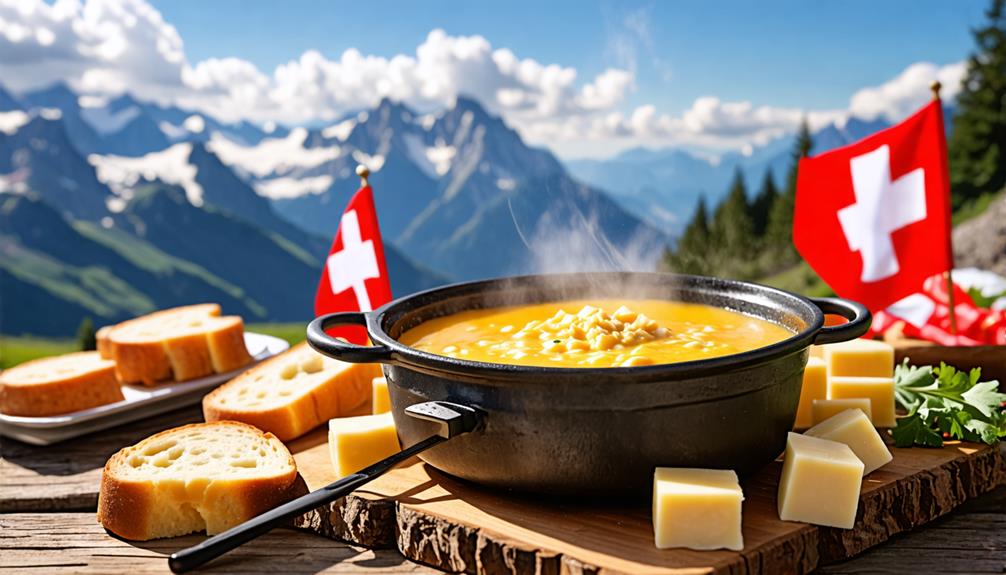
Swiss cheese fondue has a rich history that dates back to 800 BC, with significant evolution by the 18th century when communities relied on matured cheeses to survive harsh winters. Officially recognized as Switzerland's national dish in the 1930s, fondue transcended its role as a mere meal to become a symbol of unity and cultural identity, especially after WWII. This communal dining experience reflects Swiss values and traditions, emphasizing togetherness and shared enjoyment. Exploring its origins and significance reveals deeper insights into Swiss culinary practices and social customs, inviting contemplation on the broader implications of communal eating. What other stories might be hidden in its rich history?
Fondue's Mysterious Origins

Fondue's origins are intriguingly complex, with roots tracing back to ancient times. As early as 800 BC, Homer's *Iliad* mentioned a mixture of goat cheese, flour, and wine, laying the groundwork for what would evolve into fondue. In the 1800s, communities in the French and Swiss Alps adopted fondue, utilizing aged cheeses and stale bread during harsh winters.
By the 1930s, the Swiss Cheese Union declared fondue the Swiss national dish to boost cheese consumption and celebrate cultural identity. This move transformed fondue into a symbol of unity and heritage, emphasizing Switzerland's role as a cultural melting pot. The dish typically features a blend of cheeses combined with white wine, creating a rich and flavorful experience.
Fondue's popularity grew, becoming more than just a meal; it represented a communal dining experience. Its introduction to America at the 1964 New York World's Fair further solidified its place in culinary history, making it a beloved staple enjoyed across diverse cultures today.
The Essence of Fondue
Fondue is more than just a meal; it's a rich, historical tradition that brings people together. Its essence lies in regional variations and unique customs that enhance the dining experience. Let's explore how these elements define the true essence of fondue.
Historical Roots of Fondue
The origins of fondue can be traced back to 800 BC, with early mentions found in Homer's *Iliad*, highlighting its longstanding role in culinary history. The modern version of cheese fondue gained prominence in 18th century Switzerland as a practical way to use aged cheeses and stale bread during harsh winters. This method not only preserved food but also turned it into a delightful, communal dish.
Fondue recipes started to appear in French and Belgian cookbooks during the 18th century, spreading its appeal beyond Swiss borders. Recognizing its potential, the Swiss Cheese Union promoted fondue as a national dish in the 1930s, aiming to boost cheese consumption and solidify it as a symbol of Swiss identity.
Post-WWII, fondue gained further significance, symbolizing unity and shared experiences. This dish, rich in history, allows you to connect with the past and the culture of Switzerland, making every bite a taste of tradition.
Communal Dining Experience
Sharing a pot of Swiss cheese fondue fosters a unique communal dining experience, bringing people together through a delightful blend of flavors and connections. Gathering with friends and family around a communal pot transforms the atmosphere into one of warmth and hospitality. The simple act of skewering bread and swirling it in melted cheese creates not just a meal but a bonding experience that encourages laughter and conversation.
As you dip your bread into the gooey cheese, you're not only enjoying a delicious dish but also participating in shared experiences that create lasting memories. Playful customs, such as penalties for accidentally dropping food in the pot, add an element of fun that strengthens connections among diners. Fondue parties in Switzerland embody this essence; they're not just about food but about the joy of togetherness.
This cherished tradition reflects Swiss values of hospitality and conviviality, making fondue a perfect choice for any gathering. So, next time you're with loved ones, consider embracing the communal nature of fondue, savoring the delicious flavors while deepening your bonds.
Regional Variations and Customs
Swiss cheese fondue features various regional variations and customs that reflect the diverse culinary heritage of the Alpine communities. For instance, fondue Vaudoise uses local cheeses distinct to the Vaud region, while fondue Neuchâteloise highlights unique flavors specific to Neuchâtel. Despite these differences, all variations share the communal essence of bringing people together around a bubbling fondue pot.
Customs surrounding fondue enhance the shared experience. One popular tradition is the 'fork rule,' where if you lose a piece of bread in the pot, you may face playful penalties, adding a fun twist to the meal. As the fondue is enjoyed, a dark crust known as 'la religieuse' may form at the bottom of the pot; this delicacy is highly prized and symbolizes the communal nature of fondue dining.
Fondue parties are cherished traditions throughout Switzerland, particularly in the Swiss Alps, emphasizing the strong cultural bonds formed over this hearty dish. So, gather your friends, respect the customs, and immerse yourself in the delightful world of Swiss cheese fondue!
Characteristics of Swiss Fondue
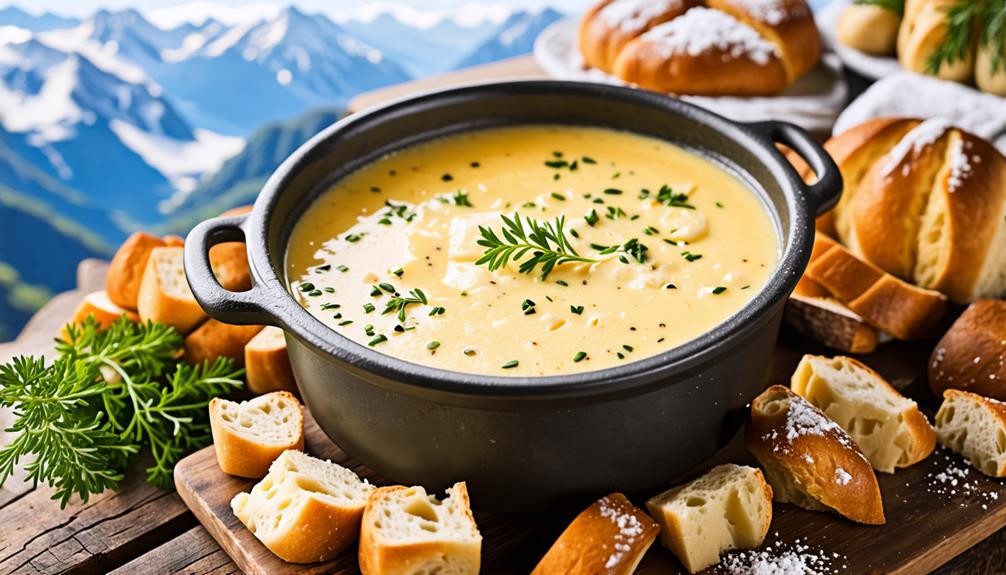
When you think of Swiss fondue, the traditional ingredients that come to mind include Gruyère and Emmentaler cheeses, combined with wine and garlic. This delicious blend not only creates a rich flavor but also sets the stage for a communal dining experience. As you gather around the caquelon, the fun truly begins as everyone enjoys dipping their chosen accompaniments into the bubbling cheese.
Traditional Ingredients and Preparation
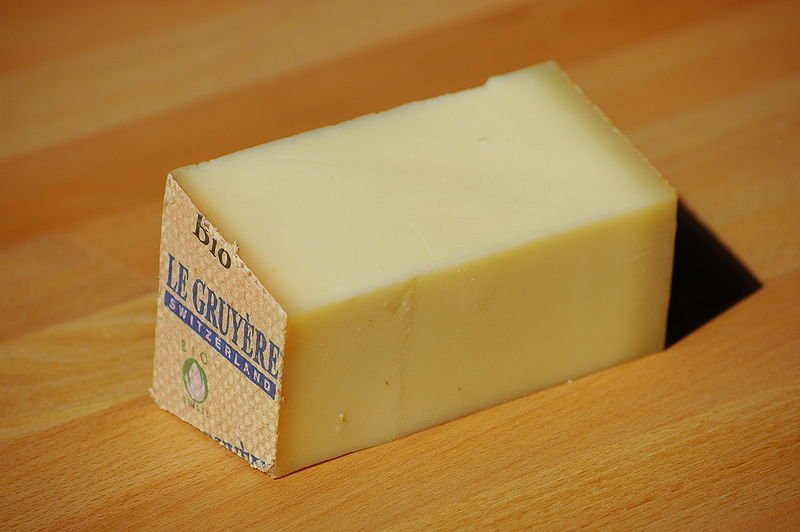
Traditional Swiss fondue features a delightful blend of Gruyère and Emmental cheeses, creating a rich and flavorful experience. To prepare this iconic dish, you'll need a few crucial ingredients and equipment. The cheeses are melted in a caquelon, an earthenware pot designed for even heating, often over a portable stove called a réchaud.
Here's a quick look at the key components:
| Ingredient | Purpose |
|---|---|
| Gruyère cheese | Provides a nutty flavor |
| Emmental cheese | Adds a creamy texture |
| Dry white wine | Enhances melting and flavor |
You'll also mix in garlic and a touch of flour for consistency. A common ratio for the cheese blend is equal parts Gruyère and Vacherin Fribourgeois, a blend known as "moitiés-moitiés." Once your mixture is bubbling, serve it with crusty white bread, boiled potatoes, and pickles. Remember, the fun lies in using long forks to dip your bread into the bubbling cheese fondue, making it a truly interactive experience. Enjoy the melting cheese as you savor the flavors of this traditional Swiss dish!
Communal Dining Experience
Gathering around a caquelon for fondue creates a warm and inviting atmosphere that encourages connections and conversation among diners. This communal pot transforms a meal into a lively gathering, where you can enjoy the rich flavors of melted cheese while engaging with friends and family. The act of dipping bread into the gooey cheese isn't just about satisfying hunger; it's an interactive dining experience that fosters bonding.
As you skewer chunks of bread, you'll find yourself laughing and sharing stories, making every moment memorable. The playful tradition surrounding lost bread—considered bad luck—adds an element of fun that brings everyone closer together. You might even face a light-hearted penalty if you lose a piece!
Fondue parties are a cherished social event in Switzerland, particularly during the cold winter months. The enticing aroma of melted cheese fills the air, inviting everyone to gather around the table. This sensory experience enhances the communal aspect of sharing food, allowing you to savor not only the delicious cheese but also the joy of togetherness. So, grab your skewer, dip in, and enjoy the delightful interaction that fondue brings!
Varieties of French Fondue
French fondue offers a delightful array of varieties, each showcasing unique cheese combinations and regional flavors that enhance the communal dining experience. One of the most popular types is fondue Savoyarde, which traditionally combines Gruyère, Comté, and Beaufort cheeses. This distinct mix creates a rich flavor profile that differentiates it from its Swiss counterparts.
In preparing French fondue, cheese is melted with garlic and dry white wine, following a method similar to Swiss fondue but with local variations in cheese selection. Depending on the region, variations may include cheeses like Reblochon or Abondance, reflecting local cheese production and culinary traditions.
The essence of French fondue lies in its communal dining aspect, inviting diners to share the experience. As you skewer and dip bread or vegetables into the bubbling cheese pot, you partake in a time-honored tradition that promotes togetherness. Fondue Savoyarde has become a cherished dish, not only in the Alps but also in homes and restaurants across France, making it a beloved choice for social gatherings.
Unique Italian Fondue Approach
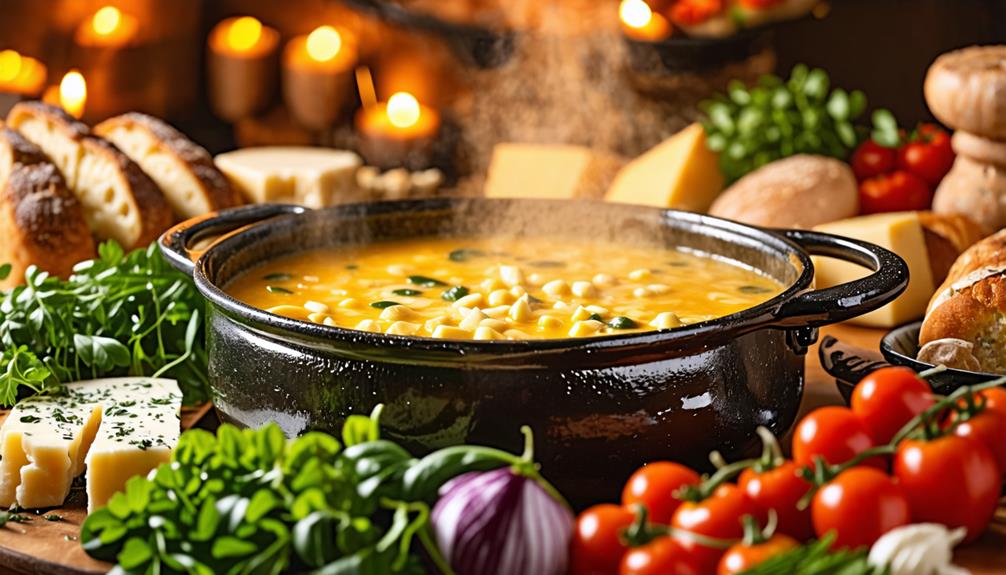
While fondue is often associated with Swiss and French styles, Italian fondue, or Fonduta, offers a distinct approach that highlights the creamy richness of Fontina cheese. This unique style focuses on creating a savory custard-like dish rather than the typical melted cheese experience you might expect. Unlike its Swiss counterparts, Fonduta doesn't use wine or flour; it relies on butter, milk, and egg yolks to achieve its lighter consistency.
The preparation emphasizes the quality of Fontina cheese, renowned for its excellent melting properties, which enhances the overall experience. Fonduta is often accompanied by crusty bread, vegetables, and cured meats, making for a diverse and satisfying meal.
Here's a table summarizing the differences:
| Aspect | Swiss/French Fondue | Italian Fondue (Fonduta) |
|---|---|---|
| Main Cheese | Gruyère, Emmental | Fontina |
| Consistency | Thick and melted | Savory custard-like |
| Ingredients | Wine, flour | Butter, milk, egg yolks |
| Accompaniments | Bread, vegetables | Crusty bread, meats, veggies |
Italian fondue celebrates rich culinary traditions while offering a delicious alternative to traditional melted cheese experiences.
Cultural Significance of Fondue
Fondue embodies the spirit of togetherness in Swiss culture, turning meals into shared experiences that foster connection and joy among diners. Swiss cheese fondue symbolizes conviviality, inviting friends and family to gather around the pot, encouraging interaction and laughter, and transforming every meal into a celebration of unity.
Originating from shepherds who needed to use aging cheese and stale bread, fondue has evolved into a beloved dish representing nourishment and social bonding. Its status as a cultural icon was cemented during the 1964 International Exhibition in New York, where it was introduced to a global audience.
Fondue parties are now popular in urban settings, where lively gatherings abound with stories and shared moments. Playful traditions, like penalties for dropping bread in the pot, enhance the convivial atmosphere and strengthen community bonds. Each dip into the melted cheese is not just about savoring flavors but participating in a rich cultural experience that celebrates friendship, unity, and the joy of sharing a meal.
Fondue Traditions and Customs
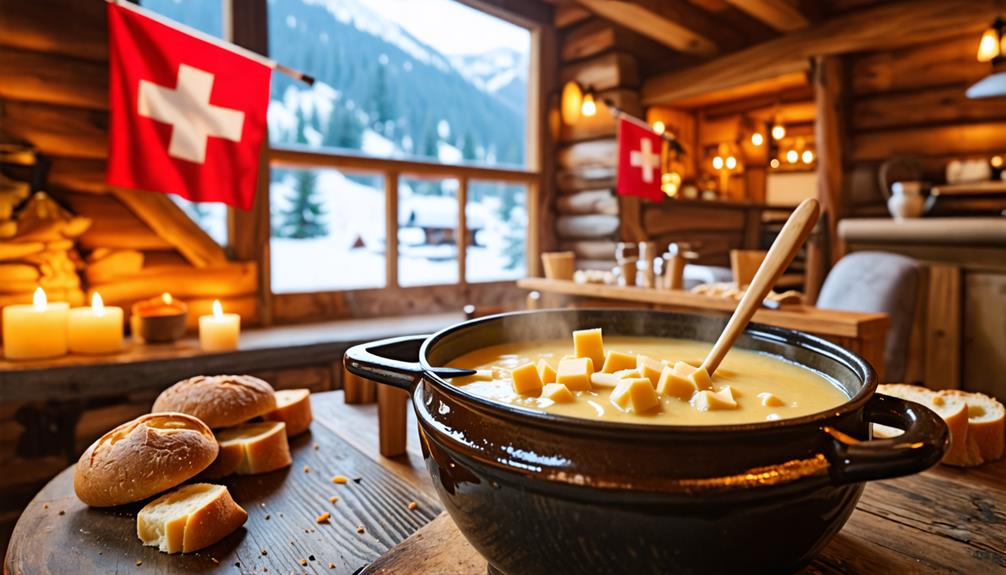
Fondue traditions and customs elevate dining into a lively, interactive experience that fosters togetherness. Skewering bread chunks and dipping them into bubbling cheese around a communal pot enhances a sense of unity, a practice rooted in the Swiss mountain regions where families and friends would gather to enjoy cheese with wine.
A playful custom adds to the fun: losing your bread in the pot is said to bring bad luck, often resulting in lighthearted penalties and laughter. The dark crust that forms at the bottom of the pot, known as la religieuse, is highly prized, sparking friendly competition for the last bits.
Typically enjoyed in informal settings, fondue emphasizes rural and traditional customs over fine dining. The aroma of bubbling cheese creates an inviting atmosphere, encouraging the sharing of stories and laughter, making each fondue gathering memorable.
Modern Adaptations of Fondue
Modern adaptations of Swiss cheese fondue blend traditional flavors with creative ingredients, expanding the dish's appeal to a broader audience. Today, you'll find numerous variations that maintain the essence of Swiss cheese fondue while incorporating diverse elements, making it more versatile than ever. Both high-end restaurants and casual dining spots showcase fondue's adaptability across different culinary landscapes.
Contemporary recipes cater to dietary needs by featuring lactose-free cheese and alternative dipping items like vegetables, bread, and even fruits. This inclusivity ensures that everyone can enjoy the communal dish regardless of dietary restrictions. The rise of fondue kits has also democratized the experience, encouraging families and friends to gather and recreate the fondue experience at home.
Innovations such as chocolate fondue and savory variations with meats and vegetables have broadened the traditional concept, attracting a wider audience. Whether you're enjoying a classic Swiss cheese fondue or a modern twist, these adaptations ensure that this beloved dish remains relevant and exciting in today's culinary scene.
Social Aspects of Fondue Dining

Gathering around a bubbling pot of melted cheese creates a lively atmosphere that strengthens social bonds among diners. Fondue dining is a communal experience where you skewer and dip an array of foods into a shared pot. This interactive ritual fosters engagement and encourages laughter, especially with playful customs like penalties for dropping bread in the cheese.
Fondue parties are celebrated in Switzerland, often accompanied by hearty sides like bread and pickles, enriching the dining experience. The act of swirling bread in bubbling cheese transforms meals into memorable social events, where storytelling and camaraderie flourish.
Whether you're enjoying fondue in a cozy chalet after skiing or at a casual gathering with friends, the meal inherently brings people together. The shared experience of dipping and chatting strengthens connections and reinforces community ties. Fondue isn't just about the food; it's about creating lasting memories and enjoying each other's company. So, next time you gather around a fondue pot, welcome the moment and relish the joy of shared experiences.
Conclusion
Swiss cheese fondue is more than just a delectable dish; it embodies a rich cultural heritage and a spirit of communal bonding. With its historical roots in Switzerland, this culinary tradition brings people together, fostering shared experiences over pots of melted cheese. Whether you indulge in a classic Swiss version or explore regional variations from France and Italy, fondue invites you to relish not only the flavors but also the joy of togetherness. So, gather your friends and family to celebrate this enduring culinary tradition!