What Country Has 400 Types of Cheese?
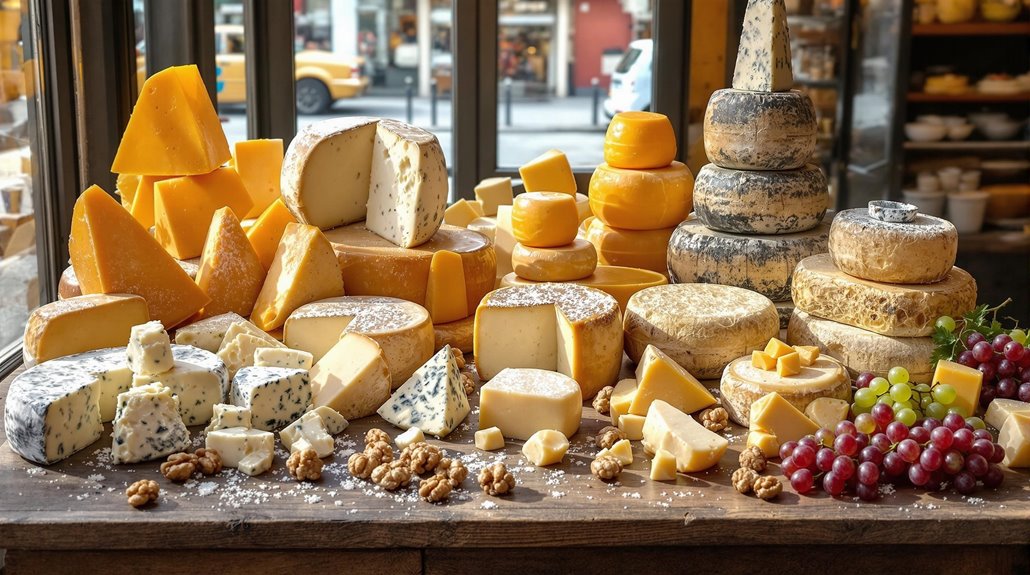
France produces around 400 distinct types of cheese, showcasing the country's rich culinary heritage and diverse regional traditions. You'll find everything from soft, creamy varieties in the north to firm mountain cheeses in the Alps, and distinctive blue cheeses aged in limestone caves throughout the central regions. While Britain actually makes more varieties (700), France's cheese-making proficiency spans centuries, with 44% of their production carrying prestigious AOP status. The story behind each French cheese reveals a fascinating world of terroir, tradition, and taste.
The Rich History of French Cheese Making
While many countries produce cheese, France stands as the undisputed champion of cheese-making tradition, with roots tracing back to ancient Mesopotamia. During the Middle Ages, French artisans plunged cheese-making into an art form, with influential figures helping shape the development of countless cheese varieties across the nation. Dedicated monks in monasteries discovered that salting the cheese enhanced its flavor while teaching local farmers proper techniques. You'll find that France's diverse climate and unique terroirs have played a pivotal role in crafting over 1,000 distinct types of cheese, each reflecting its region of origin.
Today, the AOP designation guarantees these cheeses maintain their authenticity and quality, protecting traditional production methods passed down through generations. With 96% of French people regularly enjoying cheese, it's clear that this culinary heritage remains deeply woven into the country's cultural fabric, making France the world's premier destination for cheese enthusiasts.
France's Leading Position in Global Cheese Production
France's dominant role in global cheese production stems directly from its rich heritage of artisanal cheese-making. With approximately 400 types of cheese crafted across the country's diverse regions, you'll find an unmatched range of varieties of cheese that showcase France's unique terroirs and climates. While France is renowned for its cheese varieties, British cheese production actually surpasses France with around 700 distinct types.
What's particularly impressive is that 44% of French cheese production carries the prestigious Protected Designation of Origin (AOP) status, guaranteeing you're getting authentic regional specialties.
The French passion for cheese is evident in their consumption habits - an astounding 96% of the population regularly indulges in cheese, consuming an average of 26.7 kg per person annually. This dedication to quality and tradition hasn't gone unnoticed globally, as France leads the world in cheese exports by value, cementing its position as the global cheese authority.
Regional Diversity of French Cheese Varieties
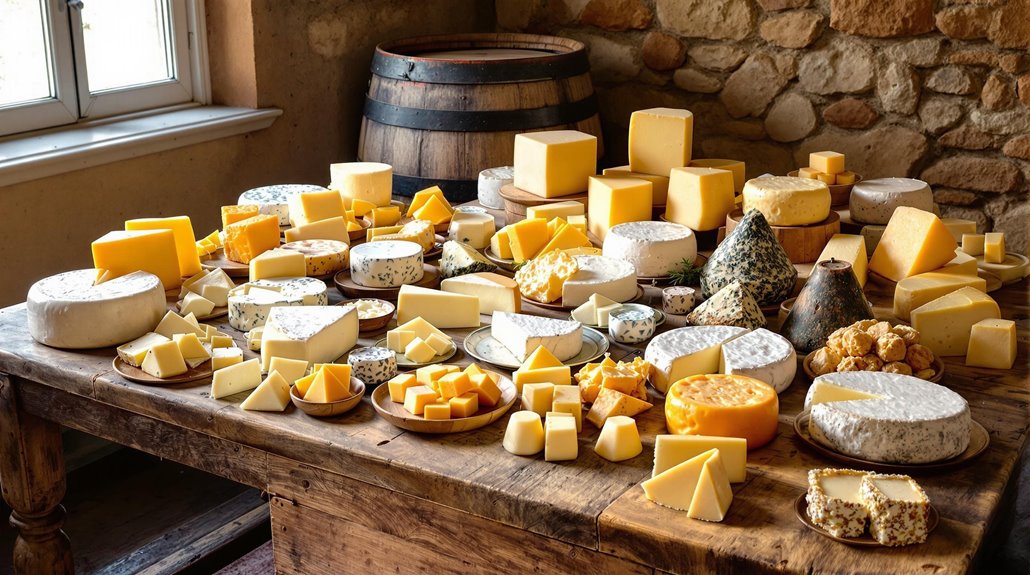
Throughout the varied terrain of France, you'll plunge into distinct cheese-making traditions that mirror each region's singular character and setting. The country's 400 types of cheese reflect its diverse climates and geographical features, with each region producing unique varieties that can't be replicated elsewhere. When you immerse yourself in French cheese production, you'll uncover that local environments directly influence taste, texture, and quality.
- Northern regions specialize in soft, creamy cheeses shaped by cool climates
- Alpine areas produce firm mountain cheeses using rich summer milk
- Central regions craft distinctive blue cheeses in limestone caves
- Mediterranean zones create sheep's milk cheeses suited to arid conditions
- Western coastal areas utilize sea-salted traditions for unique flavors
The AOP certification protects 44% of these regional specialties, ensuring you're savoring authentic French cheese crafted according to traditional methods. In the Alsace region, Munster cheese making dates back nearly a thousand years, with monks developing the distinctive orange-rinded delicacy in their monastery cellars.
Understanding French Cheese Classification Systems
The classification of French cheeses follows three distinct systems that help you understand their origin and production methods. You'll find cheeses categorized as farm-made, artisanal, or industrial, each reflecting different production scales and techniques. Additionally, France's prestigious AOP label designates 44% of their cheeses, guaranteeing specific geographical origins and traditional production methods.
When you're exploring French cheeses, you'll notice that many AOP varieties, including famous blue cheeses, showcase unique characteristics tied to their terroir. While most French AOP cheeses exported internationally use pasteurized milk, Roquefort stands as a notable exception. Understanding these classification systems helps you appreciate the rich heritage and quality standards that make French cheese production exceptional, from small farmstead varieties to renowned regional specialties like Tome des Bauges and Valençay.
The Role of Terroir in French Cheese Making
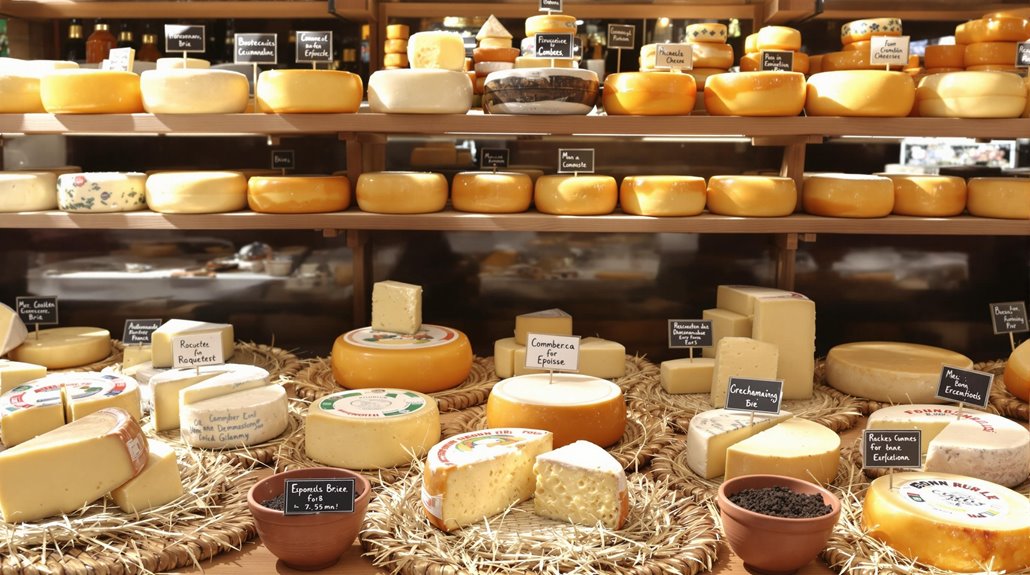
Building on France's classification systems, terroir shapes every aspect of French cheese making - from the specific grasses that feed the livestock to the microorganisms in aging caves. When you taste French cheese, you're experiencing the unique combination of geography, climate, and traditional practices that define each region's distinct flavors.
- Local soil composition affects the nutrients in grass eaten by dairy animals
- Regional weather patterns influence milk production and cheese aging
- Indigenous bacteria and molds create distinctive rinds and flavors
- Traditional aging caves provide specific humidity and temperature conditions
- Generational knowledge of local cheese making techniques
You'll find that terroir explains why Roquefort from Aveyron can't be replicated elsewhere, and why Camembert tastes different when it's made outside Normandy. It's this intimate connection between land and product that makes French cheese so special.
French Cheese Consumption Patterns and Culture
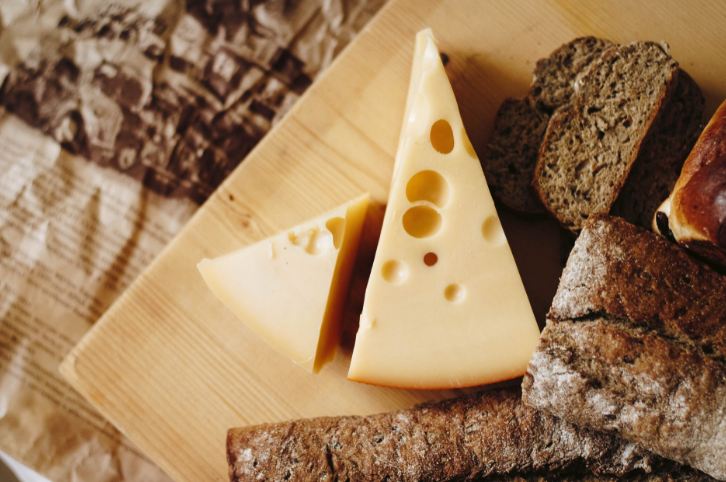
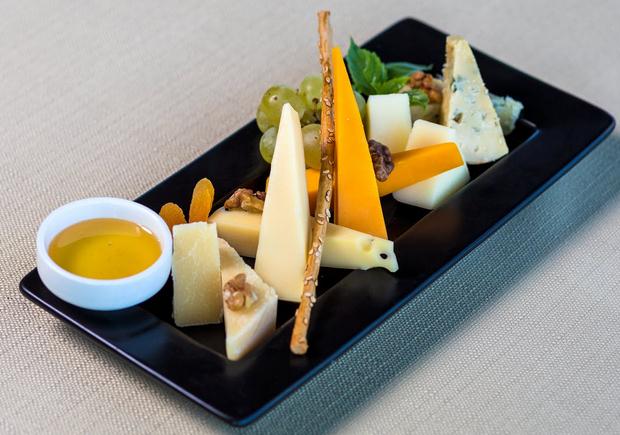
How deeply is cheese woven into French daily life? You'll find it's an essential part of almost every meal, with the French being among the world's largest consumers of cheese, averaging about 57 pounds per person annually. They typically serve it between the main course and dessert, arranged carefully on a wooden board with specific cutting tools for each variety.
In French culture, cheese isn't just food - it's an art form and social experience. You'll notice the French rarely eat cheese alone; instead, they savor it while engaging in conversation with family and friends. Most French households shop for cheese several times a week, visiting local fromageries where they can discuss selections with expert cheesemongers who know their customers' preferences and can recommend new varieties to try.