What Impact Does Cave Aging Have on the Flavor and Texture of Cheese?
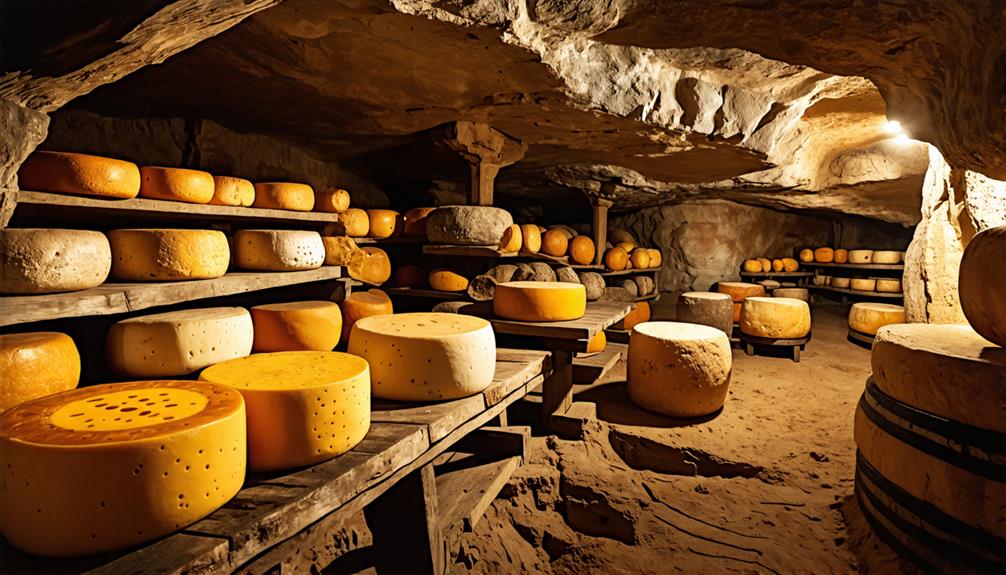
When considering cheese, the transformative effects of cave aging on its flavor and texture might not be immediately apparent. This unique aging method fosters an environment where specific bacteria and molds flourish, profoundly influencing the cheese's character. Cave-aged cheeses exhibit a fascinating array of flavors, from tangy to earthy, and textures, from creamy to firm. These characteristics are intricately linked to the cheese's origin and production methods, prompting deeper questions about the broader implications of this aging process.
Characteristics of Cave-Aged Cheese
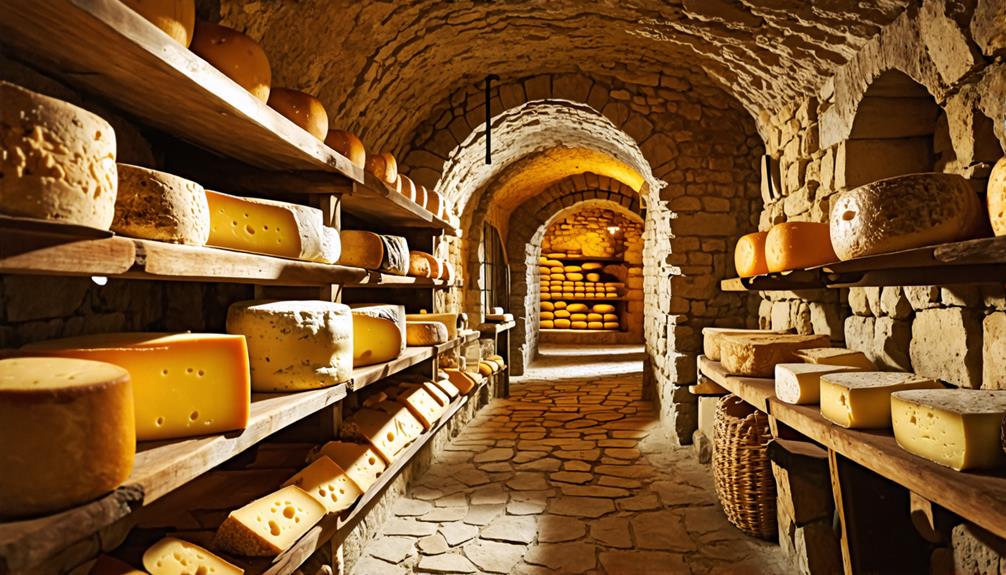
Cave-aging cheese brings out unique flavors and textures by creating ideal conditions for slow ripening in cool, humid environments. The specific temperature and humidity levels in caves allow cheese to mature evenly, enhancing its flavor profile and texture. Cave-aged cheeses often have a more complex taste, with earthy and nutty notes resulting from the thorough aging process.
The controlled cave environment also promotes the development of distinctive rinds. These rinds are formed by specific molds and bacteria that thrive in high humidity, contributing to varieties like bloomy and washed-rind cheeses. Each cheese's rind plays a critical role in its comprehensive flavor experience, often adding an extra layer of taste and aroma.
Cave aging also helps maintain optimal moisture levels, preventing spoilage while encouraging beneficial microbial activity. This balance is key to achieving the desired mouthfeel and richness in cave-aged cheeses. When you savor a piece of cave-aged cheese, you're not just tasting the dairy; you're experiencing a carefully crafted blend of flavors and textures that only a cave can provide.
Popular Cave-Aged Cheeses
Exploring the world of cave-aged cheeses reveals a variety of popular options, each showcasing unique flavors and characteristics shaped by their specific aging processes. For instance, Bleu Mont Bandaged Cheddar from Wisconsin delights with notes of caramel, mustard greens, walnuts, and mushrooms, all influenced by the specific humidity and temperature of its cave environment.
LaClare Chandoka™ impresses with its citrusy and buttery taste, demonstrating the complexity achieved when cheesemaking is combined with cave aging. Roelli Red Rock Cheese offers a fusion of American-style cheddar with a slight blue vein, enhancing both flavor and texture through its unique aging conditions.
Carr Cave Aged Cheddar is particularly notable for its earthy flavor and distinctive open-air cave rind, showcasing how specific aging environments can significantly impact cheese characteristics. Finally, Meister Cheese Company's Eagle Cave Reserve presents a rich, nutty profile with buttery caramel undertones, exemplifying the depth of flavor achieved through careful cave-aging techniques. Each of these cave-aged cheeses highlights the incredible diversity and artistry found in this fascinating aspect of cheesemaking.
Importance of Aging Cheese
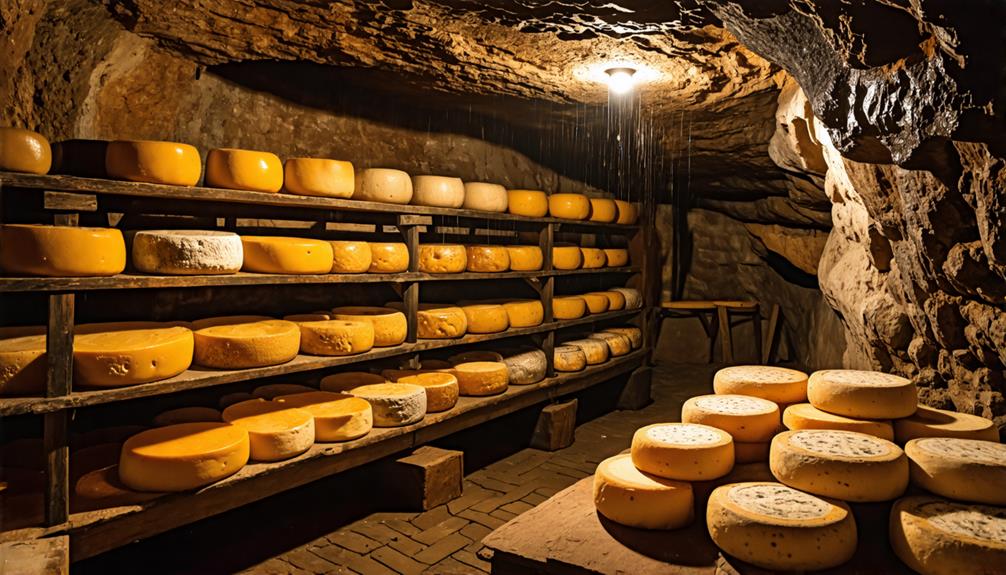
Aging cheese is crucial for enhancing its flavor and texture, allowing you to fully appreciate the complexity of each bite. As cheese matures, environmental conditions significantly influence its unique characteristics. Understanding the mechanisms behind flavor development and textural changes enriches your appreciation for this culinary art.
Flavor Development Mechanisms
The conversion of lactose into lactic acid during cheese maturation results in tangy flavors that deepen over time, highlighting the importance of this process in shaping a cheese's unique character. As you explore cheese aging, it is intriguing to observe the various mechanisms that contribute to flavor development.
Proteolysis, the breakdown of proteins during aging, introduces complex flavors, often reminiscent of smoky and nutty notes. Additionally, moisture loss in the cheese concentrates these flavors, enhancing the overall taste experience. Aging also facilitates the formation of calcium lactate crystals, which elevate umami flavors and add depth to aged cheeses.
In cheese caves, the controlled environment promotes slower ripening, allowing flavors to mature and evolve, creating profiles unique to each cheese type.
| Flavor Mechanism | Description |
|---|---|
| Lactose to Lactic Acid | Creates tangy, evolving flavors |
| Proteolysis | Breaks down proteins, adding complexity |
| Calcium Lactate Crystals | Enhances umami, contributing to richness |
| Moisture Loss | Concentrates flavors, enhancing taste |
Embrace the journey of flavors as they develop in your favorite aged cheeses!
Textural Changes During Aging
During cheese maturation, significant textural transformations occur that enhance both the taste and mouthfeel of the final product. The cheese ripening process is essential, as it allows for moisture loss, leading to firmer and denser textures. This variation is evident when tasting different cheeses: some may be crumbly, like aged cheddar, while others could be granular, such as Parmigiano-Reggiano.
Proteolysis plays a crucial role in this transformation, breaking down proteins and contributing to the creamy textures in soft cheeses like Brie. When examining cave-aged cheeses, you'll appreciate how these unique processes enhance the overall sensory experience.
Additionally, calcium lactate crystals can form during ripening, adding a delightful crunch and umami flavor that elevates the tasting experience. The interaction of molds and bacteria on the rinds also influences texture, creating distinctive surface characteristics that make each cheese unique.
In essence, as cheese matures, the interplay of moisture, texture, and flavors culminates in a product that's not just food but a sensory experience, inviting you to savor every bite.
Role of Environmental Conditions
Environmental conditions in cave maturation significantly influence the flavor and texture of cheese, creating a unique ripening process that enhances the overall tasting experience. These key factors directly contribute to the characteristics of cave-matured cheese:
- Temperature and Humidity: Consistent cool temperatures (around 50°F) and high humidity (above 90%) are crucial for proper ripening and flavor development.
- Microbial Activity: Unique molds and bacteria thrive in caves, enriching the flavor complexity as they interact with the cheese.
- Lactose Conversion: As cheese matures, extended time in the cave allows lactose to gradually convert to lactic acid, resulting in tangy flavors and rich textures.
- Controlled Airflow: The airflow in caves prevents spoilage and encourages the formation of desirable rinds, contributing both flavor and texture through specific mold growth.
These environmental factors create the ideal conditions for maturing cheese, ensuring moisture retention and allowing each wheel to develop its distinctive profile. Understanding these conditions highlights the craftsmanship behind your favorite cave-matured cheeses.
Wisconsin's Cheese Heritage
With over 180 years of cheesemaking history, Wisconsin stands as a cornerstone of the American cheese industry. The state produces an impressive one-quarter of all cheese made in the U.S. and is particularly renowned for its artisan varieties, which account for nearly half of the country's total.
Wisconsin cheesemakers employ techniques like cave aging to enhance the unique flavors and textures of their cheeses. This method provides controlled environments that contribute to the cheese's depth and complexity, improving both taste and quality. The state's commitment to excellence is evident, as Wisconsin has won more cheese awards than Italy, France, and Switzerland combined.
The 'Proudly Wisconsin Cheese' badge signifies a dedication to high standards and traditional methods, ensuring that every bite reflects the rich heritage of cheesemaking. When you enjoy a slice of Wisconsin cheese, you're experiencing not just flavor, but a legacy steeped in passion and craftsmanship that has shaped the American cheese landscape.
Aging Benefits for Flavor
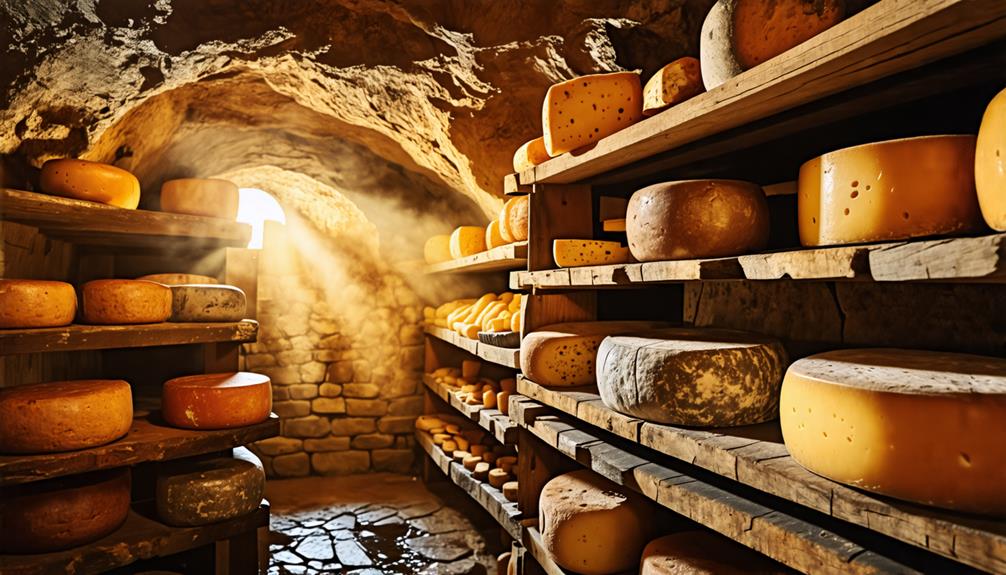
Cave maturation enhances cheese by developing a complexity and depth of flavor, turning each bite into a rich experience. Cave-matured cheeses offer unique flavors and textures due to their meticulous aging process. Here are four key benefits of cave maturation for flavor:
- Enhanced Flavor Complexity: Slow ripening allows intricate flavor development, resulting in a richer taste profile.
- Varied Textures: The cool, humid cave environment creates diverse textures, from creamy to crumbly, enhancing your tasting experience.
- Tangy and Nutty Notes: Lactose conversion to lactic acid produces tangy flavors, especially in cheeses aged over six months. Proteolysis introduces smoky and nutty undertones.
- Distinctive Rind Development: Specific molds and bacteria thriving during cave maturation contribute to the cheese rind's flavor, resulting in varieties like bloomy and washed-rind cheeses.
Production and Aging Process
The cheese production and aging process meticulously transforms milk into a flavorful and textured delicacy. It begins with the preparation and standardization of milk, followed by acidification using starter cultures that initiate fermentation. This acidification is crucial for flavor development during the aging process.
Next, curdling occurs with the addition of rennet, forming solid curds and separating whey. The resulting curds set the foundation for the cheese's final characteristics. For cave-aged cheeses, the curds are stored in controlled environments such as caves or cellars, where specific temperature and humidity levels are maintained. These conditions are vital for optimal ripening, which can span from days to years.
Throughout the aging process, molecular changes occur, creating distinct flavor profiles and textures in the final product. Techniques like washing and bandaging protect the cheese and encourage the development of specific rinds and flavors. Regular monitoring ensures the cheese matures to its desired state.
Ultimately, the careful production and aging process imparts each cheese with its unique character, making it a true culinary delight.
Varieties of Aged Cheeses
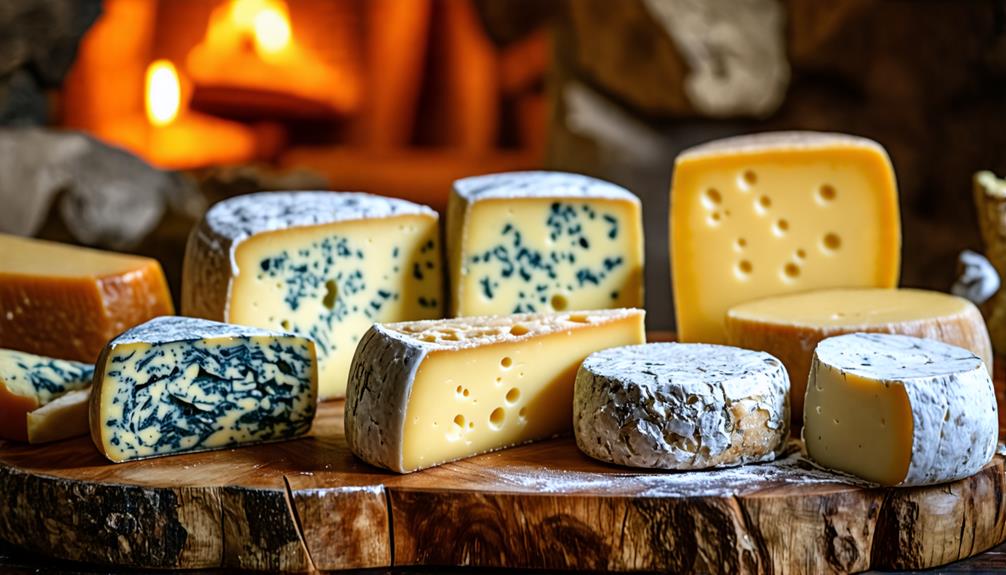
Matured cheeses offer a delightful range of flavors and textures, each telling a unique story shaped by its maturation process. The variety among mature cheeses is influenced by factors such as maturing time and techniques. Here are four notable types:
- Cheddar: This classic cheese can be matured from a few months to several years, developing rich flavors and a crumbly texture that deepen over time.
- Parmigiano-Reggiano: Matured for a minimum of two years, it features a granular texture and a nutty flavor profile, making it ideal for grating.
- Manchego: This Spanish cheese presents a spectrum of flavors; younger versions are mild and creamy, while matured forms become sharp and robust.
- Roquefort: Known for its distinct tang, this blue cheese matures for three to five months, developing its characteristic mold veins thanks to specific fungal cultures.
Cave-matured cheeses, such as Carr Cave Aged Cheddar, gain unique earthy flavors, while other varieties, like Meister Cheese Company's Eagle Cave Reserve, offer nutty, buttery notes, all due to the intricate maturing process.
Engaging With Cheese Culture
Engaging with cheese culture opens up a world of flavors, stories, and communities that every cheese lover can savor. By signing up for newsletters, you can receive delicious cheese recipes, pairing ideas, and the latest news on artisan cheeses. Exploring online cheese shopping directories allows you to uncover unique varieties like Asiago, Fontina, and Ricotta, each offering its own distinct flavor and texture.
Joining a community of cheese enthusiasts enables you to share experiences and participate in events that celebrate cheesemaking. Subscribing to updates from local cheesemakers and shops provides exclusive insights into their craftsmanship and special offers.
Participating in cheese tastings or workshops is a fantastic way to deepen your appreciation for the nuances of flavor and texture that come from different aging processes. You will learn how certain aging techniques can enhance or alter taste, providing a richer understanding of the cheese you enjoy. Engaging with cheese culture not only refines your palate but also connects you with others who share your passion, making every cheese experience even more rewarding.
Conclusion
Cave aging significantly enhances the flavor and texture of cheese, introducing complex flavors such as tangy and nutty notes, and resulting in firmer textures that make each bite enjoyable. Exploring popular cave-aged varieties will deepen your appreciation for the rich traditions of cheese-making, including those from Wisconsin. Immerse yourself in the world of aged cheeses to experience the unique taste crafted through this meticulous process. Your palate will surely thank you!