What Is Donkey Milk Cheese?
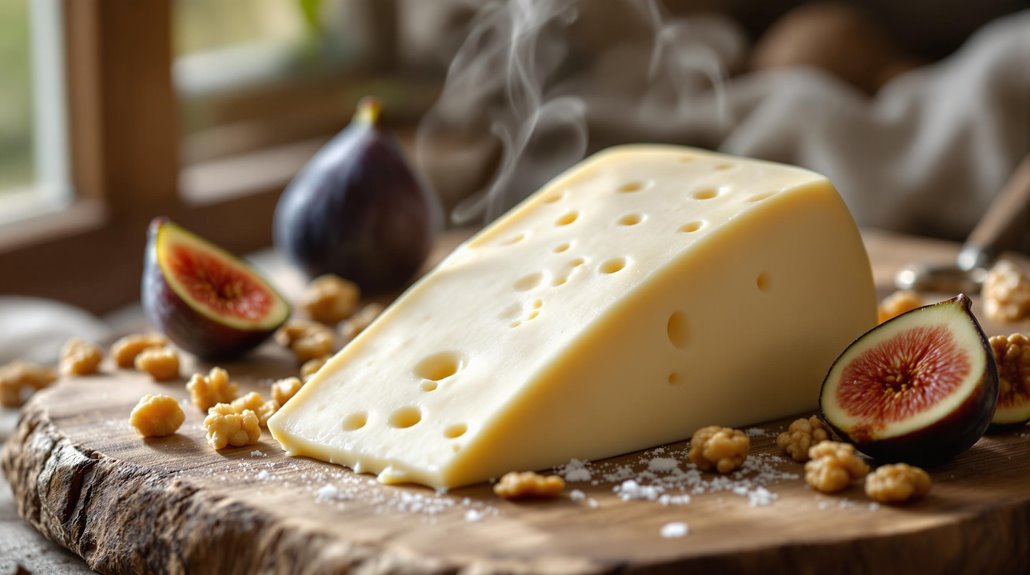
Donkey milk cheese, known as Pule, is the world's most expensive cheese produced exclusively in Serbia's Zasavica Special Nature Reserve. You'll find it's made from a unique blend of 60% donkey and 40% goat milk, requiring intensive hand-milking of Balkan donkeys three times daily. At $1,700 per pound, this rare delicacy mirrors human breast milk's composition and offers exceptional health benefits. The captivating path from humble donkey milk to luxury cheese reveals an extraordinary story of Serbian innovation.
The Origins of Pule in Serbian Farmlands
While many luxury foods have glamorous origins, pule cheese emerged from a humble conservation effort in Serbia's Zasavica Special Nature Reserve. You'll find this unique story begins with former MP Slobodan Simić, who founded the reserve to protect the endangered Balkan donkey breed. His conservation project unexpectedly led to a novel discovery in cheese production.
The reserve now houses 180 Balkan donkeys, which produce small amounts of precious milk that's transformed into the world's most exclusive cheese. What makes pule so scarce is the challenging process of collecting donkey milk - each animal yields only 1.5-2 liters daily. To produce this distinctive cheese, farmers combine 60% donkey milk with 40% goat milk, creating a product that's become famous worldwide for its rarity and unique characteristics.
The milk is collected through manual milking methods that have remained unchanged since the 1700s, with each donkey being milked three times per day.
The Complex Art of Donkey Milk Production
Although donkeys have been valued for their milk throughout history, their modest daily output of just 1.5-2 liters makes production a challenging pursuit. Compare this to a cow's impressive 60-liter yield, and you'll understand why donkey milk is so precious.
At Serbia's Zasavica Nature Reserve, the art of producing donkey milk has been refined to a science. Female donkeys must be milked by hand three times per day, making the process incredibly labor-intensive. You'll find that Balkan donkeys require special care and attention to maintain consistent milk production. When you consider how much milk it takes to make cheese, the challenge becomes even clearer - donkey milk contains fewer solids than cow's milk, requiring vastly more raw material to produce each pound of pule cheese. This explains why the final product commands such extraordinary prices.
Unlike mixed-milk cheeses, donkey milk cheese cannot be blended with other animal milk varieties due to its unique composition and structure.
From Milk to Luxury: The Making Process
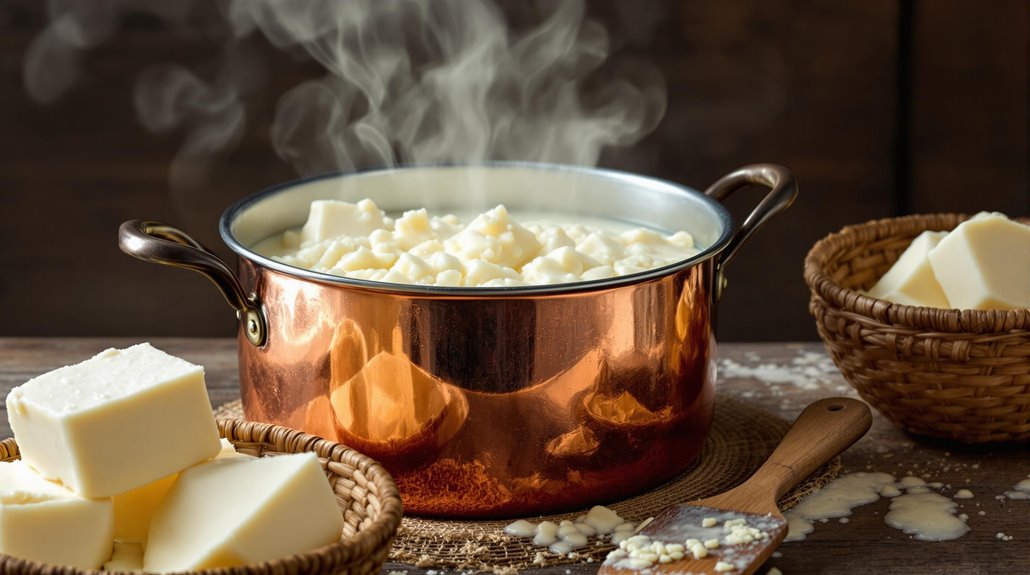
The conversion of donkey milk into pule cheese involves a precise blend of tradition and necessity. In Serbia, you'll find local cheesemakers carefully mixing donkey milk with goat milk in a 60-40 ratio to produce this luxurious delicacy. The process is incredibly demanding, requiring a substantial amount of milk - 6.6 gallons yield just 2.2 pounds of cheese.
To produce this rare cheese, cheesemakers follow these essential steps:
- Hand-milk donkeys three times daily
- Combine the precise ratio of donkey and goat milk
- Form the mixture into molds for 24 hours
- Age the cheese for one month
The labor-intensive nature and limited milk yield explain why this cheese commands such high prices. At $50 for a golf ball-sized portion, it's among the world's most expensive cheeses, with annual production costs reaching $100,000. Like the ancient Roman cheese makers, these artisans understand that proper aging and careful production methods are essential for creating exceptional dairy products.
Nutritional Benefits and Health Claims
Beyond its astronomical price tag and complex production process, pule cheese offers extraordinary nutritional advantages that help justify its luxury status. You'll find that donkey milk, the base ingredient used to produce this rare cheese, closely mirrors human breast milk in composition, making it exceptionally beneficial for your body.
Nature has blessed donkeys with the ability to create milk that's packed with vitamins, minerals, and proteins, while maintaining remarkably low levels of fat and cholesterol. The health benefits of this unique dairy product are impressive: it can strengthen your immune system and may even help slow down aging processes. This explains why historical figures like Cleopatra valued it so highly. When transformed into cheese, these nutritional properties are preserved, offering you a premium product that's not just a luxury indulgence, but also a potential health enhancer.
Global Demand and Market Exclusivity
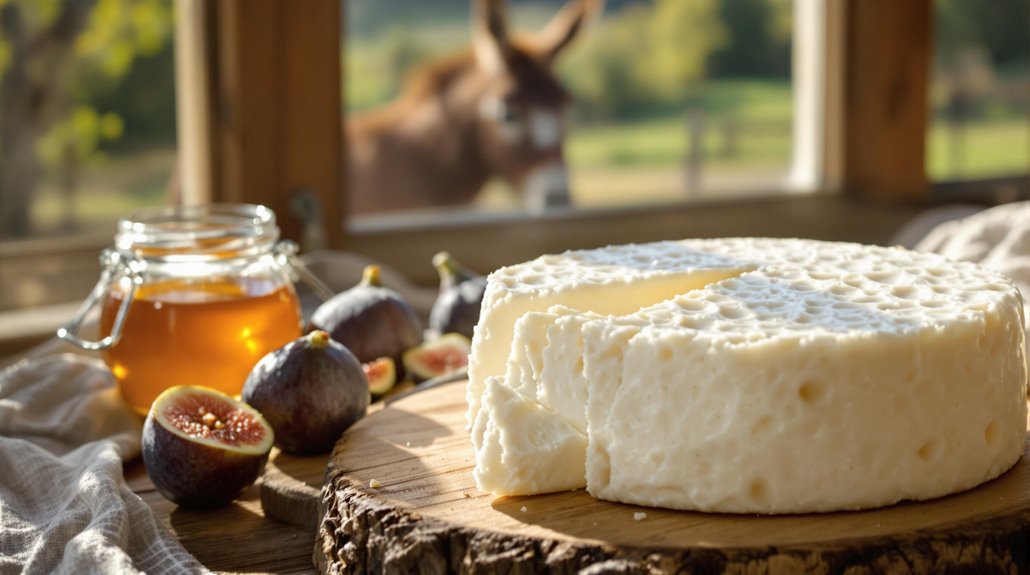
Commanding prices of up to $1,700 per pound, pule cheese stands as one of the world's most exclusive dairy products, with its production confined to a single location - Serbia's Zasavica Special Nature Reserve.
The cheese's extreme price tag and rarity stem from several critical factors:
- Each Balkan donkey can only produce milk in small quantities - around 300 milliliters daily
- The reserve maintains just 180 donkeys for production
- The milking process must be done entirely by hand
- Serbian export regulations strictly limit distribution
You'll find this worlds most expensive cheese primarily sought after by wealthy connoisseurs, particularly Russian businessmen and Ukrainian bankers. The combination of limited supply, labor-intensive production, and the unique characteristics of donkey milk has created an unparalleled level of market exclusivity, making pule truly one of the most coveted cheese in the world.
Cultural Impact on Serbian Gastronomy
Within Serbia's rich culinary terrain, pule cheese represents just one aspect of a deeply rooted gastronomic heritage. You'll find this rare donkey cheese alongside traditional delicacies like pihtije and Karađorđe's Schnitzel, showcasing Serbia's commitment to unique food production methods. While pioneers like Stevan Marinković and Jovan Vukadinović helped establish Serbia's modern dairy practices, including goats milk processing, it's the exclusive pule that's captured international attention.
The Serbian parliament has recognized the significance of preserving these culinary traditions, which often pair perfectly with the country's famous fruit brandy, rakija. From komplet lepinja to artisanal cheeses, Serbia's gastronomic realm reflects centuries of cultural evolution, with each dish telling a story of local ingenuity and time-honored preparation techniques passed down through generations.