What Is the History of Velveeta?
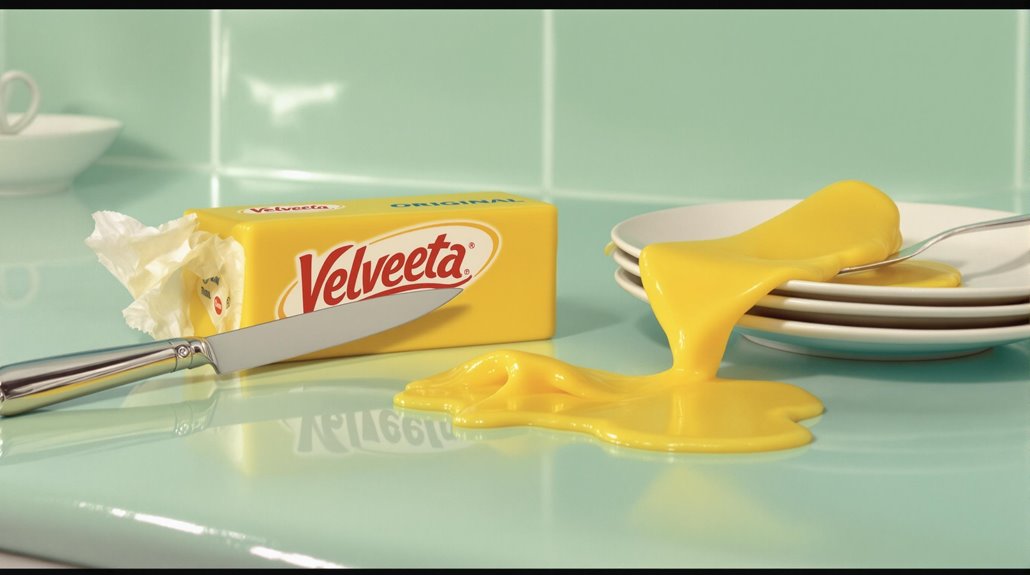
Velveeta's story begins in 1918 when Swiss cheesemaker Emil Frey created it at Monroe Cheese Company in New York. He invented it as a way to salvage broken wheels of Swiss cheese by adding whey for a smoother texture. Kraft Foods bought Velveeta in 1927 and transitioned it into a household name. While it started as real cheese, today's version is classified as a "cheese product" - an odyssey that reveals fascinating changes in American food culture.
The Birth of Velveeta in Monroe, New York
In 1918, Emil Frey, a Swiss cheesemaker working at Monroe Cheese Company in New York, created Velveeta while experimenting with ways to salvage broken wheels of Swiss cheese. As a Swiss immigrant working alongside grocer Jacob Weisl, Frey uncovered that by adding whey to broken cheese wheels, he could create a smoother, more cohesive product.
You'll find it interesting that Monroe Cheese Company, located just 50 miles from New York City, quickly recognized the potential of Frey's invention. What started as a solution to reduce waste became one of America's most recognized pasteurized process cheese spreads. The name "Velveeta" was chosen because of the product's velvety smooth texture. This accidental detection in Monroe would forever change how Americans consume and think about processed cheese. Processed cheese products like Velveeta became increasingly popular due to their convenience and extended shelf life compared to natural cheese varieties.
From Swiss Ingenuity to American Kitchen Staple
While Emil Frey's invention began as a cheese-salvaging method, Kraft Foods saw its broader potential and purchased the rights to Velveeta in 1927. The Swiss immigrant's creation at the Monroe Cheese Company evolved from a way to salvage broken cheese wheels into a revolutionary processed cheese product using emulsifying salts.
You'll find Velveeta's expedition fascinating, as it morphed from a local innovation to a national phenomenon. After Kraft Foods acquired the Velveeta Cheese Company, they:
- Expanded production to their factory in Covington
- Perfected the formula using milk proteins and cheese trimmings
- Marketed it as a nutritious American household staple
Following in the footsteps of James L. Kraft's groundbreaking cheese experiments in Chicago, Velveeta became another milestone in processed cheese innovation.
Marketing and Nutritional Claims Through the Decades
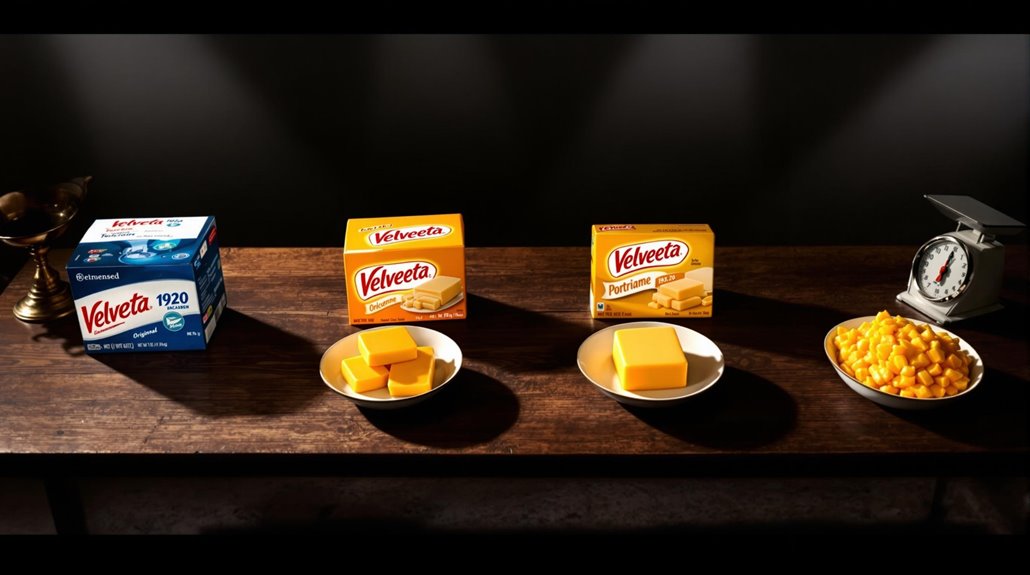
Three vital marketing tactics remodeled Velveeta from a simple cheese product into a nutritional heavyweight during the mid-20th century. First, Kraft secured the American Medical Association's approval in 1931, promoting Velveeta's whey content as essential for "firm flesh." Second, you'll find that the company commissioned a Rutgers University study to validate the product's nutritional value, strengthening its reputation as a superior alternative to American cheese.
In the 1950s, Kraft's marketing strategy targeted health-conscious mothers by positioning Velveeta as a made from real cheese option that'd benefit growing children. The company emphasized its cheese sauce's predictable consistency and mild flavor, distinguishing it from traditional varieties. This calculated approach, combined with claims about milk protein concentrate content, overhauled Velveeta into a trusted household name that promised both convenience and nutrition. Like other processed cheese products, Velveeta relied on common stabilizers such as cellulose gum and calcium chloride to maintain its signature smooth texture.
The Evolution of Velveeta's Formula and Classification
Velveeta's migration from real cheese to a processed cheese product marked a significant shift in its 100-year history. Originally made from real cheese, Velveeta underwent substantial formula changes that eventually led the FDA to require Kraft to stop labeling it as a cheese spread.
The metamorphosis involved three key changes:
- Replacing real cheese with whey protein concentrate
- Adding milk protein concentrate as a primary ingredient
- Incorporating various preservatives and additives
You'll find that today's Velveeta bears little resemblance to its original formula. The switch to cheaper ingredients, particularly imported milk protein concentrate, has sparked debates about the product's classification and nutritional value. While you might still enjoy its familiar taste and texture, it's important to understand that what you're eating isn't technically cheese anymore.
Impact on American Food Culture and Modern Usage
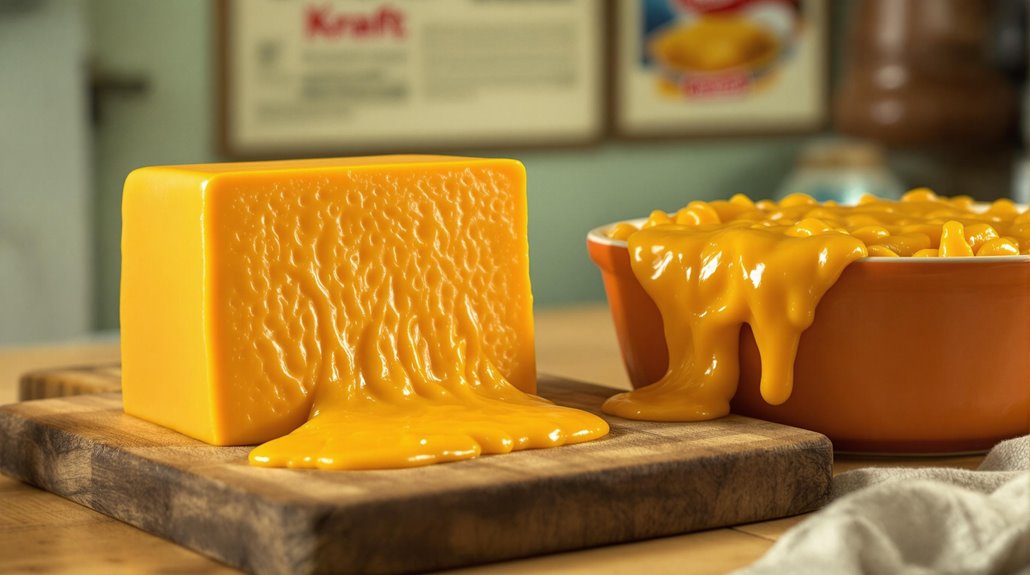
Despite its shift away from real cheese, the influence of Velveeta on American food culture has been significant and enduring. What started as a product made from mostly Swiss cheese at the Cheese Factory in Monroe has altered into a household name that's shaped how Americans cook and eat. You'll now find Velveeta in countless recipes across the United States, from classic macaroni and cheese to popular queso dip variations.
While some may criticize it for being a cheese product rather than real cheese, its convenience and reliable melting properties have secured its place in American kitchens. Today, when you know Velveeta's versatility in cooking, you understand why it's become such a staple. Its influence extends beyond individual households, contributing to a broader shift toward convenient, shelf-stable food options in modern American cuisine.