What Is the Legend Behind Stilton, the Blue Cheese With a Protected Name?
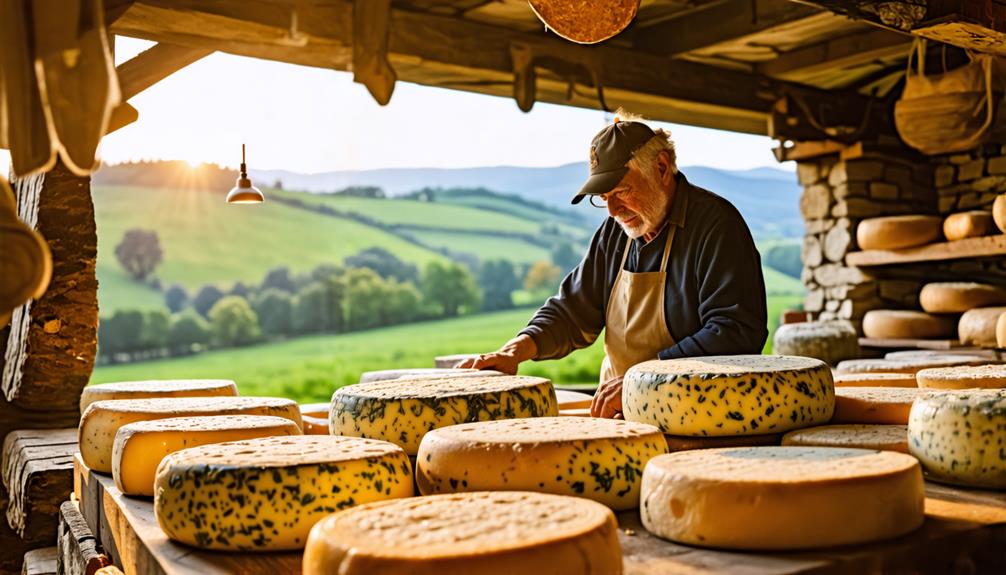
Stilton cheese, often referred to as the 'aristocrat of cheeses,' has a rich history rooted in a quaint village in England. Its rise from a local delicacy to an internationally celebrated culinary staple began in the 18th century, particularly at an inn frequented by travelers. What sets Stilton apart is its Protected Designation of Origin (PDO) status, which ensures its legacy and quality are preserved. Delving into its history reveals intriguing tales that define this iconic cheese, including the secrets behind its distinct blue veins.
Historical Origins of Stilton
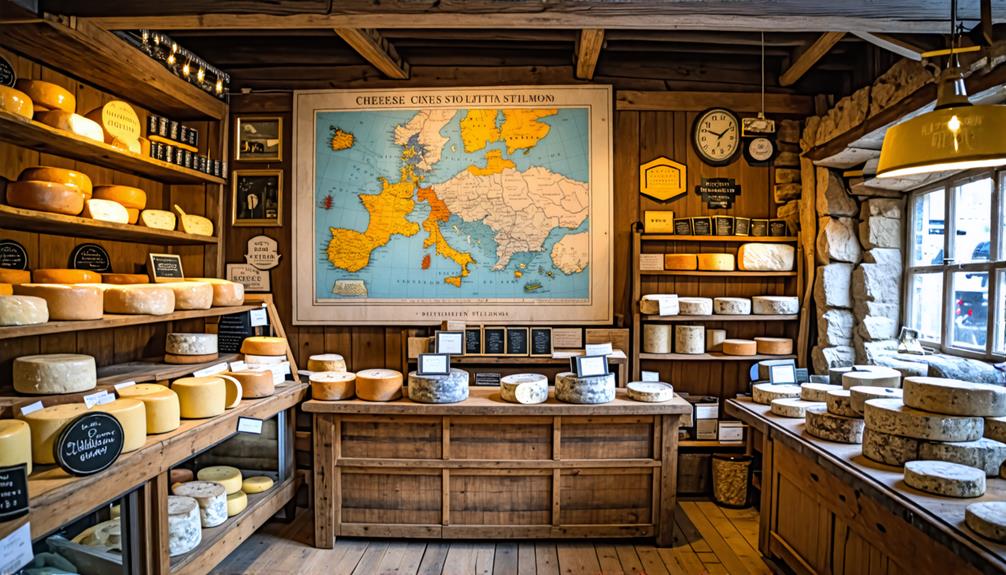
Stilton cheese has its origins in the village of Stilton, historically located in Cambridgeshire, England. It gained prominence in the 18th century, particularly among travelers who frequented The Bell Inn, a well-known rest stop where the cheese was recognized for its rich flavor and distinctive blue veins. The earliest documented reference to Stilton cheese dates back to 'The Forme of Cury' around 1390, but its production became notably significant in the early 1720s. Contrary to popular belief, historical records indicate that Stilton cheese was indeed produced in the village, not merely sold there.
In 1724, Daniel Defoe, the renowned writer, likened Stilton to 'English Parmesan,' further establishing its reputation in English cuisine. To protect the cheese's heritage and quality, the Stilton Cheesemakers Association was formed in 1936. This led to the awarding of Protected Designation of Origin (PDO) status in 1996, which mandates that only cheese produced in specific regions of England can be marketed as Stilton. This rich history underscores the cheese's significance and enduring legacy in British culinary traditions.
Cultural Significance and Folklore
Stilton cheese, often referred to as the 'aristocrat of cheeses,' holds a distinguished place in English culture. Celebrated in literature and cherished as a festive delicacy since the 18th century, Stilton's rich history is intertwined with folklore. One notable legend centers around the Bell Inn in Stilton, where travelers first enjoyed its unique flavor. This historic coaching inn not only popularized the cheese but also established it as a symbol of Great Britain's culinary heritage.
Stilton's cultural significance goes beyond taste; it is a staple during Christmas celebrations and festive gatherings, epitomizing warmth and tradition. Writers like G. K. Chesterton and George Orwell have immortalized Stilton in their works, reinforcing its iconic status in British literature. The cheese's Protected Designation of Origin (PDO) status underscores its authenticity, ensuring that genuine Stilton is produced only in Derbyshire, Leicestershire, or Nottinghamshire. This protection preserves its history and heritage, making each bite a connection to England's vibrant culinary narrative. Enjoying Stilton means partaking in a rich cultural tapestry that spans centuries.
Types of Stilton Cheese
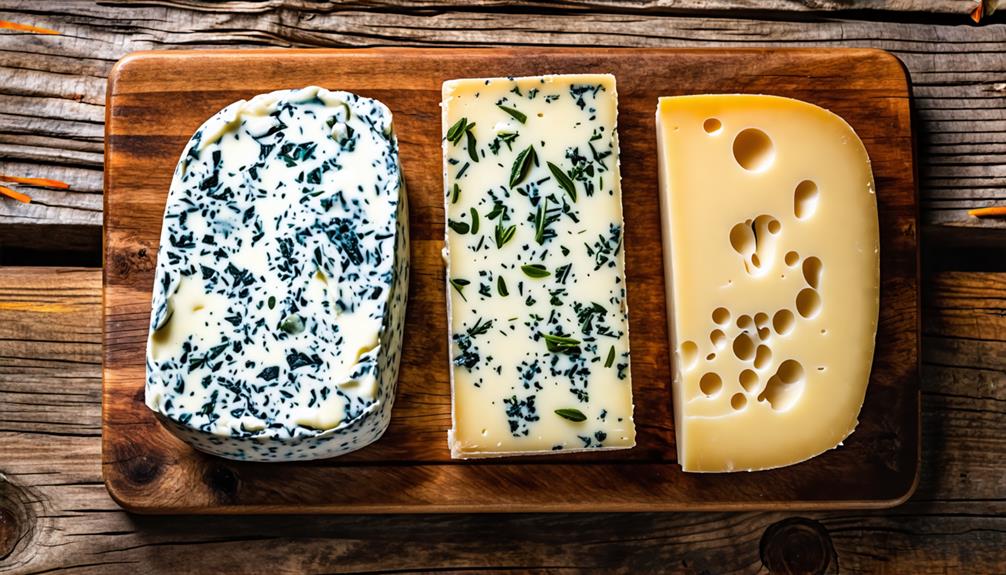
Stilton cheese boasts a rich heritage with two distinct varieties: Blue Stilton and White Stilton, each offering unique flavors and textures. Blue Stilton is famous for its striking blue veins and robust flavor, making it a favorite among cheese enthusiasts. This variety must be made in a traditional cylindrical shape, unpressed, and contain a minimum milk fat content of 48% in dry matter. The production is limited to six licensed dairies, ensuring the highest quality standards.
In contrast, White Stilton has a crumbly texture and a milder taste, appealing to those who prefer a subtler cheese experience. White Stilton typically matures for 4-6 weeks, while Blue Stilton requires a minimum maturation period of 9 weeks to develop its distinct characteristics. Both varieties hold PDO (Protected Designation of Origin) status, guaranteeing production only in Derbyshire, Leicestershire, or Nottinghamshire. Whether you opt for the bold Blue Stilton or the delicate White Stilton, you will appreciate the craftsmanship behind these exceptional cheeses.
Protected Designation of Origin
When you savor Stilton cheese, you're experiencing a product safeguarded by its Protected Designation of Origin (PDO) status. This designation ensures that Stilton must be produced in specific regions of England, adhering to rigorous production standards to maintain its quality. Understanding these regulations enhances your appreciation for the authenticity and craftsmanship in every bite.
PDO Status Explained
Stilton cheese's Protected Designation of Origin (PDO) status ensures that it can only be produced in specific regions of England—namely Derbyshire, Leicestershire, and Nottinghamshire. This designation, established in 1996, safeguards the cheese's authentic production methods and geographical origin from imitation. Only cheese made from pasteurized cow's milk and shaped in the traditional cylindrical form can be labeled as Blue Stilton.
The Stilton Cheesemakers Association plays a crucial role in maintaining high standards for Stilton cheese under PDO regulations. This association ensures that the unique flavor and traditional craftsmanship of Stilton are preserved. According to these regulations, only six licensed dairies are authorized to produce the cheese, thereby protecting its integrity and authenticity.
Regional Production Regulations
To guarantee authenticity and quality, only cheese produced in the designated regions of Derbyshire, Leicestershire, and Nottinghamshire can be labeled as Blue Stilton. This designation is protected by the Protected Designation of Origin (PDO) status, granted in 1996 to preserve the cheese's unique characteristics and prevent imitation.
To qualify as Blue Stilton, the cheese must adhere to specific production guidelines, including the use of pasteurized cow's milk and a traditional cylindrical shape. These regulations ensure that every wheel of Stilton cheese meets the high standards expected by consumers.
As of September 2016, only six licensed dairies are permitted to produce Blue Stilton, maintaining a controlled and high-quality production process. Notably, despite its name, Stilton cheese cannot be produced in the village of Stilton itself, underscoring the strict regional production regulations. By adhering to these guidelines, the integrity and rich heritage of Stilton cheese are preserved, allowing consumers to enjoy its distinctive flavor with confidence in its authenticity.
Manufacturing Process
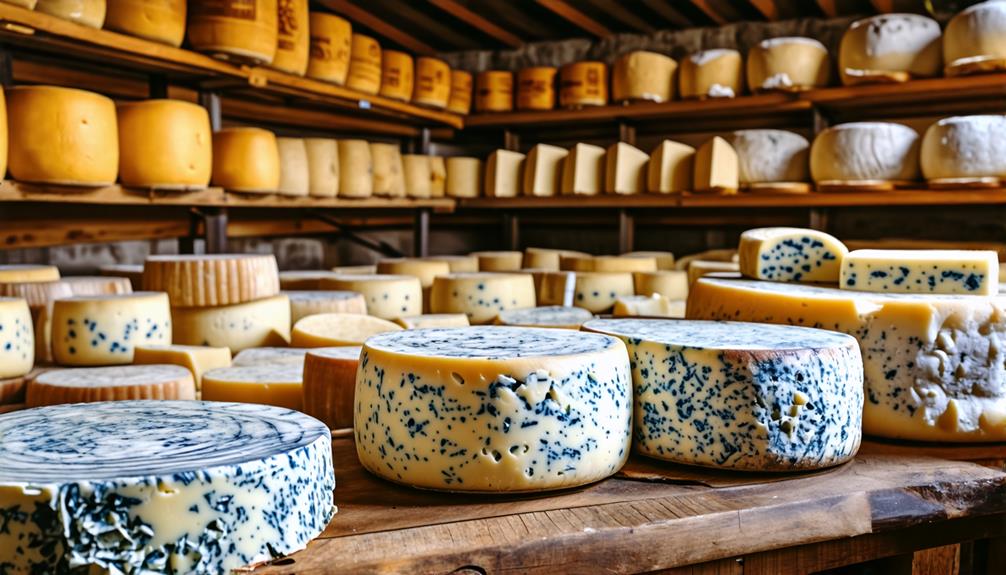
In producing Stilton cheese, pasteurized milk sourced exclusively from Derbyshire, Leicestershire, or Nottinghamshire is curdled to create its characteristic blue veins. The production process involves several key steps, beginning with curdling the milk, followed by draining and pressing the curds. To form the blue veins, cheesemakers pierce the cheese with stainless steel needles, allowing air to reach the interior. This air exposure fosters the growth of Penicillium roqueforti, the essential mold that imparts Stilton its unique flavor and texture.
Below is a detailed overview of the primary steps involved in the manufacturing process of Stilton cheese:
| Step | Description | Duration |
|---|---|---|
| Curdling | Milk is heated and rennet is added to form curds. | Immediate |
| Piercing | Cheese is pierced to introduce air for mold growth. | After pressing |
| Maturation | Cheese is matured for a minimum of 9 weeks. | 9 weeks minimum |
In accordance with the Protected Designation of Origin (PDO) guidelines, Stilton must retain a traditional cylindrical shape and develop a self-forming crust during maturation. Only six dairies are authorized to produce Stilton cheese, ensuring adherence to the traditional recipe and preservation of its heritage.
Nutritional Profile
When you enjoy Stilton cheese, you're not just savoring its rich flavor; you're also benefiting from its impressive nutritional profile. With a high protein content and a significant amount of calcium, this cheese supports bone health and overall well-being. Additionally, its vitamins and probiotics enhance its value, contributing positively to your diet.
Nutritional Benefits Overview
Stilton blue cheese offers a rich nutritional profile, providing high protein, calcium, and essential vitamins that support overall health. This cheese not only delights your palate but also delivers significant health benefits.
Here are three key nutritional benefits of Stilton cheese:
- High Protein: With around 20 grams of protein per 100 grams, Stilton cheese serves as an excellent protein source, aiding in muscle maintenance and various bodily functions.
- Rich in Calcium: Containing approximately 800 milligrams of calcium per 100 grams, Stilton cheese supports strong bones and teeth, crucial for comprehensive skeletal health.
- Essential Vitamins: Stilton is packed with vitamins A and B12, which are vital for maintaining healthy vision and supporting nerve function.
Additionally, Stilton cheese has a fat content ranging from 30% to 35%, contributing to its creamy texture and rich flavor. It also contains probiotics, which are beneficial for gut health. Incorporating Stilton cheese into your diet can enhance both your meals and your nutritional intake, making it a delightful choice for health-conscious cheese lovers.
Cheese Composition Analysis
Analyzing the nutritional profile of Stilton cheese reveals a robust composition that supports a balanced diet, featuring high protein, essential vitamins, and beneficial probiotics. Made from cow's milk, Stilton cheese contains approximately 20 grams of protein per 100 grams, making it an excellent choice for those looking to enhance their protein intake. The blue veins throughout the cheese not only add visual appeal but also signify its unique aging process and flavor.
Stilton cheese is rich in calcium, providing around 800 milligrams per 100 grams, essential for maintaining strong bones and teeth. However, its fat content typically ranges from 30% to 35%, contributing to its creamy texture and indulgent taste. This cheese also serves as a source of probiotics, promoting gut health and improving digestion. Stilton is a good source of vitamins A and B12, which are vital for overall health. With its impressive nutritional profile, Stilton cheese can be a delicious addition to your diet when enjoyed in moderation.
Culinary Uses and Pairings
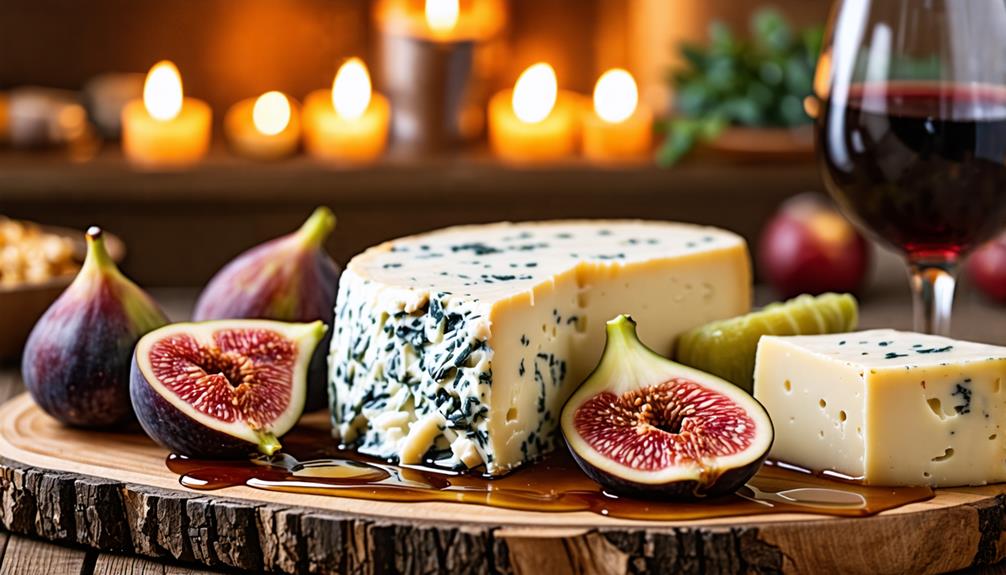
Indulging in Stilton blue cheese opens up a world of culinary possibilities, from enhancing festive cheese boards to elevating everyday dishes with its rich, creamy depth. Explore these versatile uses to make Stilton a standout in your kitchen:
- Cheese Boards: Serve Stilton with fruits like pears and nuts for a delightful pairing, perfect for festive occasions.
- Stilton Soup: Incorporate Stilton into creamy soups to elevate their flavors and impress your guests.
- Salad Toppings: Crumble Stilton over mixed greens or mix it into dressings to add a luxurious touch to your salads.
When it comes to pairings, Stilton shines alongside sweet wines like port or Madeira, enhancing its savory profile. You might also try it with barley wine for a unique flavor contrast. These culinary uses and pairings not only highlight the versatility of Stilton but also make it a crucial enhancement to your cooking repertoire. Welcome the robust flavors of Stilton and watch your dishes transform!
Similar Cheeses and Alternatives
Exploring the world of blue cheese reveals a variety of options that can serve as delicious alternatives to Stilton. While Blue Stilton is a PDO-protected cheese known for its distinct blue veins and robust flavor, other choices also offer rich, complex tastes. British blue cheeses like Oxford Blue and Shropshire Blue provide similar profiles but lack the PDO designation. For those seeking a traditional Stilton-like experience, Stichelton, a raw-milk blue-veined cheese, follows traditional methods but cannot be labeled as Stilton due to PDO restrictions by the European Commission.
Internationally, options such as Gorgonzola from Italy, Roquefort from France, and Danish Blue bring unique flavors to the table, offering diverse culinary experiences. In British supermarkets, you might find generic British Blue cheese, which won't possess the same characteristics or protections as true Stilton. Whether you prefer the classics or wish to explore new varieties, there's a blue cheese to suit every palate.
Conclusion
Stilton cheese is more than just a culinary delight; it is a historical artifact steeped in tradition. Originating from a small village in England, Stilton has grown to become a celebrated cheese with a Protected Designation of Origin (PDO) status. This means that authentic Stilton can only be produced in the counties of Derbyshire, Leicestershire, and Nottinghamshire using specific methods. Its distinctive blue veins and rich flavor make it a standout on any cheese board or in various dishes. Next time you savor Stilton, remember you're enjoying a piece of England's storied heritage.