What Was Yankee Cheese?
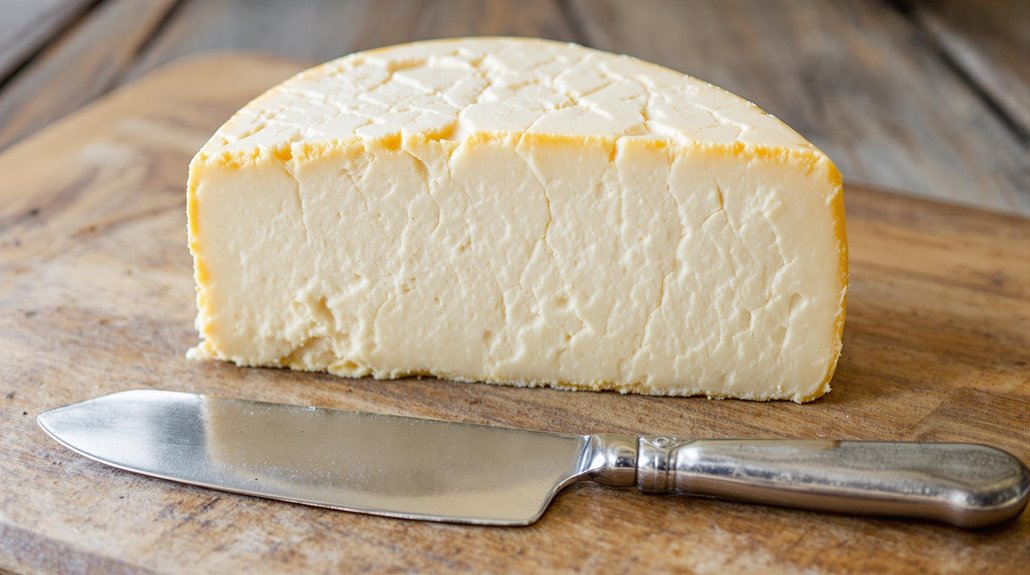
Yankee cheese was an early American variant of cheddar that you'd find in colonial New England. When settlers arrived, they adapted traditional English cheese-making methods using local ingredients and conditions to create their own unique dairy product. While you won't find authentic Yankee cheese in stores today, its legacy lives on through modern artisanal cheese makers who've revived these historical techniques. There's much more to uncover about this fascinating piece of American dairy history.
Historical Origins and New England Roots
As early New England settlers established their communities, they developed their own variant of cheese-making that came to be known as Yankee cheese. You'll find that this regional creation emerged as a distinct style that closely resembled cheddar cheese in its characteristics and production methods.
The term "Yankee cheese" reflected its deep roots in New England's dairy culture, though you might be interested to know that it wasn't always used in a complimentary way. Sometimes, people used it as a derogatory reference to American cheese. While the exact definition remained somewhat unclear throughout history, what's certain is that this cheese represented one of the earliest forms of cheese production in the American Northeast, showcasing how New England's dairy farmers adapted traditional cheese-making techniques to their local conditions.
Much like the early British cheese makers, these New England farmers initially produced cheese as a practical way to preserve their milk supply without refrigeration.
The Dutch Connection
While Yankee cheese itself was a New England creation, its name shares fascinating ties to Dutch culture and religious conflicts. You'll find that religious tensions led Catholics to mock Dutch Protestants as "cheese-eaters," while the Dutch fired back by calling Catholics "fish-eaters." Next time you hear someone use cheese-related slang, remember its historical roots in Dutch dairy culture.
The term "John Cheese" emerged from combining the Dutch names Jan and Kaas, used by Flemish mockers to tease the Dutch. This nickname may have evolved into the term "Yankee." Cheese today still influences cultural nicknames - just look at the term "cheese-head," which originally referred to Dutch people, likely inspired by the round shape of Edam cheese. The tradition of embracing cheese-related nicknames continues today, as seen when Wisconsin fans proudly adopted the Cheesehead hat nickname after Chicago Bears fans used it as an insult.
Making Traditional Yankee Cheese
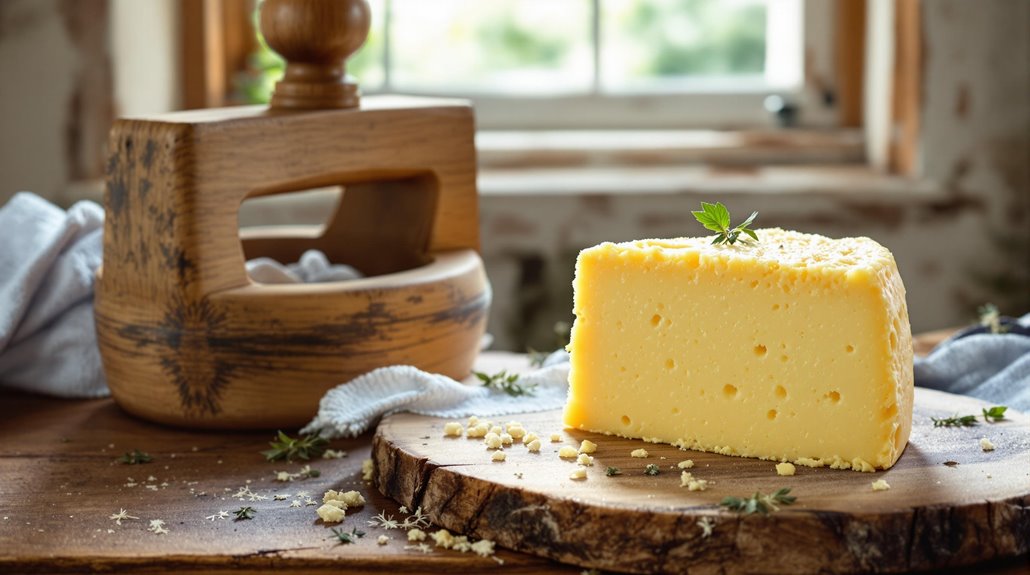
Traditional Yankee cheese emerged as New England's early contribution to American cheesemaking, closely resembling what we now know as cheddar. You'll find that colonial New Englanders developed this cheese variety as they adapted English cheesemaking methods to their new homeland.
If you're curious about making this historical cheese, dear friends, you'd follow a process similar to traditional cheddar production. While exact historical recipes are scarce, you can imagine colonists incorporating local ingredients and adding seasonings like black pepper to create their unique regional variation. The cheese's production was centered in New England, where it became an important part of early American dairy culture. Today, you won't find authentic Yankee cheese in stores, but its legacy lives on through the countless cheddar varieties produced across America. The New England colonies established themselves as America's first dairymen in the 1600s, setting the foundation for the country's cheese-making tradition.
Cultural Impact and Terminology
Beyond its production methods, Yankee cheese left a lasting mark on cultural terminology and social discourse. As an English compound noun, it reflected the complex trade relationships between New England and other regions. You'll find that cheese-related terms often carried deeper economic implications and religious undertones, as seen in how Catholics used "cheese-eater" to mock Dutch Protestants.
The emergence of "poor man's cheese" variants worldwide demonstrates how culinary diplomacy played a role in elevating common foods to respectable status. Like the Lebanese "Kechek el fouqara," these adaptations showed how communities converted necessity into cultural identity. Even terms like "cheese-head" and "John Cheese," originally referring to Dutch people, illustrate how dairy products shaped cross-cultural perceptions and social interactions in early American society.
Regional Variations and Development
How did Yankee cheese develop distinct characteristics across New England's varied terrains? You'll find that this early form of cheddar-like cheese emerged through artisanal production techniques that were unique to colonial New England. As settlers established themselves in different regions, they adapted their cheese-making methods to local conditions and available resources.
The culinary traditions of New England played an essential role in shaping Yankee cheese production, as communities developed their own variations of this staple food. You can trace how this cheese-making practice had a significant economic impact on local communities, becoming an important part of colonial trade and sustenance. While similar to traditional cheddar, Yankee cheese's development reflected the distinct regional characteristics of New England's early settlements, marking an important chapter in American cheese-making history.
Modern Interpretations and Uses
Contemporary artisans have revived Yankee cheese-making techniques, adapting them for modern tastes and production methods. You'll find that artisanal production techniques now blend traditional craftsmanship with modern food safety standards. Consumer preferences today lean toward authentic, heritage-inspired cheeses that tell a story.
- Small-batch producers market their Yankee-style cheeses as premium, locally-sourced products
- Marketing strategies often highlight the cheese's historical New England connections
- Artisan cheesemakers incorporate sustainable and organic practices
- You'll see these cheeses featured in high-end restaurants and specialty shops
- Food tourism experiences now include Yankee cheese-making demonstrations
These modern interpretations preserve the essence of traditional Yankee cheese while meeting contemporary standards. You can find these cheeses at farmers' markets, specialty stores, and even some major retailers who've recognized their growing appeal.
Legacy in American Cheese-Making
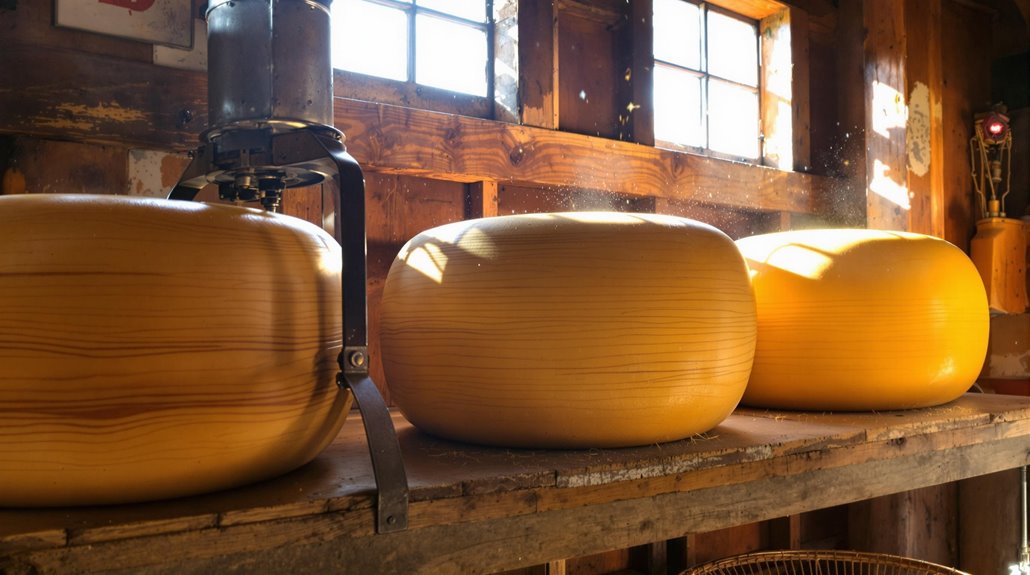
While Yankee cheese may have faded from common production, its influence has left an enduring mark on American cheese-making traditions. As one of New England's early cheese innovations, it helped establish the region's reputation for dairy production and laid the groundwork for future cheese-making projects.
You can trace the changing cultural perceptions of American-made cheese through Yankee cheese's course. Though sometimes used disparagingly as a synonym for American cheese, it represented an important step in growing commercial production. While its exact recipe remains unclear today, you'll find its legacy in the development of American cheddar-style cheeses. The term "Yankee cheese" serves as a reminder of how New England's dairy industry contributed to the foundation of American cheese-making, even as production methods and tastes have changed over time.