Why Is Cheese so Expensive in Japan?
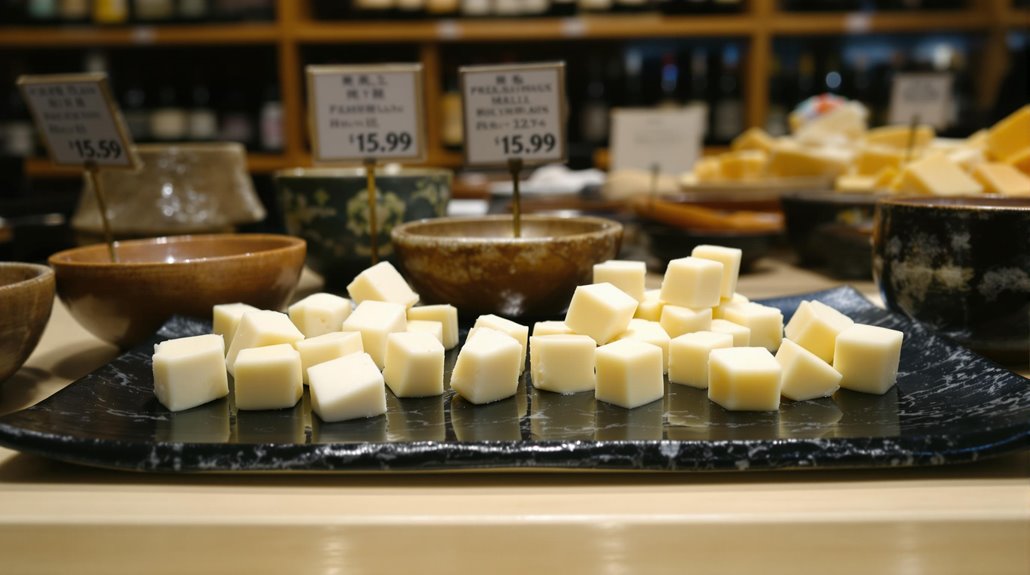
Cheese is expensive in Japan due to several interconnected factors affecting both domestic production and imports. You'll find that Japan's mountainous terrain limits dairy farming capabilities, while its humid climate makes it challenging to maintain healthy cattle. High import tariffs (often over 30%), strict quotas, and complex distribution systems drive up costs further.
The country's relatively new relationship with cheese also means limited domestic production knowledge. Comprehending these factors will help you traverse Japan's unique cheese market more effectively.
The Historical Relationship Between Japan and Cheese
Despite being a global culinary powerhouse, Japan's relationship with cheese hasn't always been smooth sailing. Unlike Western nations with centuries-old dairy farming traditions, you'll find that cheese in Japan remains relatively new to the cultural palette. The country's limited dairy farm infrastructure has historically struggled to meet domestic demand, forcing heavy reliance on imports.
This stands in stark contrast to China, where early cheese production can be traced back to the Tang dynasty period of 618-907 AD. Japanese people traditionally gravitate toward milder cheese varieties, reflecting a cultural preference that's shaped by generations of local cuisine.
This conservative approach to cheese consumption has influenced how the domestic market has developed. You'll notice that while Japan excels in many culinary areas, cheese production isn't one of its strong suits. Instead of being a dietary staple, cheese occupies a unique position as a premium product, often viewed more as a luxury than an everyday food item.
Understanding Japan's Dairy Industry Limitations
Although Japan boasts impressive technological advancements in many sectors, its dairy industry faces significant geographical and logistical constraints. You'll find that Japan's mountainous terrain leaves only about 12% of its land suitable for farming, making it challenging to maintain large dairy herds. This limited space directly impacts the country's ability to produce milk, a vital ingredient for cheese specialty products.
When it comes to dairy farming, Japan goes through additional obstacles. The humid climate makes it difficult to keep cows healthy and productive, while high feed costs cut into farmers' profits. These factors force Japan to rely heavily on imported dairy products, particularly cheese. The need to import, combined with strict quality control measures and complex distribution systems, contributes considerably to the high prices you'll see in Japanese markets. This stands in stark contrast to states like Wisconsin, where family-owned farms comprise nearly 96% of all dairy operations, ensuring stable domestic production.
Import Challenges and Trade Restrictions
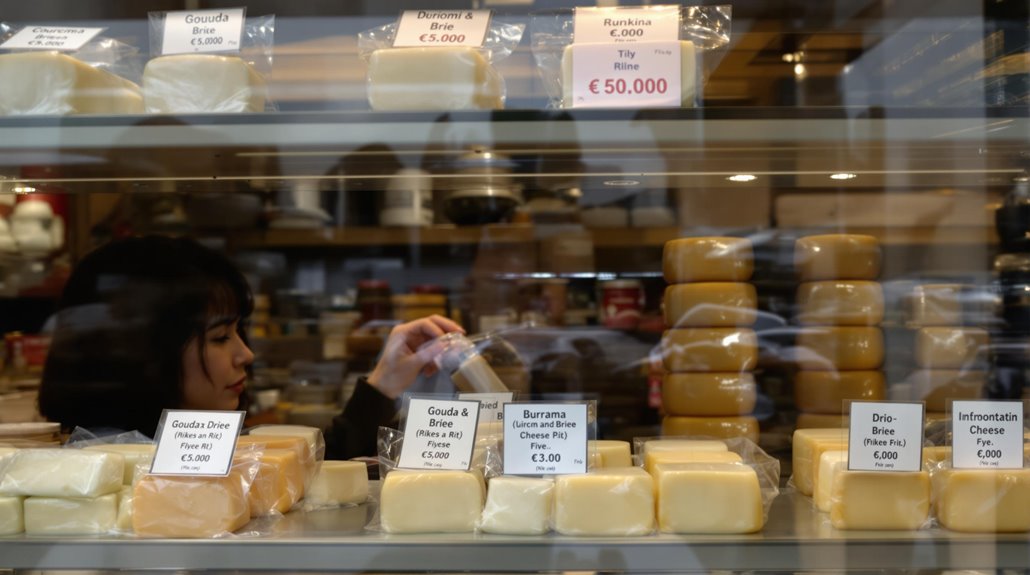
Japan's reliance on imported cheese brings additional cost-driving challenges through its complex web of trade restrictions and import regulations. You'll find that the country's tariff structure considerations substantially impact cheese prices, with rates often exceeding 30% on imported products. These protectionist policies debate centers around supporting domestic producers while managing the reality that local production can't meet demand.
Trade policy implications extend beyond just tariffs. You're dealing with strict quotas that limit supply and complex customs procedures that add costs at every step. The challenges don't end at the border - the underdeveloped distribution network for imported cheeses creates additional expenses. As a result, you're paying premium prices for cheese products that would cost considerably less in other developed nations. The growing demand for sustainable packaging options has added another layer of complexity to Japan's cheese imports, as 70% of consumers are willing to pay more for environmentally conscious products.
Where to Find Quality Cheese in Japanese Stores
Food enthusiasts seeking quality cheese in Japan have several reliable shopping options. You'll find premium selections at specialty stores like Seijo Ishii, National Azabu, and Kaldi, though prices tend to be higher. For more affordable cheese options, check out Niku no Hanamasa or Gyomu Super, where you can find quality British Wyke cheddar. Costco offers excellent value with its wide range of Gouda, Brie, and Goat cheese varieties.
While regular supermarket chains like Maruetsu carry limited selections, upscale stores like York Benimaru feature better imported cheese varieties. If you can't visit these stores in person, many retailers like Seijo Ishii and National Azabu offer nationwide delivery service availability. Just keep in mind that online orders might cost more than in-store purchases.
The Role of Consumer Preferences in Pricing
Consumer preferences in Japan have shaped a unique cheese market that strongly favors mild, processed varieties over traditional aged or strong-flavored cheeses. These cultural influences, similar to the aversion many Japanese have to strong-flavored foods, have limited the growth of a sturdy domestic cheese industry.
Without significant consumer demand for traditional cheeses, there's little incentive for subsidization policies that could help develop local production. The resulting dependence on imports leads to higher prices, as the market lacks the economies of scale needed to make these products more affordable. While consumer education efforts have helped some Japanese uncover and appreciate stronger cheeses, the overall preference for milder flavors persists. This limited market for traditional cheese varieties means you'll continue to pay premium prices for imported cheese products in Japan.
Domestic Production Vs International Imports
While domestic cheese production in Japan has grown over the years, the industry hasn't developed the proficiency or scale needed to compete with international producers. Without substantial economic subsidies, local manufacturers struggle to match the quality and variety of Western cheese-making traditions, forcing Japan to rely heavily on imports.
Supply chain inefficiencies and distribution network constraints further complicate the situation. You'll find that limited cold storage facilities and transportation challenges make it costly to maintain cheese quality throughout Japan. When combined with high tariffs on imported dairy products, these factors create a significant price barrier. The result is a market where you're paying premium prices for both imported and domestic cheeses, as Japanese producers can't achieve the economies of scale necessary to offer more competitive pricing.
Ways to Save Money on Cheese Purchases
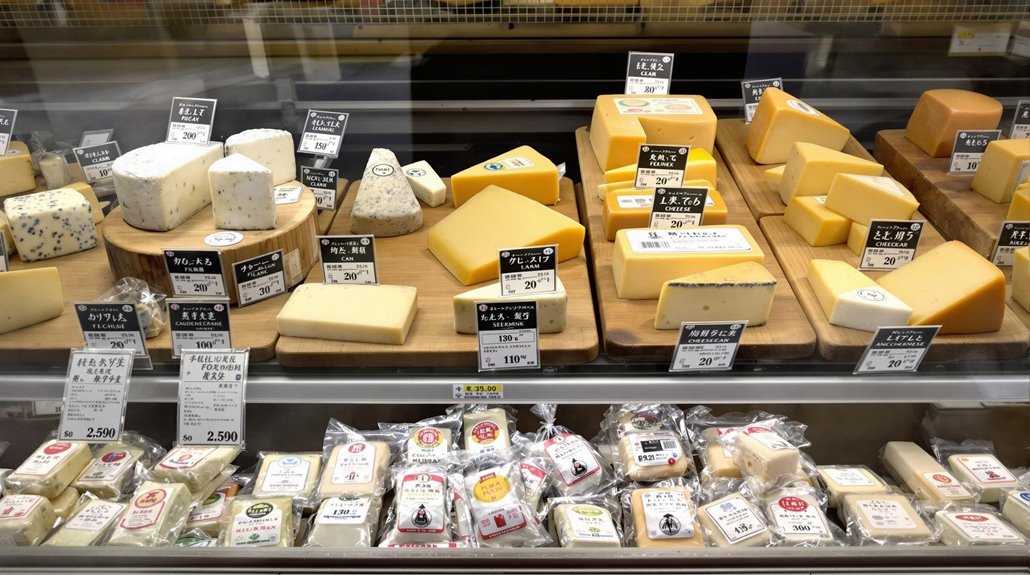
Several practical strategies can help you reduce your cheese expenses in Japan without compromising on quality. You'll find significant savings by shopping at regular supermarkets like Maruetsu, where cheese quality metrics remain reliable despite lower prices. Take advantage of membership programs and discount days at specialty stores like Kaldi and Seijo Ishii, which maintain proper refrigeration requirements for their products.
For even better value, consider buying in bulk at Costco, particularly for varieties like Gouda and Brie that have longer seasonal availability. Domestically-produced Japanese cheeses often cost less than imported options while meeting similar quality standards. If you're far from specialty stores, ordering online from retailers like National Azabu can be cost-effective, though it's worth comparing their in-store prices first to ascertain the best deal.