Artisan Cheese vs. Mass-Produced: Key Differences & Flavor Profiles
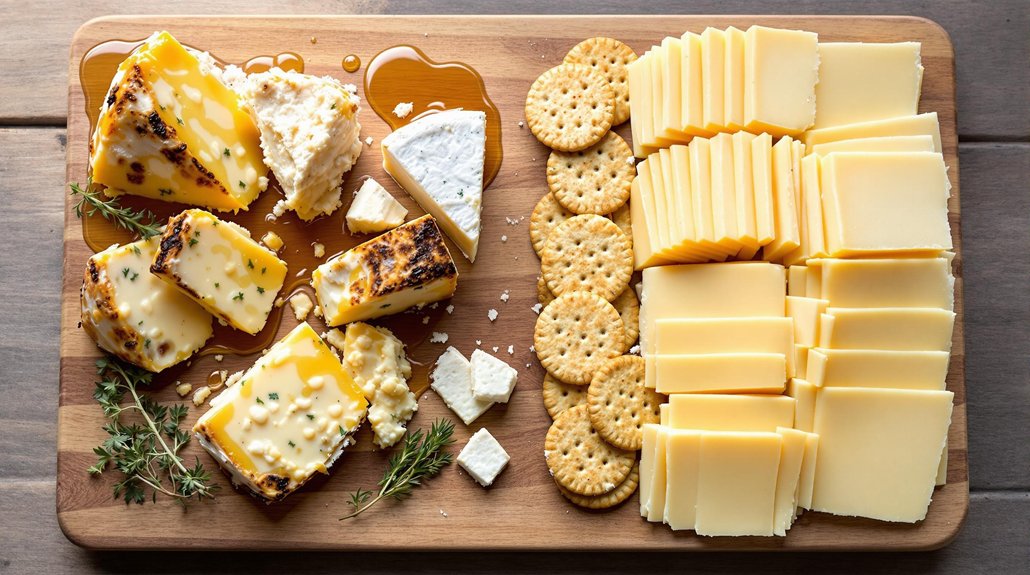
Artisan cheese differs fundamentally from mass-produced varieties through its small-batch, handcrafted approach. You'll notice artisanal cheeses offer complex, nuanced flavors that reflect their regional terroir, while mass-produced options prioritize consistency and longer shelf life. Artisan products feature distinctive textures—from creamy to crystalline—and result from traditional aging methods without additives. They typically come from local farms with ethical practices. Discover how these differences translate to your palate and environmental impact beyond the label.
The Craft of Artisan Cheesemaking
Five distinctive elements separate artisan cheese from its mass-produced counterparts. When you taste artisan cheese, you're experiencing the culmination of traditional methods that prioritize quality over quantity. Artisan cheesemakers work with their hands, minimizing mechanization to create small-batch products with character and depth.
These skilled craftspeople meticulously control every aspect of production—from milk selection to starter cultures and aging environments—developing complex flavour profiles impossible to achieve in factory settings. The terroir of the region infuses each wheel with unique characteristics reflective of its geographical origins.
Though artisan cheese requires more labor and typically offers a shorter shelf life than mass-produced varieties, the extended aging periods allow flavours to develop fully. This dedication to craftsmanship results in cheese that's nuanced, distinctive, and worth savoring.
The marriage of ancient techniques with contemporary approaches has created a renaissance in the cheese domain, preserving traditional legacies while satisfying modern palates.
Mass Production: How Industrial Cheese Is Made
Unlike the handcrafted approach of artisanal producers, industrial cheese manufacturing operates on an entirely different scale. Mass-produced cheeses emerge from sprawling facilities where automated machinery handles every step from milk intake to packaging.
Industrial cheese production prioritizes consistency above all else. In controlled environments, high-quality milk undergoes intensive pasteurization before being transformed through standardized processes. You'll find these facilities process thousands of gallons daily, creating identical products batch after batch.
To achieve extended shelf life, manufacturers add preservatives and stabilizers that wouldn't appear in artisanal varieties. While this guarantees you can find the same cheese with identical taste year-round at any supermarket, it sacrifices the complex flavors and seasonal variations that make artisanal cheese unique. The centrifugation process efficiently separates curds from whey and ensures precise moisture control across large production volumes.
Ingredients and Sources: Quality Considerations
The foundation of every cheese begins with its ingredients, creating a fundamental divide between artisan and mass-produced varieties. When you choose artisan cheese, you're selecting products made with milk from small, local farms that prioritize animal welfare and sustainable practices. These high-quality ingredients undergo minimal processing—often raw or lightly pasteurized—allowing complex flavors to develop naturally.
Artisan cheesemakers craft their products in small batches using traditional methods, carefully selecting and monitoring bacterial cultures to guarantee flawless flavor development. You'll find fewer additives and more attention to terroir and craftsmanship in these cheeses.
In contrast, mass-produced cheeses rely on highly pasteurized milk from large-scale dairy operations, with standardized cultures and numerous preservatives and stabilizers to assure consistency and cost-effectiveness rather than distinctive character.
Flavor Profiles: Complexity vs. Consistency
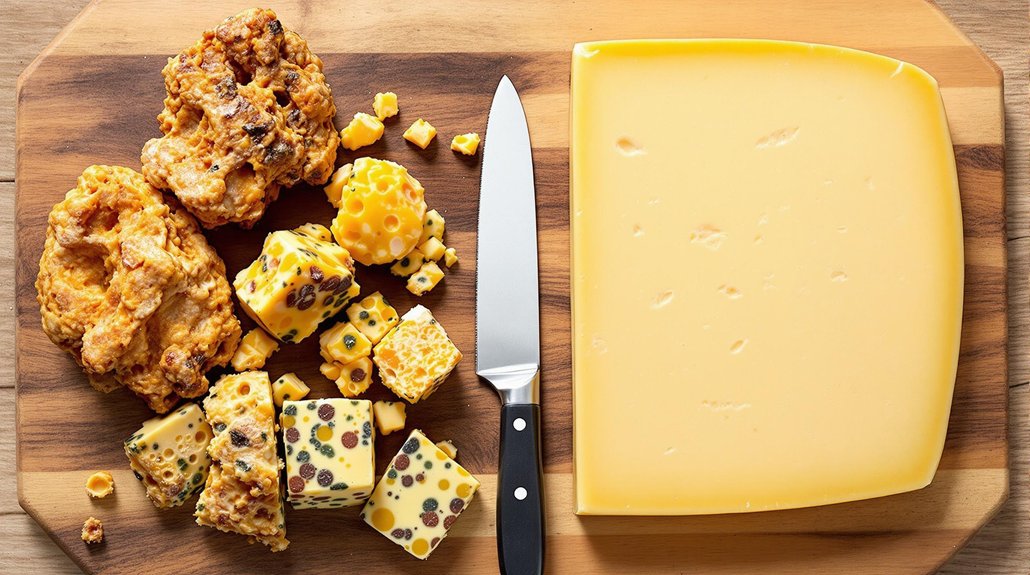
Distinctive flavor complexity stands as perhaps the most compelling reason to explore artisan cheeses. When you taste these handcrafted varieties, you'll discover a spectrum of complex flavors that reflect traditional craftsmanship and regional character—from earthy and nutty to sweet and fruity notes that mass-produced cheese simply can't replicate.
Artisan cheesemakers achieve this complexity through high-quality raw ingredients, natural cultures, and patient aging processes. Each wheel tells a unique story, with subtle variations that celebrate the production methods rather than hiding them. While industrial cheeses offer consistency and longer shelf life, they sacrifice the nuanced flavour profiles that make artisanal options so remarkable.
You're not just tasting cheese; you're experiencing the terroir and expertise of dedicated craftspeople who prioritize quality over uniformity.
Texture and Mouthfeel: Artisanal Distinction
Beyond flavor complexity, texture and mouthfeel represent critical dimensions where artisan cheeses truly shine against their mass-produced counterparts. When you bite into a carefully crafted artisan cheese, you'll experience a symphony of tactile sensations that mass-produced varieties simply can't replicate.
Each artisan cheese is handcrafted with quality over quantity in mind, allowing for:
- Nuanced variations from delicate creaminess to firm crystalline structures
- Satisfying, lingering mouthfeel that enhances complex flavour profiles
- Engaging textural journeys that evolve as you taste
Unlike the engineered uniformity of industrial cheeses, artisan cheeses offer unique characteristics that transform your eating experience. The tactile diversity in these made-by-hand products creates a more memorable sensory interaction, making the difference between artisanal and mass-produced immediately apparent through touch and feel.
Aging Processes and Their Impact
Just as texture offers a tactile revelation, aging stands at the heart of what separates artisan cheese from its mass-produced rivals. When you taste artisan varieties, you're experiencing the results of patient aging processes that often extend for months or years in carefully monitored environments. Skilled cheesemakers allow natural bacteria and molds to flourish during this period, developing complex flavor profiles that continue to evolve.
In contrast, mass production prioritizes efficiency and consistency. These cheeses are made through mechanized techniques in strictly controlled settings, with aging typically limited to weeks rather than months. While industrial cheese production delivers reliable results, it sacrifices the depth achieved when raw milk transforms through traditional aging. You'll notice that artisan cheeses offer multilayered, robust flavors that mass-produced counterparts simply can't replicate.
Health Benefits and Nutritional Differences
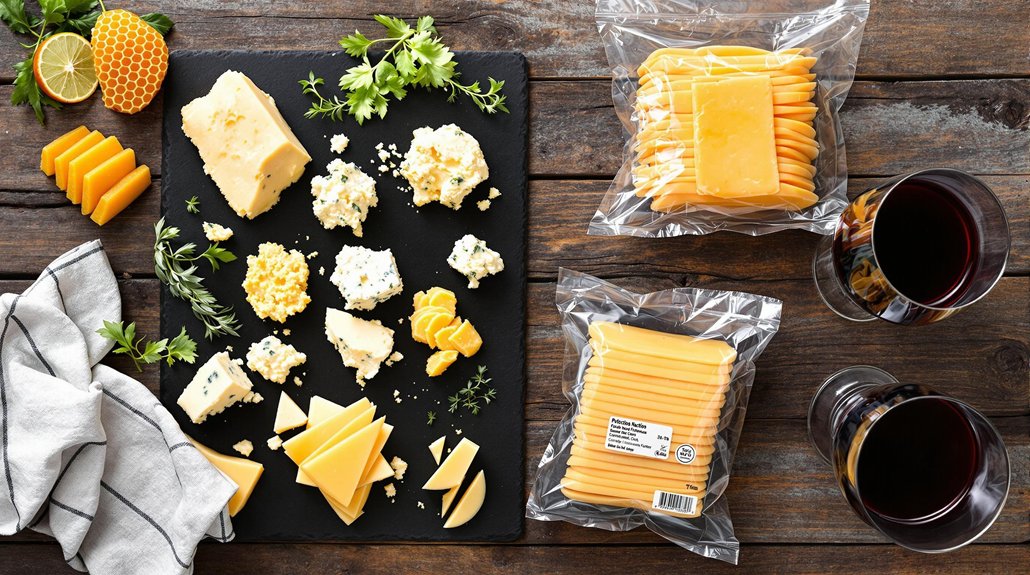
While both cheese varieties can be part of a healthy diet, artisan and mass-produced cheeses offer distinctly different nutritional profiles. As a cheese connoisseur, you'll find artisan varieties are typically minimally processed, containing fewer artificial preservatives.
The traditional dairy farming practices behind artisan cheese often result in products with:
- Higher levels of beneficial probiotics and enzymes from raw milk
- Increased omega-3 fatty acids and CLA from grass-fed cows
- Greater nutrient density without additives to extend shelf life
Mass-produced cheeses, including many with bloomy rind varieties, generally contain more sodium and saturated fat. Manufacturers focus on consistency and longevity using additives to extend shelf life, which can diminish nutritional value. By choosing artisan cheeses, you're typically getting a more wholesome product with fewer industrial ingredients.
Environmental and Ethical Implications
The nutritional advantages of artisan cheese extend to broader impacts on our planet and communities. When you choose artisan cheese, you're supporting local farmers who typically raise their animals with better animal welfare standards, including open grazing practices. Artisan cheesemakers prioritize sustainable farming methods, reducing environmental footprints through smaller batch production and shorter transportation distances.
Unlike mass-produced options that often prioritize efficiency over sustainability, cheeses found in artisan shops reflect traditional methods passed down through generations. These practices minimize artificial additives while respecting natural ecosystems. Made in small batches, artisan cheeses represent a commitment to quality over quantity, with producers who generally maintain closer relationships with their dairy sources.
Your purchase decisions directly influence local economies and help preserve time-honored cheesemaking traditions that might otherwise disappear.
Choosing the Right Cheese for Your Needs
Selecting the ideal cheese depends largely on your specific culinary intentions and personal values. Whether you're a cheese enthusiast hosting a tasting or simply need something for everyday sandwiches, understanding when to choose artisan versus mass-produced varieties helps maximize your experience and budget.
Consider these factors when deciding:
- Purpose: Artisan cheese is often perfect for special occasions, while large scale using processes create widely available options ideal for daily consumption
- Budget: Mass-produced types of cheese offer affordability with longer shelf life
- Values: Milk used in artisan production typically supports local economies, while commercial options prioritize consistency
Both categories serve important roles in the culinary world. Your choice ultimately balances practical needs with personal preferences, making room for both artisan craftsmanship and convenient commercial options in your refrigerator.