Burrata Cheese 101: Origin, Production & Texture Highlights
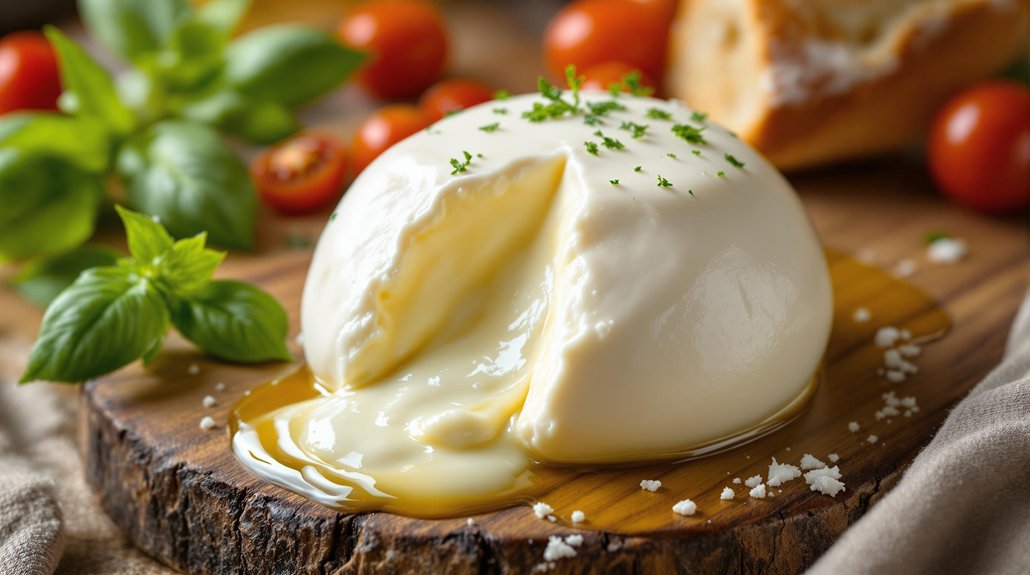
Burrata, born in Puglia, Italy, is a luxurious cheese that combines a mozzarella exterior with a creamy stracciatella filling. You'll notice its buttery texture and subtle milky flavor that sets it apart from regular mozzarella. Artisans create it using the pasta filata technique, forming a pouch they fill with soft curds and cream. Serve at room temperature with olive oil and crusty bread to experience burrata's full sensory magic. The perfect burrata experience awaits below.
The Birth of Burrata: a Cheese From Puglia
Deep in the sun-drenched hills of southern Italy's Puglia region, burrata cheese was born in the early 1900s, likely created by the entrepreneurial Bianchino brothers on their Andria farm. This artisanal creation takes its name from "burro," meaning butter in Italian—a perfect description of its creamy, rich interior.
When you're enjoying burrata, you're tasting a carefully crafted delicacy that combines a mozzarella exterior pouch filled with stracciatella (shredded mozzarella) and fresh cream. This unique cheese earned Protected Geographical Indication status in 2016, acknowledging the authentic Burrata di Andria's cultural significance and production standards. Like other fine Italian cheeses that helped make Italy the cheesemaking center of Europe in the 10th century, burrata represents centuries of dairy craftsmanship and regional pride.
What Sets Burrata Apart From Mozzarella
Though often mistaken for its cousin mozzarella, burrata stands in a class of its own with distinctive characteristics that make it a prized delicacy. You'll immediately notice burrata's unique construction—a mozzarella shell encasing a rich stracciatella filling of cream and cheese curds.
What makes burrata truly special:
- Texture contrast - Burrata offers a creamy, buttery interior versus mozzarella's firmer, stringier consistency
- Higher fat content - This fresh cheese delivers a more decadent mouthfeel than regular mozzarella
- Serving versatility - While mozzarella excels when melted, burrata shines when enjoyed fresh
- Production complexity - Burrata's labor-intensive creation process contributes to its premium price point
When you cut into burrata, you'll experience that distinctive oozing of its luscious cream filling—a sensory pleasure mozzarella simply can't replicate. Unlike mozzarella which has exceptional meltability due to its high moisture content, burrata is best savored uncooked to fully appreciate its unique texture.
Crafting Burrata: Traditional Production Methods
Traditionally, burrata production follows a meticulous process that transforms simple milk into an extraordinary delicacy. The technique begins in Puglia in southern Italy, where artisans heat cow or buffalo milk, then form and stretch the curds using the pasta filata method to create fresh mozzarella.
You'll find the magic happens when cheesemakers shape this fresh Italian cheese made into a pouch, filling it with a mixture of soft curds and cream (burro). This combination creates burrata's signature delicate flavor and creamy texture. The pouch is carefully tied shut and briefly rested before brining.
Since its 1900 origins, Burrata di Andria from the Puglia region remains the gold standard. The traditional process preserves what makes this cheese special—a firm exterior protecting an incredibly rich, oozing center.
The Sensory Experience: Flavor and Texture Profiles
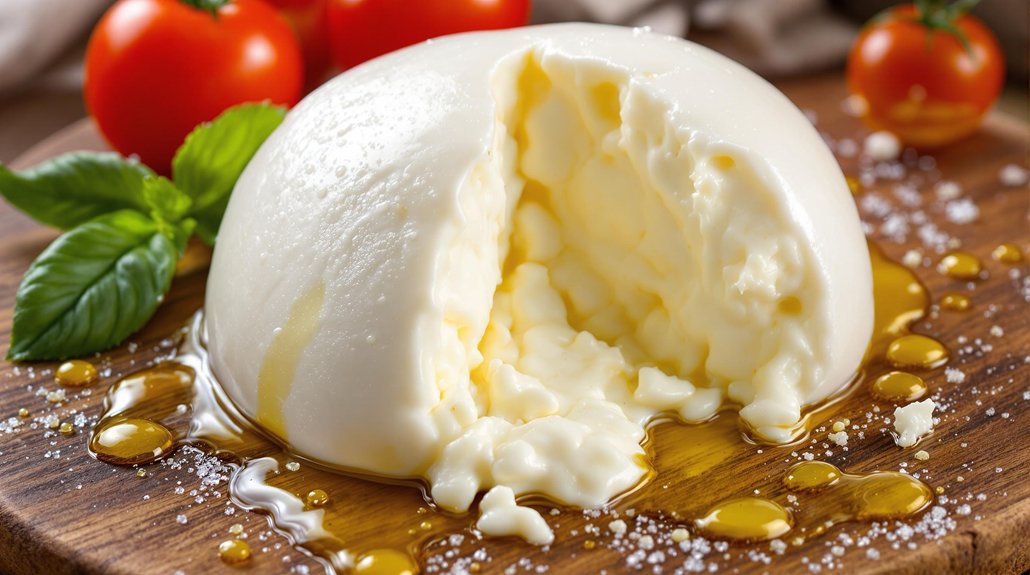
The artful production methods of burrata culminate in an extraordinary sensory experience that captivates cheese enthusiasts worldwide. When you taste fresh burrata, you'll discover a delicate balance of mild, milky sweetness complemented by a subtle lactic tang. The contrast between the thin mozzarella exterior and the luscious creamy filling defines this unique dairy delicacy.
For maximum enjoyment, consider these texture and flavor elements:
- Temperature matters - Room temperature burrata reveals its full flavor profile and allows the creamy center to flow properly
- Textural contrast - The firm exterior gives way to a soft, spreadable filling
- Flavor depth - The mild taste carries subtle dairy sweetness that's never overwhelming
- Fresh is best - Burrata's delicate nature means fresher cheese delivers superior taste
Culinary Uses: Perfect Pairings and Serving Suggestions
Because of its delicate flavor profile, burrata shines brightest when paired with complementary ingredients that enhance without overwhelming its creamy richness. Serve this cheese at room temperature for the fullest expression of its creamy flavor of burrata. A drizzle of olive oil, a sprinkle of salt and pepper, and a touch of balsamic vinegar create a simple yet elegant presentation.
Burrata pairs well with summer produce like heirloom tomatoes in a classic caprese salad. You'll also find it elevating pasta dishes, where it melts slightly when placed atop hot noodles. Always serve with crusty bread to soak up every luscious drop. For the best experience, enjoy burrata as fresh as possible—ideally within 24-48 hours of purchase.
Storing and Enjoying: Maximizing Freshness and Quality
Freshness fanatics know that storing burrata properly is essential to preserving its signature creamy center and delicate outer shell. This Italian cheese made from mozzarella and cream requires special attention to maintain its exquisite texture and flavor.
To enjoy the best burrata experience:
- Keep the cheese in its original package with lightly salted water in the refrigerator until ready to use
- Allow burrata to reach room temperature before serving—it's how this milk-based delicacy truly shines
- Consume within two days of purchase, as this pasta filata style cheese doesn't preserve well
- When serving, drizzle with virgin olive oil and pair with seasonal produce for an authentic experience
Burrata is best enjoyed fresh, so plan your meals accordingly to savor its full glory.