Cheese Currency: Can Cheese Be Used as a Form of Trade or Payment?
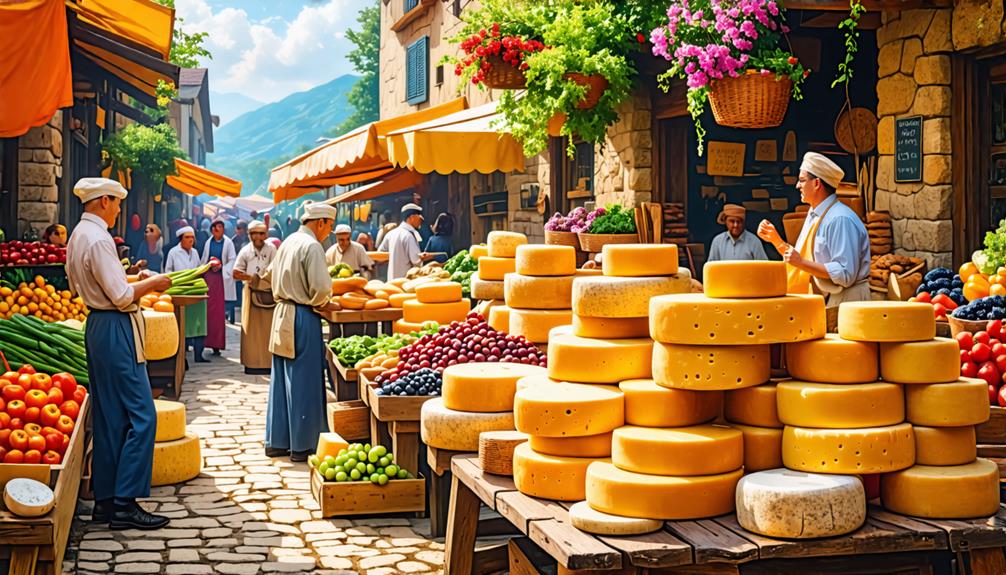
You might not think of cheese as anything more than a tasty complement to your meal, but its historical significance as currency could change your perspective. Imagine a world where Parmigiano-Reggiano isn't just a culinary delight but also a viable medium of exchange. Modern banking practices even allow farmers to use cheese as collateral, raising questions about its practicality and value in today's economy. What implications could this have for local economies and trade? The answer might surprise you.
Historical Context of Cheese as Currency
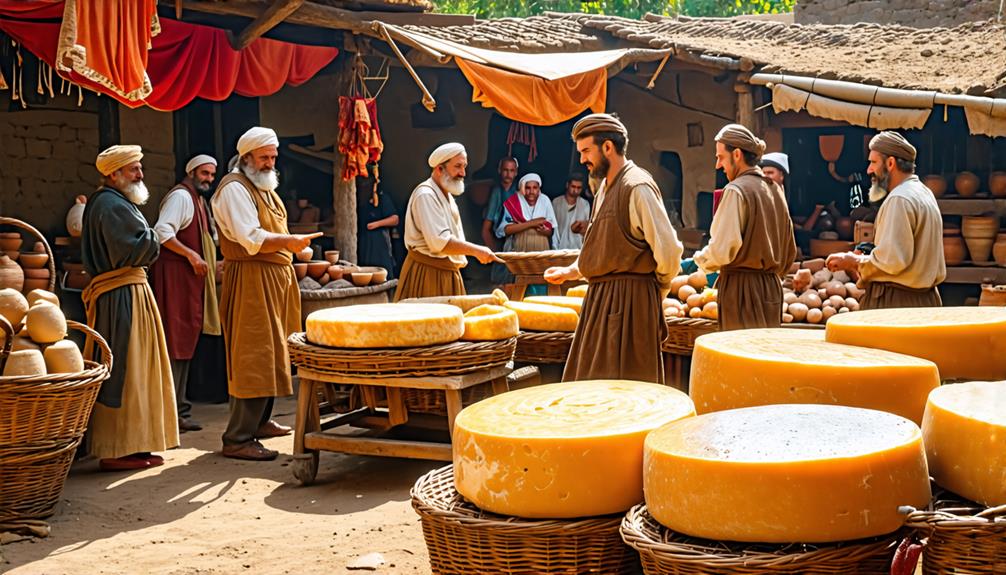
Cheese, particularly Parmesan, has played a crucial role as a form of currency in Italy since the 1200s, serving as a valuable barter item for goods and services. Local farmers relied on Parmesan to facilitate trade, exchanging it for various necessities. The rich agricultural landscape of the Emilia Romagna region contributed to the cheese's reputation, as the quality and aging process of Parmesan made it highly sought after. Each wheel could take up to three years to mature, increasing its value and desirability as a trade item.
Historically, Parmesan was not just a local trade commodity; it also held cultural significance, being accepted for tax payments in certain areas. This practice illustrated the cheese's essential role in the economy and daily life. With an approximate value of $300 per wheel, Parmesan showcased its tangible economic worth. Over the centuries, it became a common form of collateral as well, reflecting its continued relevance. The history of Parmesan as currency in Italy highlights how this cheese transcended culinary enjoyment to become a foundational element of trade and economic stability in Italian society.
Banking Practices With Cheese Collateral
Since 1953, farmers in Italy have partnered with Credito Emiliano Bank (Credem) to secure loans using Parmigiano-Reggiano cheese as collateral, establishing a unique financial model that bolsters their agricultural activities. This innovative banking practice allows dairy farmers to leverage their cheese inventory for financial support, aiding in the stability and sustainability of their operations.
Each wheel of Parmesan cheese used as collateral is stored in climate-controlled vaults during the loan period, ensuring ideal maturation and minimizing degradation risk to just 1%. Credem assesses the cheese based on current market prices, typically offering loan-to-value ratios between 70% and 80%. This method provides farmers with access to lower interest rates compared to standard business loans, creating a more supportive financial environment for local dairy farming.
The use of cheese as collateral not only provides financial relief to farmers but also enhances Credem's reputation as a community-focused bank. By supporting local producers and the agricultural economy, Credem's innovative banking practices help sustain the rich tradition of Parmigiano-Reggiano production in Italy.
Production Standards for Parmigiano-Reggiano
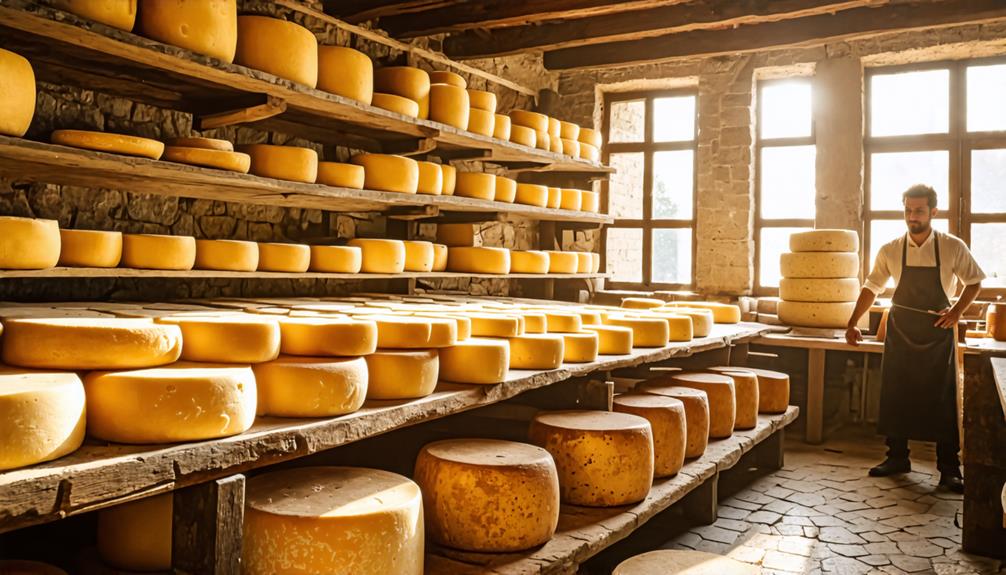
Producing Parmigiano-Reggiano requires adherence to strict standards to guarantee its quality and authenticity, relying solely on milk, salt, and rennet without any additives or preservatives. This renowned cheese originates from specific regions in Northern Italy, including Parma, Reggio Emilia, Modena, Bologna, and Mantua. The milk must come exclusively from cows in these areas, ensuring the traditional essence of the cheese remains intact.
Each production batch must be completed within 20 hours of milking to maintain freshness. Thanks to its Protected Designation of Origin (PDO) status, any cheese labeled as Parmigiano-Reggiano meets these rigorous guidelines. The cheese undergoes a careful maturation process lasting a minimum of 12 months, with longer aging periods—up to 36 months—enhancing both flavor and market value.
As Parmigiano-Reggiano is highly valued, it not only serves as a culinary delight but also has the potential to function as a form of currency in trade. By understanding these production standards, you gain insight into why Parmigiano-Reggiano is celebrated worldwide.
Nutritional Value and Pricing of Cheese
Understanding the nutritional value and pricing of Parmigiano-Reggiano highlights its dual appeal as a delicious food choice and a valuable asset. Originating from a specific region in Italy, this cheese offers significant health benefits and commands a price that reflects its premium quality.
Here are four key points to consider:
- High Protein Content: With approximately 10 grams of protein per ounce, Parmigiano-Reggiano is an excellent source of essential amino acids.
- Rich in Calcium: Each ounce provides around 331 mg of calcium, crucial for maintaining bone health.
- Pricing Factors: Authentic Parmigiano-Reggiano typically ranges from $10 to $25 per pound, depending on factors such as aging and quality standards.
- Nutritional Benefits: It is rich in vitamins A, B12, and K2. Additionally, its low lactose content makes it suitable for some lactose-intolerant individuals.
These attributes not only enhance its nutritional value but also contribute to its economic appeal. For those with access to credit, Parmesan wheels can even serve as collateral, offering a unique opportunity to use this cheese in trade.
Culinary Uses and Storage Tips
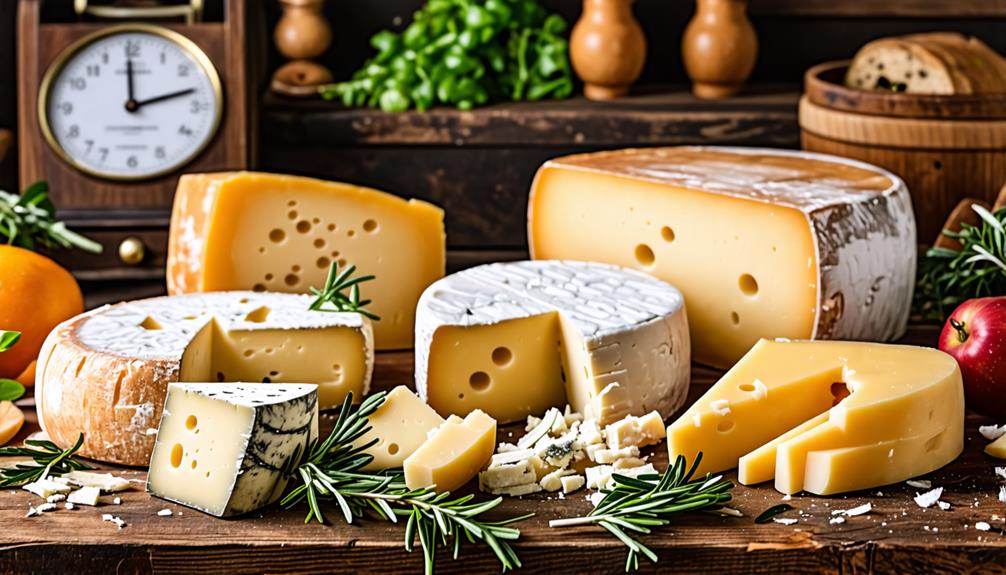
Parmesan cheese, known for its rich flavor and versatility, can elevate a variety of dishes when stored and used correctly. To maintain its quality, wrap Parmesan in parchment paper and store it in the refrigerator to prevent moisture buildup and preserve its robust flavor. For an extended shelf life, place it in an airtight container.
Grate Parmesan cheese just before use to preserve its texture and taste, and aim to consume it within 1-2 months after opening for optimal results. Finely grated Parmesan melts beautifully in moisture-rich sauces like cream or butter; however, heat it gently to prevent burning.
Enhance your sauces with a splash of white wine to elevate the flavor profile of your dishes. Traditional culinary uses for Parmesan include pasta dishes, risottos, and sauces, where it adds depth and complexity. By following these storage and usage tips, you'll maximize both the flavor of Parmesan and your culinary experience.
Conclusion
In summary, cheese, particularly Parmigiano-Reggiano, transcends its role as a culinary delight and serves as a unique form of currency with historical and modern financial applications. By recognizing its value and how it can be used as collateral, one can appreciate its significance in local economies. Whether enjoyed in a meal or considered for its financial implications, cheese remains a compelling example of the intersection between gastronomy and economic utility.