Cotija Cheese 101: Authentic Origins, Flavor & Global Adaptations
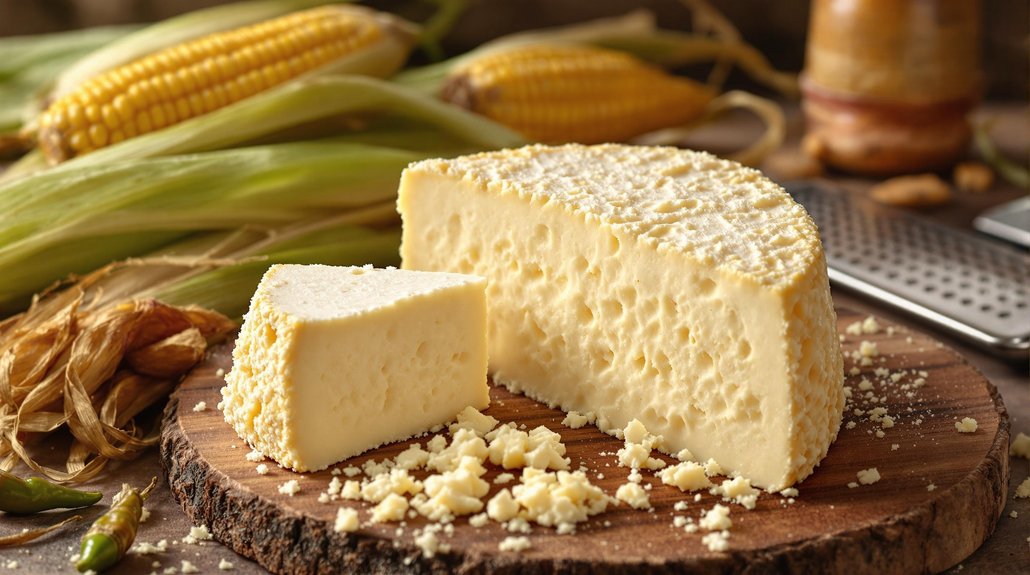
Cotija cheese originated in the isolated Sierra de Jalmich region of Michoacán, Mexico, where traditional production methods have been preserved for generations. You'll recognize this cheese by its bold, salty flavor and crumbly texture that transforms as it ages. It's perfect for topping classic dishes like elote or enhancing grilled meats. While industrial versions exist, preservation efforts have secured recognition for authentic artisanal Cotija. Discover how this Mexican culinary treasure continues to inspire global adaptations while maintaining its rich heritage.
The Heritage and History of Cotija Cheese
While many Mexican cheeses have gained international recognition, Cotija stands out with its rich heritage deeply rooted in the town of Cotija, Michoacán. For centuries, this distinctive cheese has been produced in Mexico's Sierra de Jalmich region, where isolation and limited infrastructure inadvertently preserved traditional methods.
You'll appreciate how small farmers maintained self-sustaining practices, cultivating maize and milking cows to create this authentic delicacy. However, between the 1970s and 2000s, industrial production threatened these time-honored techniques, causing traditional Cotija output to decline dramatically.
Fortunately, preservation efforts emerged, including the establishment of a Collective Mark and promotion at regional fairs. These initiatives have helped safeguard the legacy of this remarkable cheese, ensuring the state of Michoacán's culinary treasure continues to thrive despite modern challenges. Similar preservation efforts can be seen with Nepal's hard chhurpi cheese, which undergoes extensive aging and smoking processes to achieve a remarkable shelf life of up to 20 years.
Traditional Production Methods and Artisanal Techniques
Because isolation preserved its authenticity, traditional Cotija cheese emerges from time-honored production methods unique to Mexico's Sierra de Jalmich region. These artisanal methods have been passed down through generations, with producers embracing self-sustaining techniques that involve cultivating crops and milking cows on their own land.
You'll find that the labor-intensive, small-scale production creates Cotija's distinct flavor and texture that industrial versions simply can't replicate. The region's isolation and lack of infrastructure inadvertently protected traditional Cotija cheese production from outside influences for centuries. Much like Chinese cheese-making techniques that developed independently to suit local conditions, Cotija's production methods reflect the cultural and environmental factors of its region.
Unfortunately, in recent decades, industrial producers have gained ground, threatening these authentic practices. When you taste authentic Cotija, you're experiencing the culmination of generations of craftsmanship that developed in this remote Mexican mountain region.
Flavor Profile and Culinary Applications
Although revered for its distinctive taste, Cotija cheese captivates culinary enthusiasts with its bold, salty profile and slightly tangy undertones. This Mexican queso transforms as it ages—young Cotija offers a softer, feta-like experience, while aged varieties develop a firm texture and Parmesan-like complexity.
You'll find Cotija's crumbly nature perfect for topping classic dishes. Sprinkle it over tacos, enchiladas, soups, or salads to add immediate depth. Its signature application remains elote, where the cheese's saltiness beautifully complements sweet corn and spicy chili.
What makes Cotija truly versatile in Mexican cuisine is its ability to retain shape when heated while delivering that characteristic tangy punch. Beyond traditional applications, try pairing it with fresh fruits or grilled meats for unexpected flavor combinations.
Regional Variations and Modern Adaptations
How does authentic Cotija cheese transform across Mexico's diverse regions? While Michoacán remains its spiritual home, you'll find regional variations like Oaxaca's softer version or Jalisco's sharper, more aged adaptation. The difference between artisanal versions and commercial productions is striking—the latter offering a more uniform texture and consistent flavor compared to rustic originals.
Beyond Mexico's borders, international interpretations have emerged with similar crumbly, salty cheeses appearing in France, Italy, and the United States. These adaptations reflect Cotija's growing global popularity. You'll now find this versatile cheese extending far beyond traditional Mexican cuisine into contemporary culinary applications—gracing everything from gourmet burgers to sophisticated salads, proving that this centuries-old cheese continues to evolve while honoring its authentic roots.
Preservation Efforts and Global Recognition
During the late 1990s, while industrial cheese production threatened traditional methods, a dedicated coalition of producers, scientists, and cultural advocates launched substantial initiatives to safeguard authentic Cotija cheese-making practices. Their preservation efforts secured a Collective Mark designation, establishing formal recognition for this emblematic Mexican product.
These initiatives have paid off financially too—you'll now find traditional Cotija commanding considerably higher prices than industrial versions, ensuring the economic viability of ancestral production methods while preserving an important piece of Mexico's cultural heritage.
You'll appreciate how these traditional producers gained international acclaim when their cheese won an award at a world cheese championship in Italy, drastically elevating its global profile. The establishment of a regional fair further celebrated and promoted authentic Cotija cheese-making traditions.