Fontina Cheese Guide: Production Methods, Melting Characteristics & Pairings
Fontina cheese originates from Italy's Aosta Valley, crafted from raw cow's milk and aged in mountain caves for at least 80 days. You'll recognize authentic Fontina by its smooth, creamy texture and nutty, earthy flavor profile. Its exceptional melting properties make it perfect for fondues, gratins, and pasta dishes without separating. Pair it with bold red wines like Nebbiolo, or contrast with Prosecco and sweet fruits like pears and apples. Discover how this PDO-protected cheese elevates both traditional and modern cuisine.
The History and Heritage of Authentic Fontina Cheese
While many cheeses claim ancient origins, Fontina's heritage stands firmly rooted in the 12th century Aosta Valley of Italy. You'll find this cheese's reputation was built on its distinctive creamy texture and nutty flavor, qualities directly attributed to the lush alpine climate of its birthplace.
Today, Fontina Valdostana maintains its gold standard status, protected by the European Union's Protected Designation of Origin certification. This guarantees you're getting authentic cheese produced with traditional craftsmanship techniques that have been preserved for centuries.
Though you'll encounter variations produced worldwide, none capture the essence of true Italian Fontina. The cheese remains a cultural icon in Italy, featured prominently in classic dishes like Fonduta, while simultaneously transcending cultural boundaries without losing its connection to its storied Italian roots. Just like many British cheese varieties, Fontina benefits from strict protections to preserve its authentic character and production methods.
Traditional Production Methods: From Milk to Maturing
Traditional production methods are what transform simple cow's milk into the renowned Fontina cheese that has captivated taste buds for centuries. In the breathtaking Aosta Valley of northwestern Italy, artisans begin with raw milk from local cow breeds, preserving all natural enzymes and flavors.
The process starts with coagulation using calf rennet, followed by careful cutting, cooking, and pressing of the curd into molds. After formation, the cheese undergoes brining, then ages for at least 80 days in cool mountain caves. This aging period is essential, as the unique microclimate of the valley imparts Fontina's distinctive nutty, earthy character and supple texture.
The PDO designation guarantees you're getting authentic Fontina Valdostana—a tribute to the meticulous production methods that have remained largely unchanged for generations. Similar to methods used in European monasteries, cheese-making techniques have been refined over centuries to achieve the perfect balance of flavor and texture.
Flavor Profile and Textural Characteristics
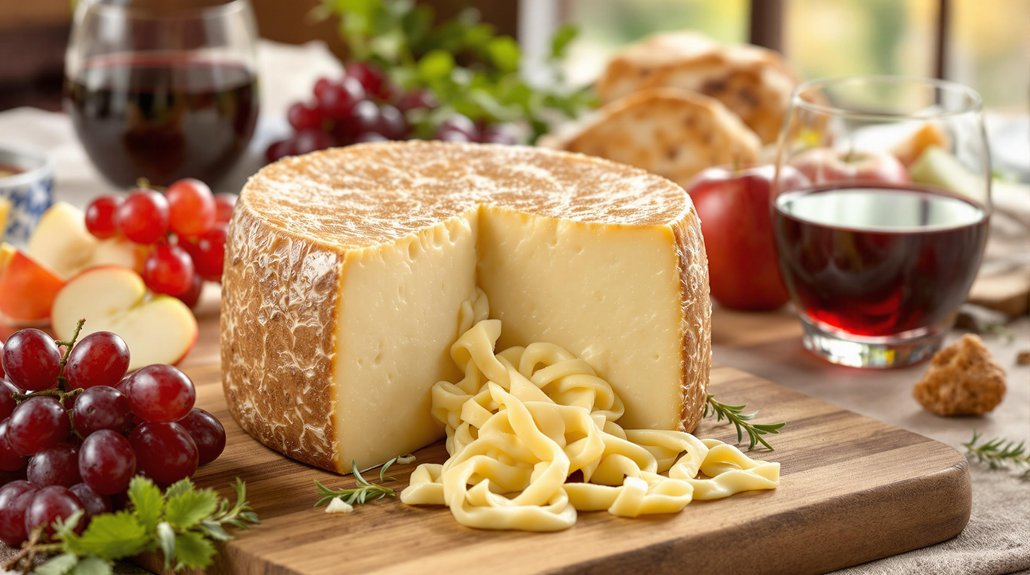
A masterpiece of sensory delight, Fontina cheese captivates with its distinct character and mouthfeel. You'll immediately notice its smooth, creamy texture that ranges from semi-hard to hard, depending on its age. The interior displays beautiful hues from pale ivory to rich straw yellow, contrasting with its earthy brownish rind.
When you taste Fontina, you'll discover a complex nutty flavor accompanied by hints of earthiness and a slightly sweet finish that lingers pleasantly. This versatile cheese with its rich history in Italian cuisine truly shines when heated, as it melts beautifully without separating—making it perfect for fondues, gratins, and sauces.
Fontina's unique characteristics guarantee it pairs well with everything from crusty breads to fruit preserves, embodying centuries of artisanal tradition in every bite.
Fontina's Superior Melting Properties in Cooking
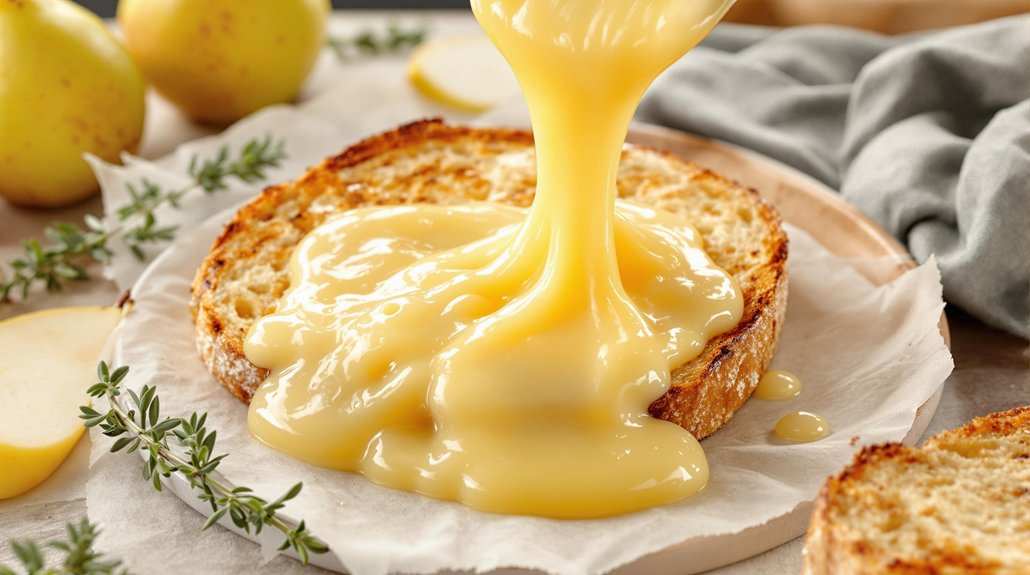
This cheese's exceptional culinary versatility truly shines when heat enters the equation. Fontina melts beautifully, transforming into a soft, gooey consistency without separating or becoming greasy—a quality that sets it apart from many other cheeses. Its high moisture and fat content allows it to achieve that perfect creamy texture and nutty flavor when melted.
You'll find countless Uses of Fontina in hot dishes where its superior melting qualities are showcased. It's an ideal pairing for Fontina-based cheese fondue, maintaining smooth consistency throughout. Add it to pasta dishes and baked pastas for a rich, decadent sauce that coats every bite. On pizzas, Fontina creates that picture-perfect stretch of melted cheese that chefs and home cooks alike prize.
Classic and Modern Culinary Applications for Fontina
From rustic Italian farmhouses to contemporary gourmet kitchens, Fontina cheese has established itself as a culinary cornerstone with remarkable versatility. This Italian cuisine staple melts beautifully in traditional dishes like polenta concia, where its creamy texture transforms simple cornmeal into a luxurious experience.
You'll find Fontina's nutty flavor enhancing risottos, soufflés, and pasta dishes, while its superior melting qualities make it perfect for fondues and sauces. When building a cheese board, Fontina pairs wonderfully with cured meats, seasonal fruits, and nuts. Pour a glass of bold red wines to complement its complex profile, allowing the flavors to harmonize perfectly.
Whether you're crafting an everyday sandwich or an elegant dinner party dish, this culinary gem moves seamlessly between casual and sophisticated applications.
Perfect Wine and Food Pairings for Fontina Cheese
When selecting companions for Fontina cheese, your beverage choice can elevate the entire tasting experience from pleasant to extraordinary. This creamy Italian delight from Val d'Aosta offers nutty, rich flavors derived from cow's milk that pairs magnificently with thoughtfully selected wines and foods.
Bold red wines like Nebbiolo and Dolcetto complement Fontina's complexity with their tannins and fruity notes. Sparkling options such as Prosecco create invigorating contrast against the cheese's creaminess. Sweet and crunchy additions—pears, apples, and nuts—balance Fontina's rich profile. Authentic Fontina Valdostana from Aosta Valley delivers the most genuine experience.
You'll find Fontina's versatility extends beyond the cheese board. Its superior melting properties make it perfect for fondues, risottos, and sauces where its distinctive flavor truly shines.