Halloumi Cheese Guide: Origins, Texture & Versatile Uses
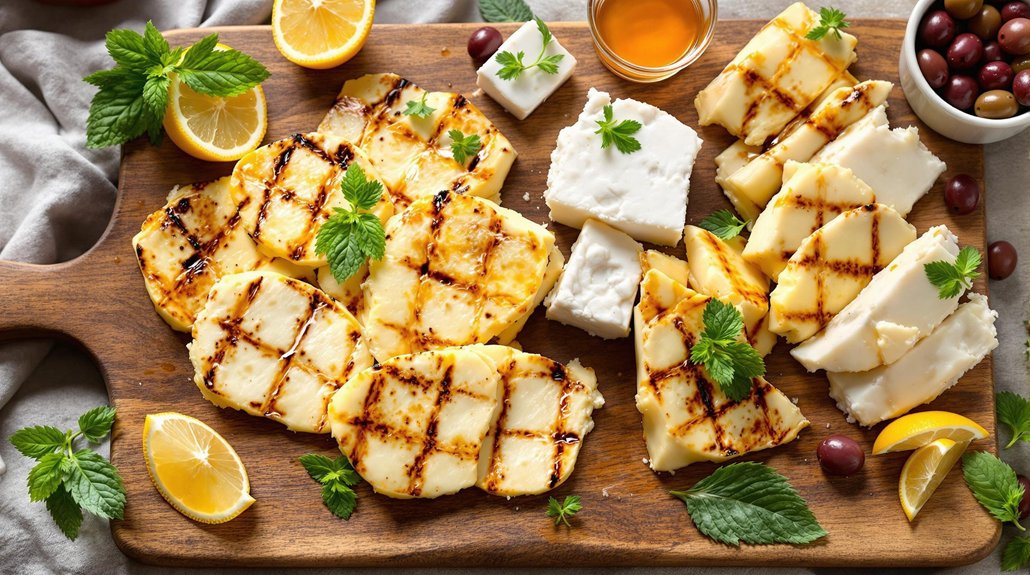
Halloumi is a semi-hard, unripened cheese from Cyprus with a 4,000-year history across the Mediterranean. You'll recognize it by its firm, layered texture and distinctive salty tang. Made from goat's, sheep's, and sometimes cow's milk, it won't melt when cooked, creating that signature crispy exterior and chewy center. You can grill, fry, or bake it for countless sweet and savory dishes. Discover why this protein-rich cheese has captured global culinary hearts.
What Is Halloumi: A Traditional Mediterranean Delicacy
Originating from Cyprus and the Eastern Mediterranean region, halloumi stands out as a semi-hard, unripened cheese with remarkable versatility. This brined cheese traditionally combines goat's and sheep's milk, though modern varieties often incorporate cow's milk as well.
When cooked, Cyprian-style halloumi develops a crispy golden exterior while maintaining a tender, chewy center. The cheese offers a firm, layered texture with a distinctive salty tang.
Lebanese-style halloumi can be enjoyed as a table cheese or incorporated into sweets and savory dishes like toasties and pides. As a good source of protein, halloumi continues to win fans worldwide.
What makes halloumi truly special is its high melting point, allowing it to be grilled or fried without losing its shape. While traditionally halloumi is never eaten alone, it has found popularity with dairy farmers across the United States and Canada as a versatile ingredient that enhances other dishes.
The Ancient History of Halloumi: From Bedouin Tribes to Global Fame
The journey of halloumi cheese stretches back millennia, with records from the Middle East and Egypt mentioning early versions called "Halum" or "Aloum" as far back as 4,000 BCE. Bedouin tribes treasured this versatile cheese for its remarkable shelf life and portability, making it a perfect companion for their nomadic lifestyle.
Similar to how Egyptian tomb murals depicted early cheesemaking methods with milk stored in skin bags suspended from poles, these ancient techniques laid the foundation for halloumi production. What began as a practical food source gradually expanded from Cyprus to neighboring Greece and throughout the Middle East.
Today, halloumi has transformed into one of the world's best-loved specialty cheeses, creating what many call "Halloumi fever." The cheese's unique properties—it doesn't melt when heated—make halloumi perfect for grilling or frying. These cooking tips have helped propel this ancient food into modern kitchens worldwide, where chefs and home cooks celebrate its distinctive squeaky texture.
Nutritional Profile: Protein-Rich With Considerations
While halloumi's fascinating history explains its cultural significance, understanding its nutritional makeup helps explain its growing popularity among health-conscious consumers. You'll find halloumi packs an impressive protein punch—about 25g per 100g serving—rivaling other protein sources like Cottage Cheese. This traditional cheese, made from a blend of goat's milk and cow's milk, delivers a potent combination of protein and calcium that supports muscle maintenance and bone health.
However, moderation is key. Halloumi's high saturated fat and sodium content means it's best enjoyed occasionally rather than daily. When exploring Halloumi Recipes, consider portion sizes carefully. The good news? Its versatility allows for creative inclusion in both sweet and savory dishes, making it a flavorful addition to your balanced diet when consumed thoughtfully.
Understanding the Unique Texture: Why Halloumi Doesn't Melt
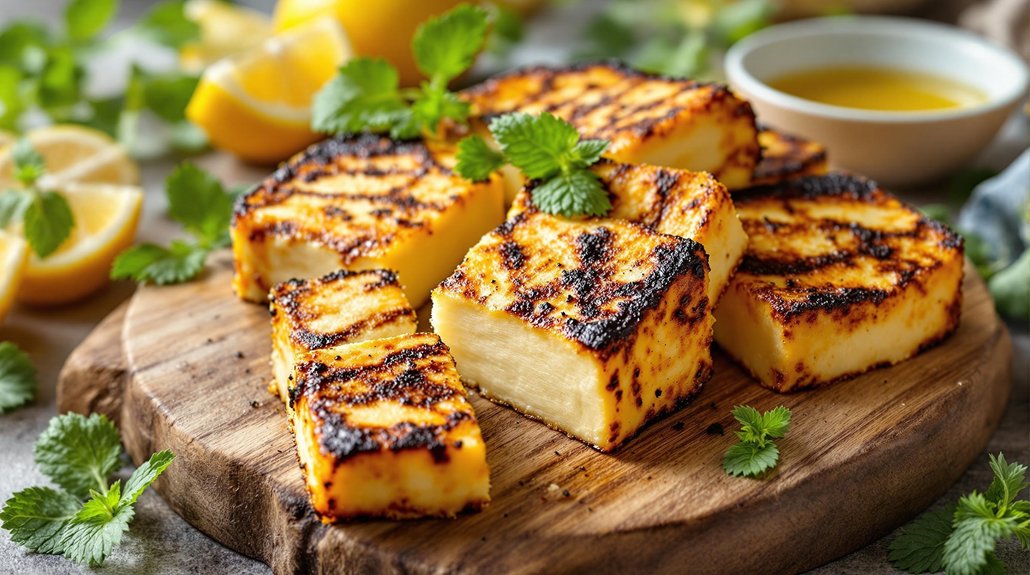
Most cheeses start to melt and lose their form when heat is applied, but halloumi stands apart with its remarkable resistance to melting. This unique property stems from its high protein and low moisture content, which creates a stable structure that withstands heat.
When you cook halloumi, you'll notice it maintains its firm layered texture rather than turning into a puddle. This is largely due to the traditional use of goat's and sheep's milk, which naturally increases the cheese's high melting point compared to cow's milk varieties.
The production process further enhances this characteristic—pressing and brining the curds creates halloumi's distinctive springy, squeaky texture. This structural integrity makes it perfect for grilling, frying, or baking while maintaining texture, offering you versatility that few other cheeses can match.
Cooking Methods: Grilling, Frying, Baking and Beyond
Halloumi's remarkable heat resistance opens up a world of cooking possibilities that few other cheeses can offer. Its unique texture holds firm under high heat, retaining shape while developing a delicious contrast of crispy exterior and tender interior.
Perfect for grilling, this versatile cheese transforms when cooked over Medium-High Heat for just 2-3 minutes per side, developing a golden-brown crust while maintaining its rich flavour. You'll achieve similar results when frying halloumi in a lightly oiled pan, creating that sought-after crispy-outside, creamy-inside consistency.
For a different approach, try baking halloumi at 400°F for 15-20 minutes, which enhances its nutty flavor while preserving its pliable texture. Whether grilled or fried, halloumi's exceptional melting point guarantees consistent results across various cooking methods.
Sweet and Savory Pairings: From Watermelon to Burgers
The versatility of halloumi extends far beyond cooking techniques into the domain of flavor pairings, where its salty profile creates magical combinations across both sweet and savory applications. You'll find this grilled cheese particularly stunning alongside sweet watermelon, where the contrasting flavors create a refreshing summer dish that delights the palate.
Thanks to its ability to withstand high temperatures without melting, halloumi makes an excellent meat substitute in burgers, offering a satisfying protein alternative with that distinctive springy bite. For more adventurous combinations, try incorporating Middle Eastern spices and herbs to enhance the cheese's subtle flavor profile. Whether you're packing it for an on-the-go lunch or preparing an impressive dinner, this versatile cheese shifts effortlessly between sweet and savory worlds.
Signature Halloumi Recipes Worth Trying
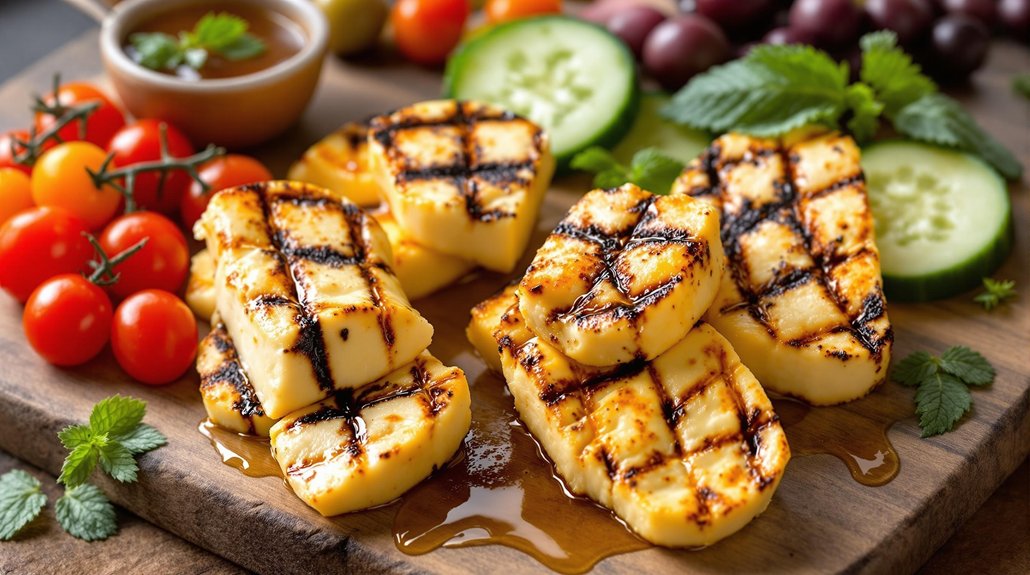
Signature dishes elevate halloumi from a mere ingredient to the star of culinary experiences worth adding to your regular rotation. Mediterranean-inspired grilled halloumi skewers with vegetables create a vibrant meal when drizzled with olive oil and lemon. For an addictive snack, try Cyprian-style halloumi fries – simply cut into batons, dust with flour and spices, then fry until crispy.
A revitalizing halloumi salad pairs the cheese with mixed greens, cucumbers, and mint, finished with a tangy lemon vinaigrette. Vegetarians will love a halloumi burger featuring a thick slab of grilled cheese with roasted veggies and pesto. Start your day with a halloumi breakfast – either Lebanese-style with flatbread and fresh vegetables or Cyprian-style paired with eggs and avocado.
Pro Tips for Perfect Halloumi Every Time
With these signature recipes in your repertoire, let's examine how to achieve the best results when working with this versatile cheese.
Cut halloumi into uniform slices or cubes for even cooking and that coveted golden crust. When you cook halloumi, use medium-high heat whether it's fried or grilled—this creates the perfect contrast between crispy exterior and chewy interior. A light brush of olive oil helps achieve that beautiful caramelization.
Halloumi is best enjoyed immediately after cooking while the temperature contrast is at its peak. Try serving halloumi with tomatoes and other fresh vegetables to balance its salty richness. Before purchasing, check the label for quality indicators—brands like Cottage Cheese Farm deliver authentic Mediterranean flavor and superior texture.
Halloumi's Protected Status: Cyprus's Cheese Legacy
After centuries of tradition and decades of advocacy, halloumi finally received its well-deserved Protected Designation of Origin (PDO) status from the European Union on March 30, 2021. This landmark decision means that authentic halloumi is a semi-hard cheese traditionally made and produced in Cyprus under specific guidelines.
The PDO designation prevents any non-Cypriot product from being marketed as halloumi within EU borders, preserving the integrity of this unique sheep's milk cheese (though it often contains goat's and cow's milk too). For Cypriots, this recognition represents the culmination of a long struggle to protect their culinary heritage.
When you purchase genuine halloumi today, you're experiencing a protected cultural legacy with guaranteed authenticity—a true taste of Cyprus secured for future generations.