Hoop Cheese 101: America’s Original Fresh Cheese & Traditional Uses
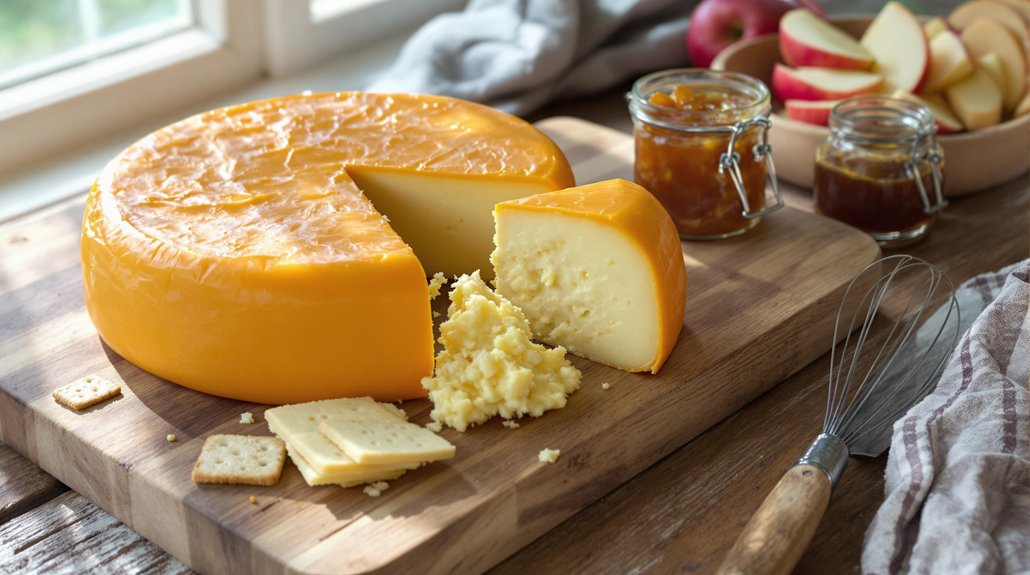
Hoop cheese, one of America's oldest indigenous cheese varieties, is made from pure cow's milk with no additives or preservatives. You'll recognize it by its distinctive red wax coating, which preserves its mild, slightly tangy flavor and crumbly texture. It melts beautifully in traditional Southern recipes like cheese grits, biscuits, and apple casseroles. While increasingly rare in modern markets, this humble cheese offers a genuine taste of Southern culinary heritage worth exploring further.
The Origins and History of Southern Hoop Cheese
The humble beginnings of hoop cheese stretch back through generations of Southern culinary tradition, representing one of America's earliest indigenous cheese varieties. Made from pure cows milk on small farms throughout the South, this cheese earned its name from the cylindrical wooden hoops used to shape it during the manufacturing process.
What made hoop cheese special in Southern cuisine:
- Each producer developed their unique flavor profile, creating regional variations that reflected local tastes
- It provided rural communities with accessible dairy nutrition when refrigeration was limited
- Despite its short shelf life, it became integral to family meals and traditions
Though once ubiquitous in country stores across the region, hoop cheese's availability declined as mass production and standardization transformed America's food landscape in the 20th century. Unlike Wisconsin cheeses, which have been regulated with strict production standards since the early 1900s, traditional Southern hoop cheese relied primarily on local knowledge and techniques passed down within families.
What Makes Hoop Cheese Unique: Ingredients and Production Methods
Simplicity defines authentic hoop cheese at its core, distinguishing it from most modern commercial cheeses flooding supermarket shelves today. Unlike processed varieties, traditional Southern hoop cheese contains only cow's milk—no additives, preservatives, or artificial ingredients.
The production process remains refreshingly uncomplicated. After curdling the milk, cheesemakers focus on thoroughly draining the whey before pressing the curds into a distinctive hoop-shaped mold, creating its characteristic cylindrical form. This shape isn't just decorative—it's functional, allowing for proper aging and moisture release.
You'll notice two common varieties: "red ring" and "black rind," each reflecting specific aging techniques. The absence of preservatives gives hoop cheese its genuinely natural flavor but limits shelf life to just 1-2 weeks. For baking enthusiasts, the softer "bakers cheese" version adds wonderful creaminess to Southern recipes.
The Distinctive Red Rind: Why Hoop Cheese Has Its Signature Look
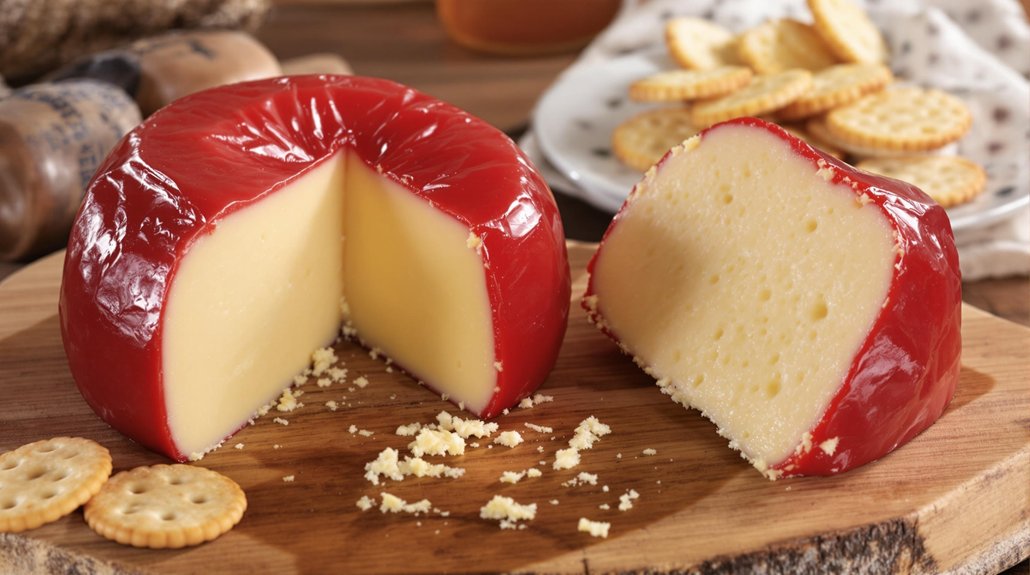
Walking past a country store's cheese counter, you'll immediately recognize hoop cheese by its most iconic feature—the vibrant red wax coating that encases this Southern classic. This distinctive red rind isn't just decorative; it serves essential purposes in preserving the cheese's quality and establishing its identity.
The red wax coating offers three key benefits:
- Seals in freshness, preventing the semi-hard cheese from drying out
- Protects the crumbly texture that makes hoop cheese perfect for crumbling over dishes
- Helps distinguish between aging varieties—while the standard red rind indicates a milder flavor, some hoop cheese varieties feature a black rind, signaling a sharper, more mature profile
When you spot that characteristic red rind, you're looking at centuries of cheesemaking tradition preserved in a colorful package.
Flavor Profile and Texture: Understanding Hoop Cheese's Appeal
Though often overshadowed by its more pungent cheese cousins, hoop cheese commands a devoted following thanks to its distinctive balance of flavor and texture. This unique type of cheese offers a mild, slightly tangy, and buttery taste that doesn't overwhelm your palate like many aged cheeses.
When you sample hoop cheese from a local producer, you'll notice its semi-hard, crumbly texture that melts beautifully while maintaining its creamy character. It's similar to a mild cheddar but with a softer consistency. Made from pasteurized cows' milk, its neutral profile allows other ingredients to shine in recipes.
On a cheese plate, hoop cheese provides a pleasant counterpoint to stronger varieties. This balance of taste and texture explains why it remains a beloved staple in traditional Southern cuisine.
Cooking With Hoop Cheese: Traditional Southern Recipes and Pairings
The kitchen is where hoop cheese truly shines, transforming humble Southern staples into comfort food masterpieces. This creamy delight, made from cow's milk and historically sold in general stores throughout the southern United States, melts beautifully into dishes while adding rich flavor.
Try these classic pairings when you find hoop cheese at specialty markets:
- Fold it into hot grits for a creamy breakfast with more depth than using butter alone
- Layer it in apple casseroles with Ritz crackers for a sweet-savory contrast that enhances the fruit's natural sweetness
- Combine it with sharper cheeses in biscuits or casseroles to create balanced flavor profiles
Give this traditional cheese a try in both savory and sweet applications—its mild, versatile nature complements nearly any Southern dish.
Storing and Preserving Your Hoop Cheese for Maximum Freshness
Proper storage considerably extends the life of your hoop cheese, allowing you to enjoy its distinctive flavor for weeks or even months after purchase. Unlike many dairy products you'll find in grocery stores, unopened hoop cheese boasts an impressive shelf life of several months when refrigerated.
Once you've opened your cheese, wrap it tightly in plastic wrap or wax paper to prevent excess moisture loss. Never leave hoop cheese at room temperature for extended periods, as this accelerates spoilage. Most specialty cheese stores recommend checking it weekly for any signs of deterioration.
For long-term preservation, freezing is an option, though you may notice slight texture changes when thawed. The naturally low moisture content helps hoop cheese maintain its quality longer than many other fresh varieties.
Where to Find Authentic Hoop Cheese in Modern Markets
Finding authentic hoop cheese requires knowing where to look in today's modernized food landscape. While this Kind Of Cheese isn't as widespread as it once was, you can still track down this creamy Southern staple if you know where to search.
Specialty cheese shops - These establishments often stock regional favorites and might carry a wheel of cheese from small-batch producers who still offer traditional recipes.
Local grocery stores and general markets - Particularly in the South, Midwest, and Texas, where hoop cheese would historically have been a staple item.
Farmers markets and online Southern food retailers - These venues celebrate regional food traditions and frequently feature authentic hoop cheese for those seeking its mild, versatile flavor and nostalgic appeal.