Is Camembert Cheese Popular in Japan?
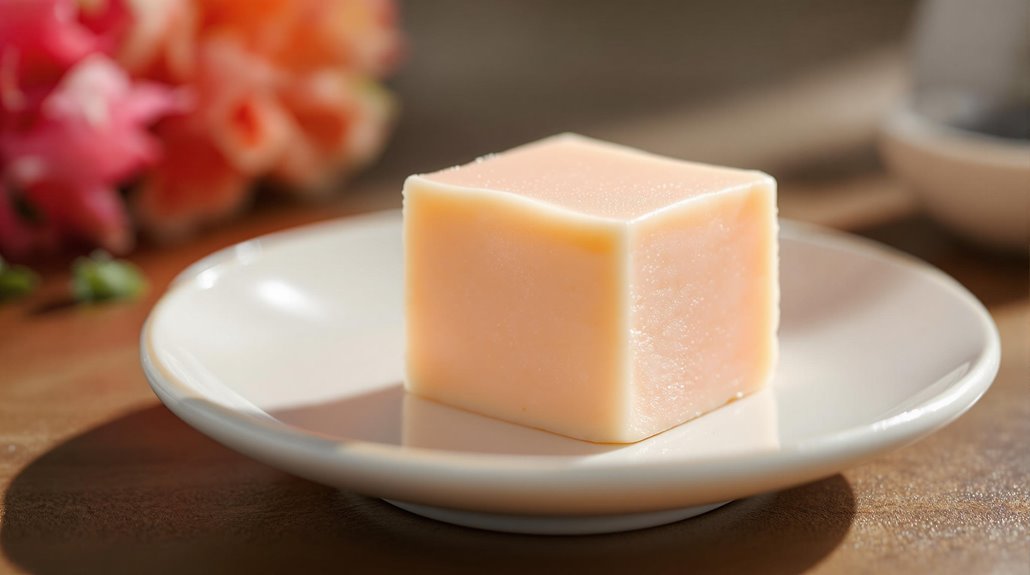
You'll find Camembert reigning as one of Japan's most celebrated cheeses, appearing in both traditional dishes and modern fusion cuisine. While mozzarella remains popular for everyday cooking, Camembert has captured Japanese culinary imagination with its creamy texture and adaptability to local flavors. Japanese artisans have even developed their own milder varieties, reflecting the country's unique approach to Western ingredients. The story of how this French cheese became popular in Japanese hearts reveals fascinating cultural shifts.
The Rise of Camembert in Japanese Cuisine
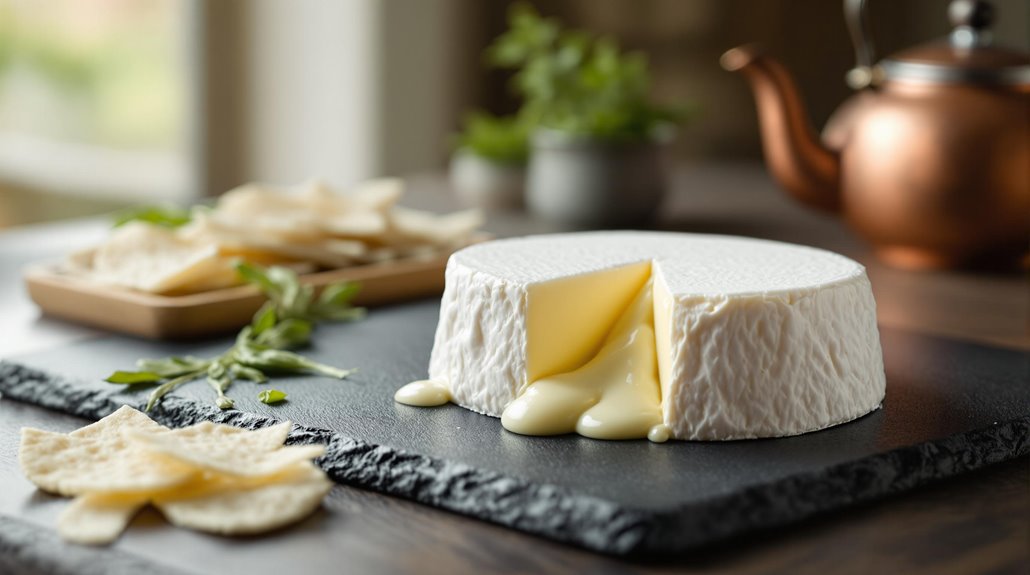
While cheese isn't traditionally associated with Japanese cuisine, Camembert has carved out a unique place in the country's culinary domain. You'll find this creamy French cheese featured prominently in both modern Japanese dishes and innovative fusion creations, as local chefs accept its versatile nature.
Japanese cooks have uncovered that Camembert works exceptionally well with their traditional cooking methods, whether it's grilled, fried, or baked. To better match local taste preferences, Japanese producers have even developed their own varieties of Camembert with milder flavor profiles.
The growing popularity of Camembert reflects a broader shift in Japanese food culture, where cheese consumption continues to rise. This soft, creamy cheese has become so beloved that it's now considered a staple ingredient in many Japanese households and restaurants. Its buttery and sweet flavor makes it particularly appealing when paired with traditional Japanese ingredients.
Historical Development of Cheese Culture in Japan
Despite its recent surge in popularity, cheese has a longer history in Japan than many realize. Ancient texts from the Asuka period mention early forms of cheese called "so" and "daigo," showing that dairy products weren't completely foreign to Japanese culture. You'll find that a significant shift occurred when the 8th Tokugawa shōgun imported cows from India to produce dairy items like hakugyūraku butter. Much like the Mongolian cheese influence during China's Yuan dynasty, Japan experienced its own dairy transformation through foreign contact.
The real metamorphosis of cheese in Japan came after the Meiji restoration, as the government actively promoted dairy consumption as a symbol of modernization. Today, the mountainous northern region of Hokkaidō leads Japan's domestic cheese production, with artisanal cheese makers and specialty shops flourishing across the country. This growth reflects both Japan's successful adaptation of Western dairy culture and its unique contribution to global cheese making.
Modern Japanese Cheese Production and Artisans
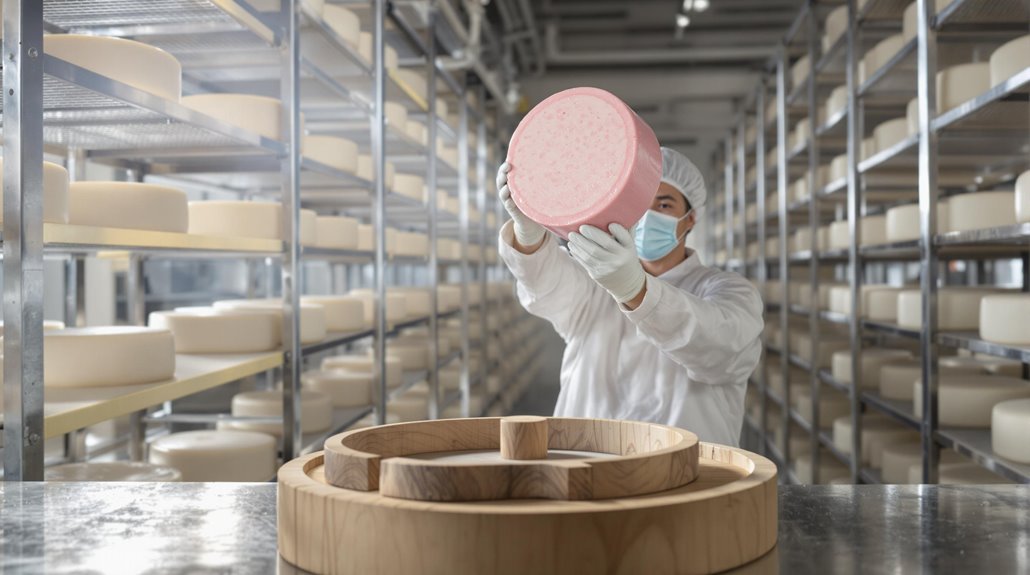
The modern Japanese cheese scene has evolved into an ever-changing community of skilled artisans who blend traditional European techniques with local innovations. You'll find pioneering producers like Atelier de Fromage in Nagano, which introduced Japan's first brie-style cheeses in 1982. Today, they've created an exclusive label featuring over 20 varieties.
Notable artisans include Chiyo Shibata, a microbiologist at Fromagerie Sen, who crafts cheese from local Holstein milk. In rural Hiroshima, Mirasaka Fromage produces award-winning varieties from free-roaming goats and cows. The Natural Cheese Contest regularly recognizes exceptional producers like Ima Farm in Tochigi Prefecture, known for their Chausudake cheese made from a mix of Saanen goat, Brown Swiss, and Holstein milk. These artisans are redefining Japanese cheese by incorporating local ingredients and techniques. The renowned Kyodo Gakusha Shintoku Farm in Hokkaido produces the award-winning Sakura cheese, a unique camembert-style creation washed in local sake.
Popular Ways to Enjoy Cheese in Japan
Since cheese made its way into Japanese cuisine, creative adaptations have altered how people enjoy this versatile ingredient. You'll find dairy products incorporated into traditional dishes in surprising ways, with mozzarella being the most adaptable type of cheese due to its mild flavor profile.
You can experience cheese in distinctly Japanese interpretations, from Parmesan-enhanced miso soup to unique fishcakes stuffed with cheese. In Nagoya, you'll uncover the local specialty miso-nikomi udon sometimes featuring Camembert cheese. For a quick bite, try sliced cheese wrapped in nori seaweed, combining familiar Western ingredients with Japanese elements.
The popularity of cheesecakes also shows how Japanese cuisine has welcomed this dairy product while maintaining its cultural identity. These innovative combinations demonstrate how Japan has successfully integrated cheese into its culinary realm.
Traditional Japanese Dishes With Cheese Adaptations
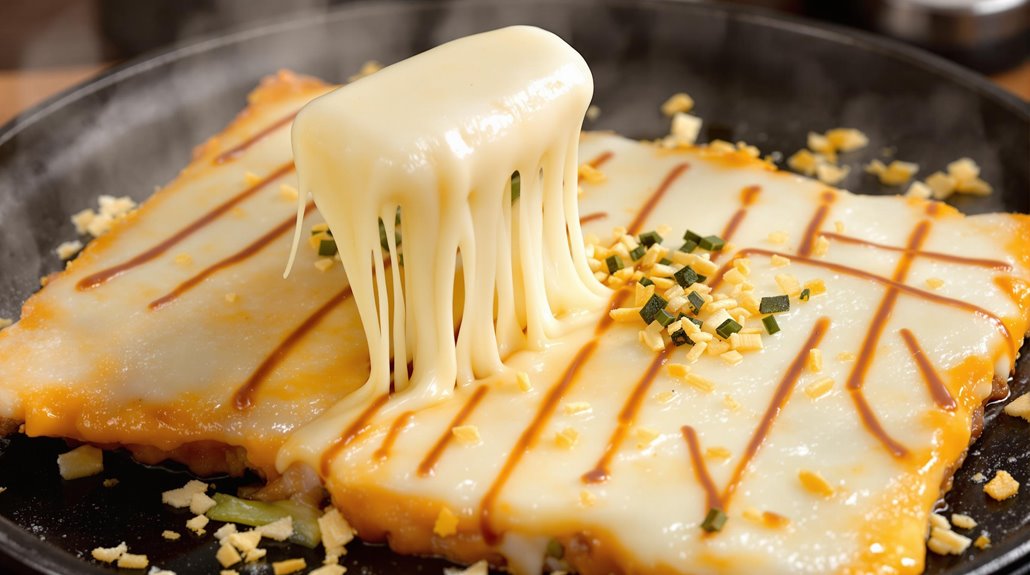
Modern Japanese cuisine has altered traditional dishes by incorporating cheese in innovative ways that respect original flavors while adding new dimensions. Around Chiba, chefs create original interpretations of classics like miso soup and udon by carefully blending in mild mozzarella to enhance rather than overpower the traditional taste profiles.
You'll find creative adaptations like cheese-stuffed fishcakes and seaweed-wrapped cheese sticks that showcase how Japanese cooking accepts fusion elements. Rather than using strong Swiss or French varieties, chefs opt for milder Japanese Emmentaler and Jarlsberg cheeses that complement umami-rich ingredients. They'll often pair cheese with distinctly Japanese elements like umeboshi plums and nori seaweed to create unique flavor combinations. These adaptations demonstrate how Japanese cuisine continues to evolve while maintaining its cultural identity.
Japanese Consumer Preferences and Market Trends
Consumer habits in Japan reflect a growing appetite for cheese, with per capita consumption reaching 2.35 kilograms in 2023. You'll find that Japanese consumers particularly favor cheddar, mozzarella, cream cheese, brie, and camembert, with a notable openness to exploring new varieties.
The market has evolved beyond traditional options, including specialty cheeses like Sasayuki, a soft cheese from Japan's northern island that's infused with Dutch myrtle. This expansion aligns with the increasing popularity of Western-style cuisine and fusion dishes. You'll notice more cheese-based products in Japanese markets, from snacks to baked goods, demonstrating how deeply cheese has become integrated into contemporary Japanese food culture. The steady growth of imported cheese varieties further indicates that Japan's cheese market continues to evolve and diversify.