Low-Sodium Cheeses: Top Picks for Health-Conscious Diets
If you're watching your sodium intake, several cheese options can satisfy your cravings while supporting heart health. Swiss cheese stands out with just 53mg per ounce, while fresh mozzarella (138mg) and ricotta (123mg per half cup) offer moderate sodium levels. Mascarpone contains only 15mg per tablespoon, and low-sodium cottage cheese provides a mere 29mg per cup. These varieties deliver calcium and protein benefits without excessive salt, making them perfect additions to a balanced diet. Discover creative ways to enjoy these cheeses in everyday meals.
Understanding Sodium Content in Different Cheese Types
While many cheese lovers worry about sodium intake, several varieties offer flavorful alternatives with markedly less salt. Swiss cheese stands out as an exceptional option with just 53 mg of sodium per ounce—significantly lower than most cheeses.
If you're monitoring your sodium intake, cottage cheese in low-sodium formulations contains a mere 29 mg per cup, making it ideal for daily consumption. Fresh mozzarella (138 mg per ounce) and ricotta cheese (123 mg per half cup) provide creamy textures with moderate sodium levels.
For those who enjoy distinctive flavors, goat cheese offers a tangy profile with 118 mg of sodium per ounce. When choosing low-sodium cheeses, remember that fat content varies independently, so you can find options that satisfy both your sodium restrictions and fat preferences.
Many of these low-sodium options are also excellent choices for people with lactose intolerance, as aged cheeses like Swiss contain minimal lactose content.
The Connection Between Cheese, Sodium, and Heart Health
Though cheese is a beloved staple in many diets, its sodium content has raised concerns among health professionals monitoring cardiovascular wellness. Your daily sodium intake directly impacts your blood pressure, with excessive consumption potentially leading to heart disease.
Interestingly, not all dairy products carry the same risk. Cheeses low in sodium, like Swiss and fresh mozzarella, can actually fit well into a heart-healthy, low-sodium diet. Recent studies suggest moderate cheese consumption may even lower cardiovascular disease risk, thanks to beneficial nutrients like vitamin K2, which helps prevent arterial calcification.
To maintain healthy calcium intake while protecting your heart, focus on varieties that contain less than 140mg of sodium per serving. By choosing wisely, you'll enjoy cheese's nutritional benefits without compromising your blood pressure goals. The calcium and casein in cheese also contribute to dental health by forming a protective layer on teeth that shields against harmful acids.
Six Low-Sodium Cheese Options for Everyday Enjoyment
Despite common assumptions about cheese being high in sodium, several varieties offer delicious flavor with minimal salt content. Fresh mozzarella contains just 85 mg of sodium per ounce, perfect for Caprese salads. Swiss cheese is even lower with 53 mg per ounce, making it ideal for Mushroom-Swiss Turkey Burgers.
Ricotta cheese provides a versatile option with 136 mg per half-cup serving, wonderful in both savory lasagna and sweet overnight oats. For a creamy texture with barely any sodium, try mascarpone cheese at only 15 mg per tablespoon. Low-fat, no-sodium-added cottage cheese is another excellent choice at just 29 mg per cup. These low-sodium options allow you to enjoy your favorite cheese-based dishes without compromising your health goals.
Creative Ways to Incorporate Low-Sodium Cheeses Into Meals
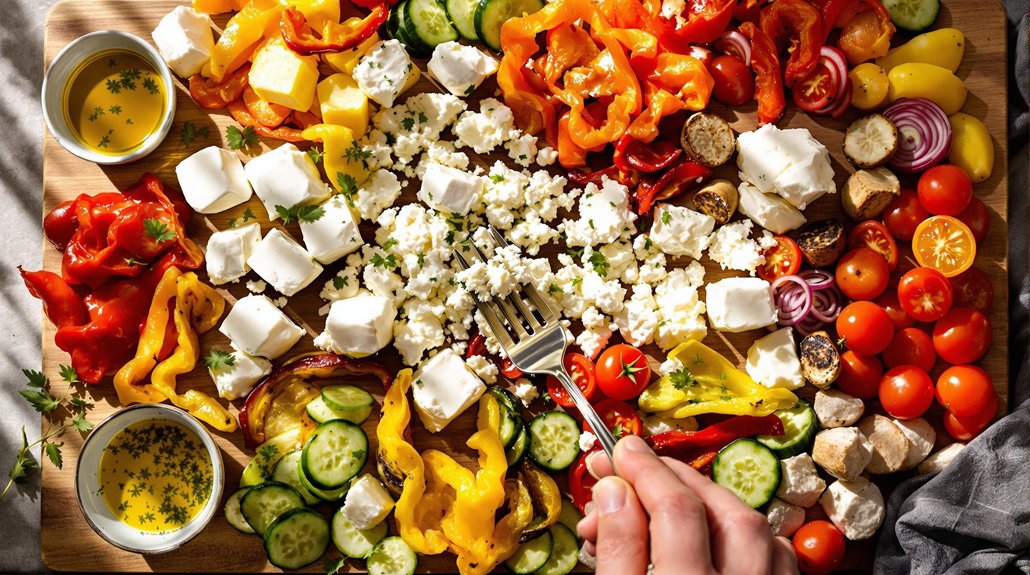
Now that you're familiar with low-sodium cheese options, let's explore how to incorporate them into delicious meals that won't compromise your health goals. Adding these cheeses to your heart-healthy diet can bring flavor without excess sodium.
- Top Caprese Stuffed Portobello Mushrooms with fresh mozzarella cheese or layer it in a Roasted Bell Pepper Salad with Basil
- Create Mushroom-Swiss Turkey Burgers for a delicious way to enjoy swiss cheese in your healthy diet
- Use ricotta cheese to prepare creamy Eggplant Lasagna Rolls or mix into Fig & Ricotta Overnight Oats
- Spread mascarpone cheese on Berries Toast or mix into Creamy Spinach Pasta for rich texture
- Combine low-fat cottage cheese with fresh fruit or create a simple Cottage Cheese Salad for a protein-packed meal
Reading Nutrition Labels: What to Look for When Choosing Cheese
When shopping for heart-healthy cheese options, understanding nutrition labels becomes your most valuable skill in traversing the dairy aisle. Always check the Nutrition Facts label first, focusing on sodium per ounce—aim for varieties with less than 200 mg per serving.
As you read the nutrition information, compare sodium content across cheese varieties. Fresh, unprocessed options like Swiss and cottage cheese naturally contain lower sodium levels than aged varieties. Many dairy products now offer low-sodium cheeses specifically designed for health-conscious consumers.
Don't forget to check for "no-salt-added" versions of your favorite cheese varieties, particularly cottage cheese. While monitoring sodium, also consider saturated fat content to maximize health benefits. Remember that portion size matters—even low-sodium cheeses can contribute considerably to your daily intake when consumed in large amounts.
Balancing Flavor and Health: Portion Control With Higher-Sodium Cheeses
You don't have to cut out flavorful cheeses like halloumi, blue, or feta entirely from your diet. With smart portion control, you can enjoy high-sodium cheeses while maintaining a healthy diet. The key is moderate consumption and thoughtful pairings.
Limit portions to 1-2 tablespoons of high-sodium cheeses to add flavor without excessive sodium. Pair strong cheeses with low-sodium foods to balance your overall sodium content. Use herbs and spices as flavor-enhancing techniques to reduce cheese quantities. Create balanced meals where small portions of flavorful cheese complement other ingredients. Track your sodium content across meals when incorporating higher-sodium cheese varieties.
Related posts