Pecorino Cheese Explained: Varieties, Flavor Profiles & Best Pairings
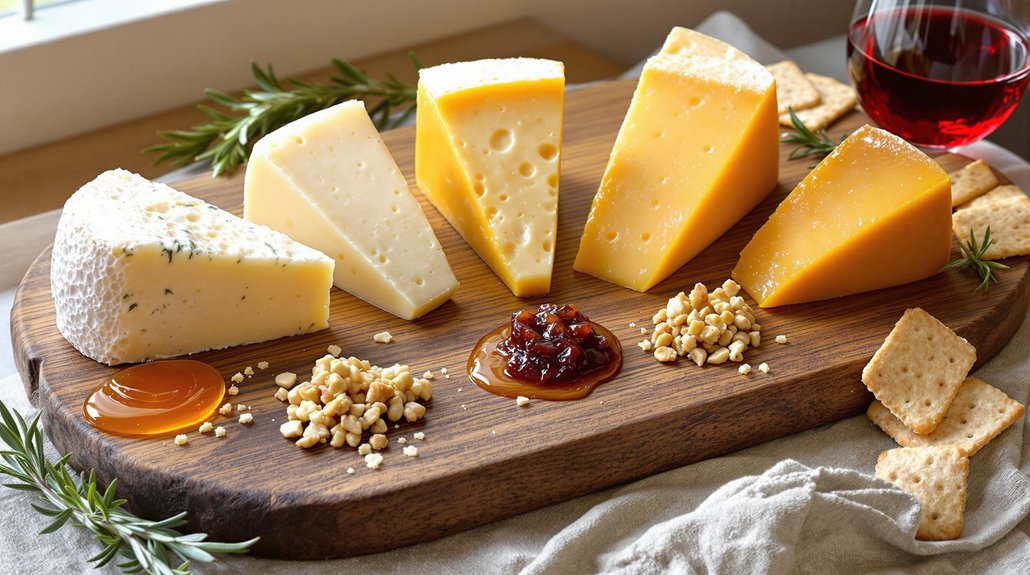
Pecorino is Italy's traditional sheep's milk cheese, ranging from mild and creamy when young to intensely sharp and salty when aged. You'll find six PDO-protected varieties, including the famous Romano and milder Toscano, each reflecting unique regional characteristics. Pair younger Pecorinos with honey and fruit, while aged varieties complement robust red wines and pasta dishes. Beyond grating, you'll discover this versatile cheese enhances everything from cheese boards to complex recipes. The true depth of Pecorino awaits.
The Ancient Origins of Pecorino Cheese
Five thousand years of culinary history stand behind every bite of Pecorino cheese. This iconic Italian delicacy traces its roots to ancient Roman times, with mentions even appearing in Homer's Odyssey. The cheese's name derives from "pecore," meaning "sheep," highlighting its essential ingredient: sheep's milk.
Originally produced in the Lazio region surrounding Rome, Pecorino emerged as a more affordable alternative to Parmigiano-Reggiano. Roman legionnaires valued this firm, salty cheese as portable, high-protein sustenance during lengthy military campaigns.
Over centuries, production expanded beyond central Italy, with Sardinia eventually becoming a major Pecorino producer. Today's varieties still reflect these ancient traditions, preserving methods that have sustained Mediterranean communities for millennia, while continuing to evolve in regional expressions across the Italian peninsula. The Romans developed and refined various cheese types in dedicated cheese kitchens called caseale, where they perfected the aging processes that give Pecorino its distinctive flavor.
What Makes Pecorino Different From Other Cheeses
While ancient Romans appreciated Pecorino for its practicality, modern cheese enthusiasts value it for its distinctive characteristics that set it apart from other cheeses. Unlike most Italian cheese varieties, Pecorino is crafted exclusively from sheep's milk, giving it a higher fat content and firmer texture than its bovine counterparts like Parmesan.
The aging process, ranging from 20 days to over 2 years, transforms Pecorino from mild and creamy to intensely sharp with a distinctive salty flavor. Traditional production methods, including brine washing and cave aging, further enhance its unique profile.
Whether you're sampling the intense Pecorino Romano, the aromatic Pecorino Sardo, or the milder Pecorino Toscano, you'll notice how versatile these cheeses are—delicious on their own or grated over your favorite dishes. Particularly, Pecorino Romano is considered a prominent example of hard cheese types with its characteristically hard, salty texture that makes it ideal for grating and seasoning.
The Traditional Production Process
Though seemingly simple, the traditional production of Pecorino follows a meticulous process refined over thousands of years. This Italian cheese's distinctive character comes from a carefully orchestrated production method that transforms sheep's milk into the firm, crumbly Romano you'll find on your table.
Fresh sheep's milk is warmed and combined with rennet, separating curds from whey—the first vital step in Pecorino's creation. These curds are cut into small kernels, cooked until firm, then pressed into the cheese's iconic drum-shaped molds.
Each cheese drum undergoes hand washing in brine, initiating the development of its complex flavor profile. The aging process, lasting from 20 days to two years in temperature-controlled caves, completes the transformation, determining how aged and robust your Pecorino will taste.
The Six PDO-Protected Varieties of Pecorino
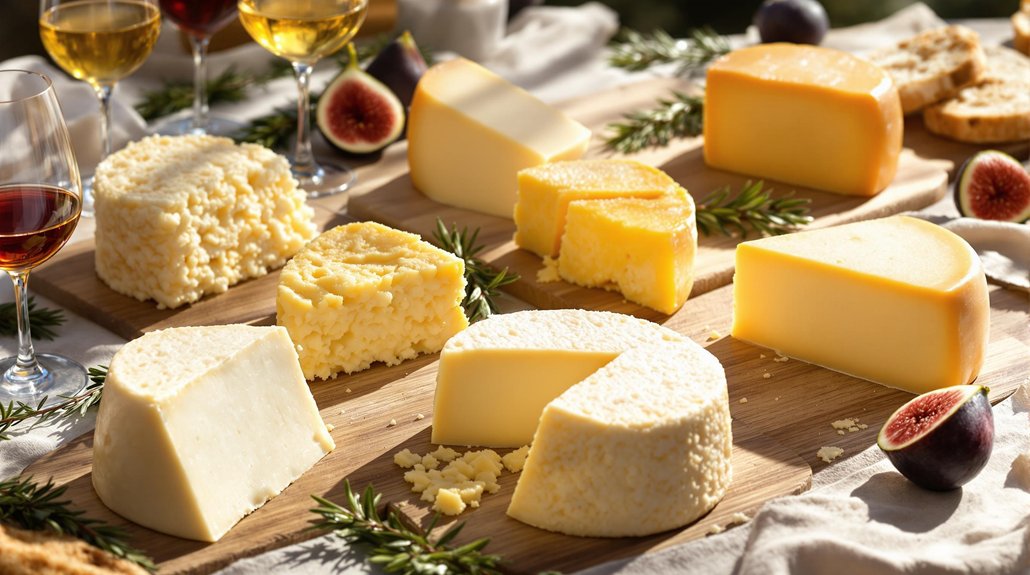
As Italy's culinary heritage receives legal protection across Europe, six distinctive Pecorino cheeses have earned the prestigious Protected Designation of Origin (PDO) status. These varieties of Pecorino cheese represent Italy's diverse regional traditions.
You'll likely recognize Pecorino Romano with its firm texture and salty, sharp flavor profile. From Sardinia comes Pecorino Sardo, offering a creamier, softer experience.
Pecorino Toscano delivers mild, grassy notes whether young (20 days) or aged (3 months). Pecorino Siciliano, often studded with peppercorns, ages between 3-18 months, developing complex flavors.
The lesser-known Pecorino di Filiano and Pecorino Crotonese complete the PDO-protected collection, each representing distinct regional craftsmanship. These designations guarantee authentic production methods continue, preserving Italy's cheesemaking legacy for generations to come.
From Mild to Sharp: Understanding Pecorino's Aging Process
Beyond the geographic distinctions of Italy's PDO-protected varieties, time itself transforms pecorino's character in remarkable ways. The journey from mild to sharp reveals why this hard cheese rivals even Parmigiano Reggiano in complexity.
The aging process unfolds through distinct stages:
- Young (2-4 months): You'll find a creamy texture with gentle salty notes and buttery mouthfeel
- Semi-stagionato (4-8 months): Texture firms while nutty flavors emerge alongside fruity undertones
- Stagionato (8+ months): Pecorino Romano and other aged varieties develop pronounced sharpness, crumbly texture, and complex flavor profiles
- Visual transformation: Watch as rinds evolve from pale white to rich amber, signaling the maturing process inside
The sheep's milk's higher fat content guarantees even young pecorinos deliver richness that intensifies remarkably with age.
Regional Variations and Local Specialties
The regional diversity of Italy's pecorino landscape offers cheese enthusiasts a remarkable journey across distinctive terroirs and traditions. While Pecorino Romano from the regions of Lazio is perhaps the most famous of the six main varieties, each region's sheep's milk cheese boasts its own Protected Designation of Origin (PDO).
You'll find Pecorino Toscano delivering nutty notes with caramel hints, while Sicily's Pecorino Siciliano Stagionata presents a spicy fragrance with buttery undertones. Traveling to Sardinia, you'll discover Pecorino Sardo is distinctly less intense than its Lazio cousin. The Basilicata region offers Pecorino di Filiano, characterized by a mellow flavor with a light tang. Meanwhile, Calabria's aged Pecorino Crotonese, matured for at least 90 days, delivers a more robust flavor profile.
Perfect Food Pairings for Different Pecorino Types
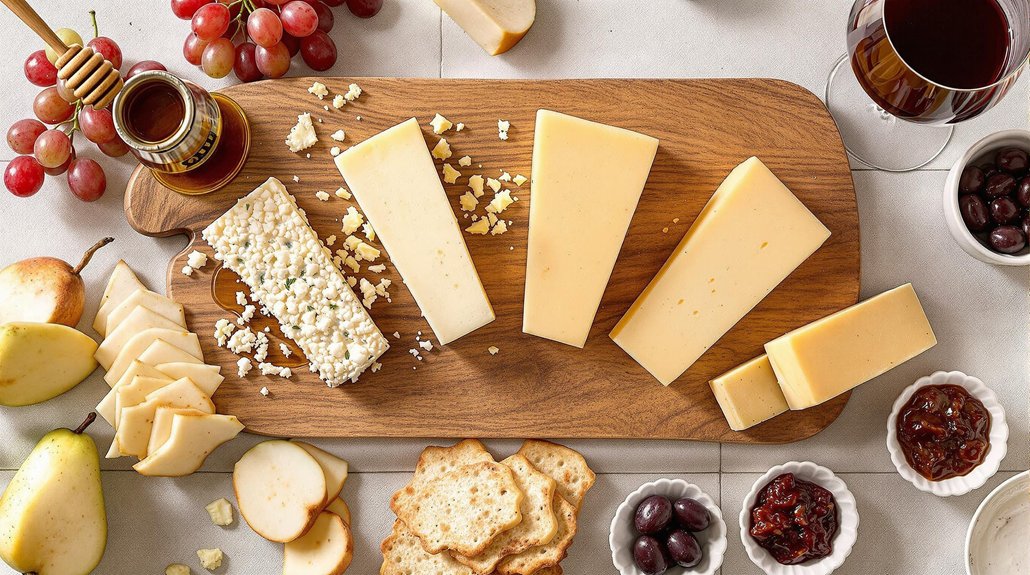
Discovering the ideal food pairings for each type of pecorino can transform your cheese experience from merely enjoyable to truly exceptional. This sheep's milk cheese offers versatile pairing options that highlight its distinctive characteristics.
- Pecorino Romano: Its bold profile stands up to pickled giardiniera and green olives. Add it to pasta dishes or enjoy with a robust red wine like Cabernet Sauvignon.
- Pecorino Toscano: Its nutty sweetness shines alongside pears, walnuts, and honey. Try it with Sauvignon Blanc.
- Young Pecorino Sardo: With its creamy texture, this ewe's milk variety complements simple crackers and fresh fruits.
- Pecorino Siciliano Stagionata: Perfect for your Cheese Board with its spicy, buttery notes that pair beautifully with cured meats and figs.
Wine Selection Guide for Pecorino Enthusiasts
When selecting wines for pecorino cheese, understanding the maturity and flavor profile of your specific variety will lead you to the perfect pairing. For traditional Pecorino Romano, aged for at least eight months from Sardinian sheep or other Italian ewe's milk with PDO designation of origin, reach for full-bodied red wines like Cabernet Sauvignon, Chianti, or Barolo that complement the cheese's robust saltiness and complexity.
Younger Pecorino varieties showcase creamier textures that pair beautifully with crisp, dry white wines including Sauvignon Blanc, Gewürztraminer, and Riesling. Remember that delicate whites will be overwhelmed by aged cheeses with their nutty and fruity undertones—these mature Pecorinos demand tannic reds that can match their assertive character. Your wine choice should always reflect the intensity of your specific Pecorino selection.
Cooking Applications: Beyond Grating and Cheese Boards
Versatile cooking applications elevate Pecorino cheese beyond its traditional roles as a pasta topping or cheese board staple. This sheep's milk cheese often transforms Italian recipes with its distinctive saltiness and depth.
- Melt Pecorino Romano into pasta dishes like cacio e pepe or carbonara, where it creates a silky, umami-rich sauce that clings perfectly to noodles.
- Use its firm texture to your advantage by shaving or crumbling it over salads and grain bowls for textural contrast and flavor enhancement.
- Incorporate milder varieties like Pecorino Toscano into baked goods—breads, tarts, and savory scones all benefit from its nuanced profile.
- Create creamy sauces and dips that pair well with crudités and crusty bread, offering a sophisticated alternative to being simply grated over pasta.