Robotic Cheese Makers: How Automation Is Revolutionizing Cheese Production
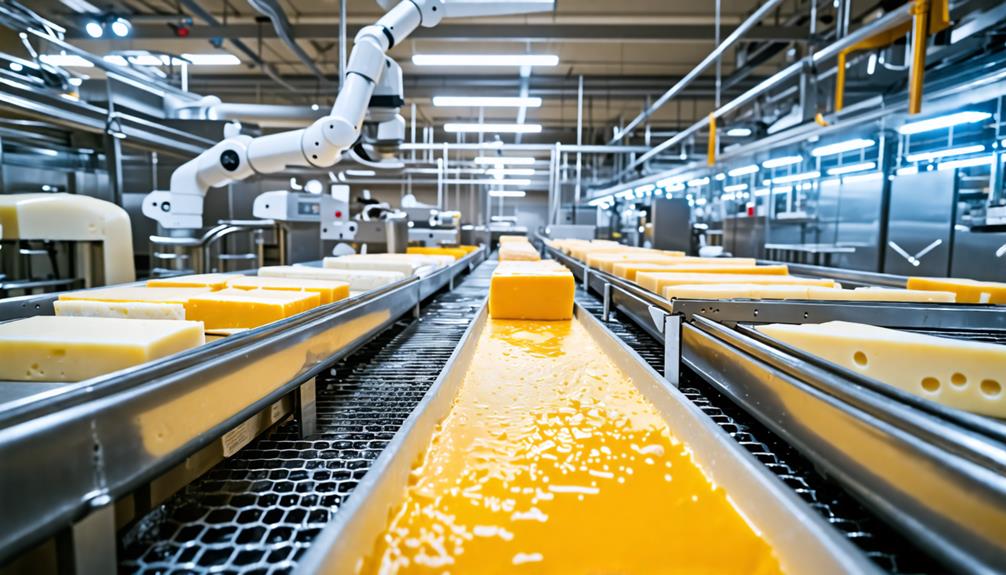
Automation is transforming various sectors, including cheese production. Robotic cheese makers enhance efficiency and consistency by minimizing human error and optimizing quality control. Advanced technologies allow companies to monitor processes in real-time and address issues promptly. However, this transition towards automation also raises concerns about sustainability and the preservation of traditional cheese-making methods. What are the broader implications for the industry and consumers?
Automation in Cheese Production
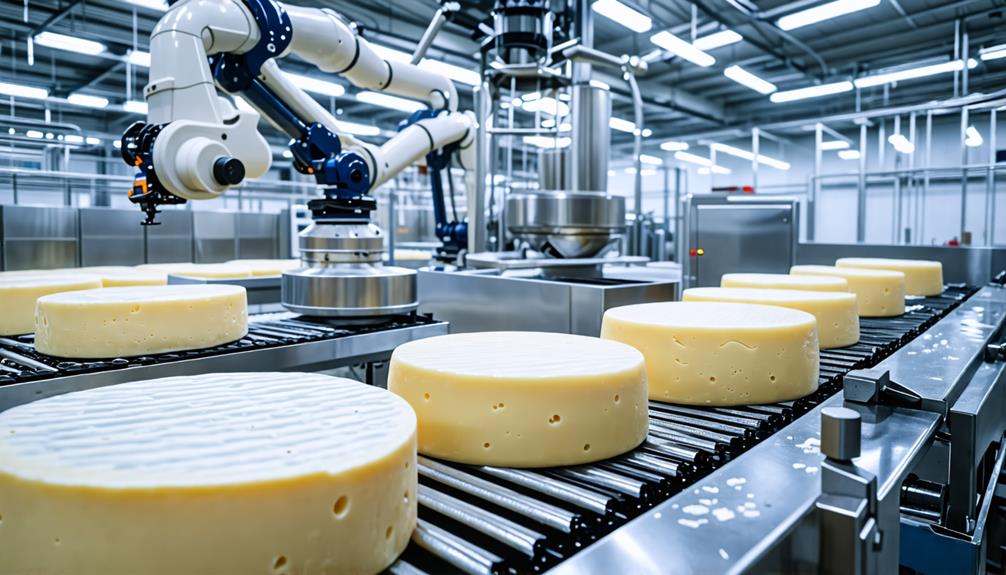
Automation in cheese production significantly enhances efficiency by employing advanced machinery for tasks such as pasteurization, cutting, and packaging. This transition to automation leverages robotic systems to execute repetitive tasks with high precision, thereby reducing human error and ensuring consistency across all batches of cheese.
Incorporating these robotic systems also elevates quality control, as real-time monitoring becomes a standard practice. This enables precise adjustments throughout the production process, minimizing waste and ensuring that the cheese consistently meets high standards. For instance, automated packaging technologies like those from ESPERA ensure accurate labeling and compliance with safety regulations, which is crucial in today's market.
The time savings achieved through automation are considerable. Companies such as Friesland Foods Cheese have reported saving over 500 hours per week thanks to robotic packaging systems. This boost in operational efficiency allows the workforce to focus on more complex tasks that require human oversight. Overall, adopting automation in cheese production leads to higher quality, improved efficiency, and a competitive advantage in an ever-evolving industry.
Impact of Digital Technology
Digital technology is revolutionizing cheese production by providing real-time insights and enhancing quality control through advanced data analytics and machine learning. These innovations lead to a more efficient and reliable cheese-making process, ensuring each batch meets the highest standards.
Consider the benefits of digital technology:
- Improved Quality: Advanced real-time monitoring detects inconsistencies early, preventing potential problems.
- Reduced Waste: Optimized recipes minimize excess, making production more sustainable.
- Quick Adaptation: Data analytics enable swift adjustments to production strategies based on consumer trends and demands.
Embracing automation not only streamlines operations but also facilitates informed decision-making, positively impacting your bottom line. Real-time data allows for rapid responses, crucial in today's fast-paced market. By integrating digital technology into cheese production, you enhance every aspect—quality, efficiency, and customer satisfaction. This transformation heralds a new era in cheese-making, where every wheel is crafted with precision and care.
Enhancing Labeling Processes
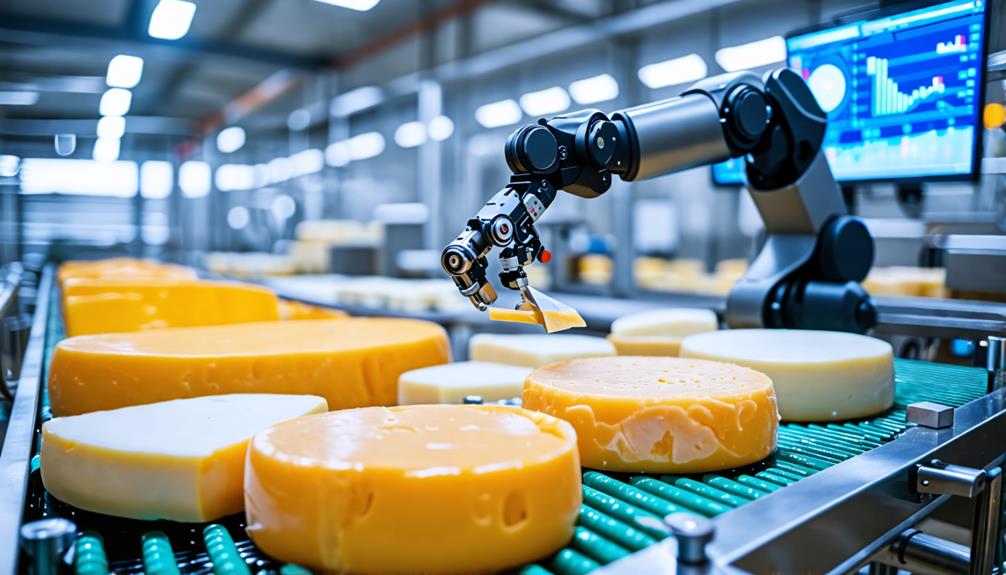
To enhance labeling processes, implement real-time updates to significantly improve accuracy. Utilize automated compliance checks to ensure adherence to safety regulations without the need for manual intervention. Additionally, advanced traceability systems will allow you to confidently track every cheese product throughout its lifecycle.
Real-time Label Updates
Real-time label updates are transforming the cheese production process by ensuring accurate and compliant labeling, significantly reducing the risks associated with errors. Integrating automation enhances product quality and minimizes human error. With real-time monitoring systems, cheese producers can swiftly adapt to changes and uphold high standards throughout the production cycle.
Here are some emotional benefits of real-time label updates:
- Peace of Mind: Accurate labels allow you to focus on crafting exceptional cheese.
- Safety Priority: Reduced contamination risks ensure your products are safe for consumers.
- Operational Efficiency: Streamlined processes lead to quicker production times, enabling you to meet demand more effectively.
Solutions like ESPERA's digital systems enable quick adaptations to product changes, ensuring every label accurately reflects the unique characteristics of your cheese. Automation reduces the likelihood of mistakes, enhancing operational efficiency and strengthening your reputation in the competitive cheese market.
Improved Traceability Systems
Enhancing traceability systems in cheese production ensures accurate labeling and compliance with safety regulations. Integrating automation streamlines dairy industry processes, ensuring every product adheres to stringent safety standards.
Automated labeling systems minimize human error and contamination by directly linking with production processes for consistent and precise labeling. This enhances the management of unique product characteristics, bolstering consumer trust and product safety.
Key benefits of improved traceability systems include:
| Benefit | Description | Impact on Product Safety |
|---|---|---|
| Real-time Updates | Online databases provide immediate and accurate labeling information. | Ensures regulatory compliance |
| Dynamic Printing | Technologies like ESPERA enable precise label production. | Minimizes labeling errors |
| Extensive Tracking | Enables thorough tracking from production to packaging. | Facilitates efficient recall management |
Automated Compliance Checks
Automated compliance checks ensure that labels are accurate and meet regulatory standards, significantly enhancing the labeling process. Leveraging advanced technology, you can be confident that your products comply with safety regulations, thereby reducing risks associated with human error.
Here's how automated compliance checks enhance your labeling processes:
- Accuracy: Real-time updates from reliable online databases ensure your labels are always correct and up-to-date.
- Traceability: Enhanced tracking capabilities allow for better management of product details and histories, ensuring complete and accurate records.
- Safety: Automation minimizes contamination risks, maintaining high food safety standards.
Benefits of Automation
Automation in cheese production offers numerous advantages, from enhancing efficiency to ensuring food safety. By integrating robotic systems, companies like Friesland Foods Cheese save over 500 hours each week through streamlined packaging processes. This level of automation significantly improves operational efficiency, enabling complex tasks like curd stirring and palletizing to be executed with high precision.
A key benefit of automation is its positive impact on food safety. Robots minimize human error, thereby reducing the risk of pathogen contamination during processing. Automated systems also facilitate thorough cleaning with high-pressure water and solvents, further enhancing hygiene standards.
Additionally, automation addresses labor challenges by reducing labor costs and mitigating seasonal labor shortages. It takes over physically demanding and hazardous tasks, ensuring a safer work environment. Real-time data analytics enable precise monitoring and adjustments, maintaining consistent quality and compliance with regulatory standards.
Quality Control Innovations
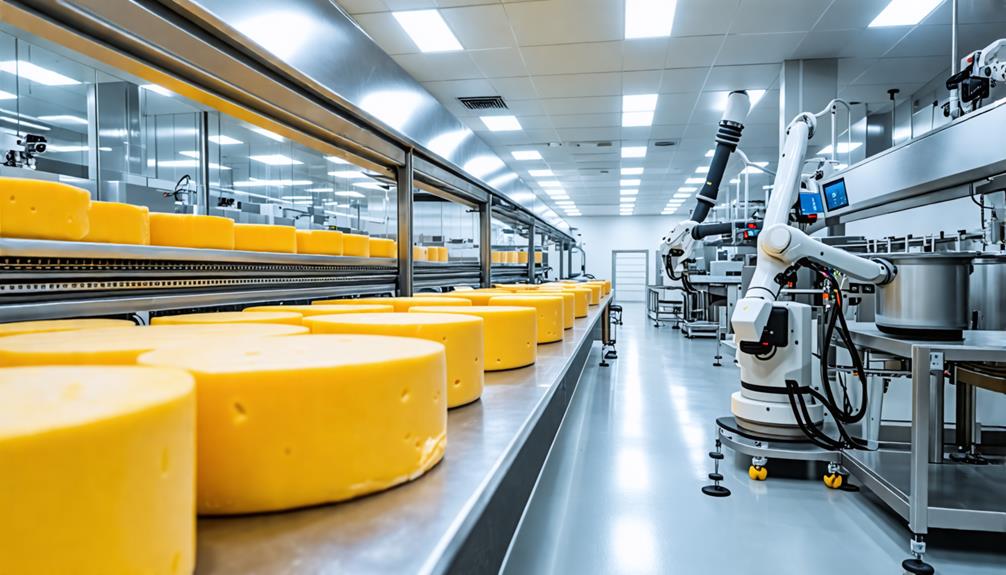
Quality control innovations in robotic cheese making are revolutionizing how producers ensure product safety and consistency. Automation lies at the core of this transformation, enhancing the monitoring and improvement of dairy products in processing plants. Advanced inspection technologies, such as Fortress systems, enable producers to uphold high safety standards by detecting metal contaminants before the checkweighing process.
Imagine the assurance provided by:
- Ensuring every cheese package is free from contaminants.
- Accessing real-time data on product quality.
- Minimizing waste with automated rejection of out-of-spec products.
The Raptor system captures weight data in milliseconds, facilitating dynamic quality control. Automated systems not only enhance compliance but also uphold consistent standards, ensuring each piece of cheese meets quality expectations. Live operational efficiency data (OEE) offers valuable insights, while metal detectors with data logging ensure traceability. Integration with software like Contact 4.0 generates auditor-friendly reports, simplifying regulatory compliance. This level of precision and reliability is essential for cheese producers to thrive in a competitive market.
Waste Reduction Strategies
Robotic cheese makers are significantly reducing waste by integrating advanced technologies that detect contaminants and optimize production processes. Utilizing Stealth metal detectors and Raptor checkweighers, waste reduction in quality cheese products exceeds 50%. These systems ensure precise contaminant detection and product evaluation, guaranteeing only the best products proceed to packaging.
Automated air blast reject mechanisms further enhance waste reduction by isolating contaminants immediately. This real-time feedback allows for instant adjustments in the production process, minimizing waste. Non-compliant products detected during inspections are automatically redirected to lockable bins, ensuring only compliant products move forward, thus reducing total waste.
Moreover, the flexibility of multiple batch options in automated systems enables fine-tuning of individual SKUs, enhancing production efficiency and minimizing overproduction. By integrating advanced technology in quality control and automated packing systems, only the highest quality products are packaged. This approach greatly decreases the volume of waste generated during production, making robotic cheese makers a smart choice for sustainable practices in the cheese industry.
Data Management Solutions

Real-time data monitoring in cheese production is essential for tracking efficiency and pinpointing bottlenecks. Automated reporting systems streamline your workload by generating compliance-ready reports effortlessly. Ensuring traceability throughout the entire process not only builds consumer trust but also maintains operational transparency.
Real-Time Data Monitoring
Real-time data monitoring systems have transformed cheese production by continuously tracking critical metrics such as temperature, pH levels, and moisture content. By leveraging automation, these systems ensure optimal conditions, significantly enhancing product quality. Imagine the assurance that comes from knowing your cheese is under constant surveillance.
- Boosted efficiency in production processes
- Rapid identification and resolution of potential quality issues
- Improved traceability with integrated metal detectors
Advanced data management solutions provide access to live Comprehensive Equipment Effectiveness (OEE) data, enabling precise identification of areas needing improvement. This not only streamlines operations but also reduces waste. Additionally, tools like Raptor Checkweighers, when connected to software such as Contact 4.0, simplify reporting and compliance with user-friendly data exports.
Integrating real-time data analytics into your cheese production process allows for timely adjustments, ensuring the highest standards of product quality are consistently maintained. Embrace this technological advancement, and enhance your production efficiency while satisfying your customers with exceptional cheese.
Automated Reporting Systems
Automated reporting systems are transforming cheese production by capturing live Total Equipment Effectiveness (OEE) data, providing crucial insights to enhance operational efficiency. Real-time data analysis allows for refined quality control and reduced waste, empowering dairy producers to make informed decisions that drive productivity.
Key Features and Benefits of Automated Reporting Systems in Cheese Production:
| Feature | Description | Benefits |
|---|---|---|
| Live OEE Tracking | Captures real-time equipment performance data | Enhances operational efficiency |
| Data Logging | Integrates with metal detectors | Improves safety compliance |
| Easy Data Export | Supports PDF and Excel formats | Streamlines reporting processes |
| Contact 4.0 Software | Connects to Raptor Checkweigher | Facilitates efficient reporting |
These systems provide a reliable and interconnected approach to monitoring and improving cheese production, ensuring consistent quality and compliance with industry standards.
Traceability and Compliance
Integrating advanced data management solutions significantly enhances traceability and compliance in cheese production. These systems ensure that every step, from manufacturing to packaging, is meticulously documented and monitored, providing real-time insights that boost operational efficiency and adherence to regulatory standards.
Consider the benefits of employing these advanced systems:
- Peace of Mind: Assurance that your cheese products consistently meet stringent safety and quality standards.
- Confidence: Each batch is fully traceable and compliant with industry regulations.
- Efficiency: Streamlined processes and reduced waste through precise, data-driven decision-making.
Automated systems, such as the Raptor Checkweigher, integrate seamlessly with Contact 4.0 software, facilitating efficient reporting and generating auditor-friendly documents in PDF or Excel formats. Metal detectors equipped with data logging capabilities further enhance traceability, monitoring cheese products from production to packaging. Real-time data analysis allows for immediate adjustments, ensuring continuous compliance and maintaining product safety.
Future Trends in Dairy Production
As consumers increasingly demand sustainable and high-quality dairy products, the future of dairy production is set to embrace advanced technologies like AI and robotics to enhance efficiency and quality. Automation is leading the way, especially in cheese production. For example, Friesland Foods Cheese has saved over 500 hours per week with robotic packaging systems, illustrating the transformative power of automation.
AI technologies will also play a pivotal role in improving dairy production. By leveraging advanced data analytics and machine learning, producers can monitor milk quality and cheese consistency in real-time. This approach not only optimizes the production process but also aligns with sustainability goals, as consumers seek greater transparency and ethical practices in food sourcing.
Furthermore, the incorporation of AI in dairy management is anticipated to enhance herd health tracking and disease prevention, ultimately boosting yields and cheese quality. As these trends continue to evolve, the dairy industry is expected to become more efficient, sustainable, and transparent, meeting the changing demands of consumers. Embracing these advancements will ensure that producers stay competitive in an ever-evolving market.
Conclusion
In summary, robotic cheese makers are revolutionizing the dairy industry by enhancing efficiency and consistency in cheese production. Embracing automation enables improved quality control, streamlined labeling processes, and reduced waste. As consumer demand for sustainable products grows, these innovations not only satisfy market needs but also pave the way for a more intelligent future in dairy production. Staying ahead in this evolving landscape involves leveraging technology to ensure the delivery of the highest quality cheese.