The Controversy of Vegan Cheese Labeling in the Dairy Industry
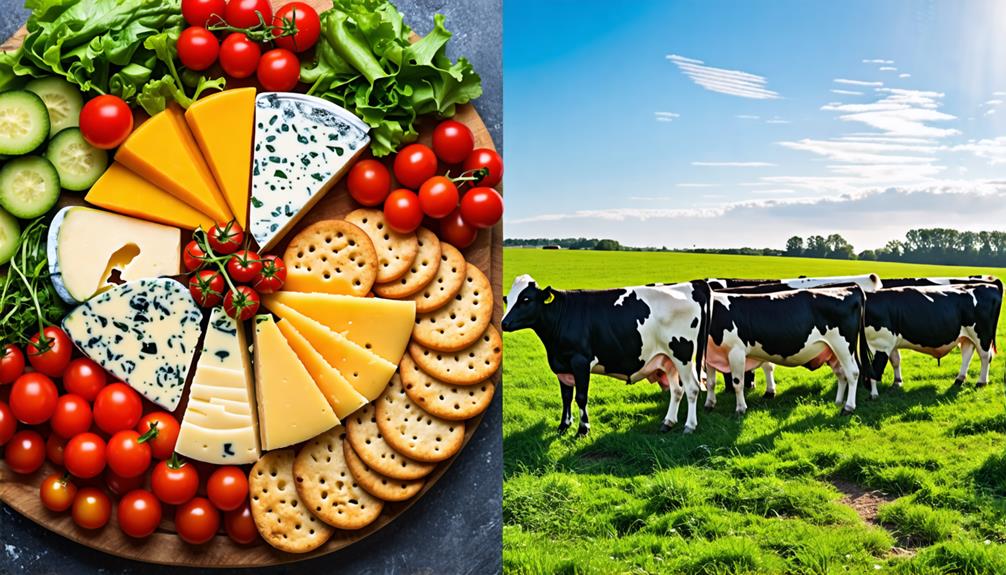
The rise of plant-based cheese has sparked a heated debate in the dairy industry. As consumer demand for vegan options grows, traditional dairy producers are advocating for stricter labeling standards to protect their market share. This clash raises significant questions about transparency and consumer rights. Are you aware of the implications these regulations might have on your choices and the future of plant-based products? The unfolding developments could reshape the landscape in unexpected ways.
Rise of Plant-Based Cheese

The rise of plant-based cheese has revolutionized the culinary world, as more consumers are moving away from dairy and opting for vegan alternatives. The global market for plant-based cheese is projected to reach $4.72 billion by 2026, underscoring the increasing demand for dairy substitutes. Major cheese manufacturers are acknowledging this trend and investing in plant-based options, indicating a significant shift within the dairy industry.
Innovative companies like Climax Foods have garnered attention with their plant-based blue cheese, earning nominations for prestigious awards like the Good Food Awards. This recognition demonstrates that vegan products are no longer niche items but are gaining acceptance in high-end culinary circles. As production techniques advance, vegan cheeses now closely replicate the taste and texture of traditional cheeses, drawing enthusiastic responses from consumers and industry experts alike.
An increasing number of vegan cheese shops are appearing in major U.S. cities, further illustrating this transformative change in consumer preferences. With established food companies entering the vegan cheese market, it is evident that plant-based cheese is more than just a passing trend; it is reshaping perceptions of cheese and dairy alternatives.
Consumer Demand for Transparency
When purchasing vegan cheese, making informed decisions is essential, and clear labeling plays a key role. As plant-based products gain popularity, understanding the ingredients and nutritional value of your food becomes increasingly important. Consumers are demanding greater transparency, prompting companies to provide accurate ingredient lists and sustainability information.
Importance of Clear Labeling
Driven by a growing demand for transparency, consumers increasingly seek clear labeling on vegan cheese products to make informed choices about their health and environmental impact. With a significant 168% growth in plant-based product sales, it's evident that there is a strong preference for detailed ingredient disclosures. The FDA acknowledges the confusion surrounding the nutritional equivalence between dairy and plant-based products, underscoring the necessity of accurate labeling practices.
To illustrate the importance of clear labeling, consider the following table:
| Labeling Aspect | Consumer Impact | Example |
|---|---|---|
| Clear Ingredient List | Reduces confusion | 'Contains no dairy' |
| Nutritional Information | Informs health choices | 'Low in saturated fat' |
| Environmental Impact | Aligns with values | 'Sustainably sourced' |
Misleading labels can obscure the absence of dairy in plant-based products, leading to misconceptions about health benefits. Advocacy for clearer labeling standards, including modifiers like 'vegan' or 'dairy-free,' reflects consumer preference for informed choices in this evolving market. By prioritizing clear labeling, consumers actively influence company practices and contribute to a more transparent food supply chain.
Nutritional Transparency in Products
Consumer demand for nutritional transparency in food labeling has surged, with 73% of shoppers seeking clear ingredient disclosures and sourcing practices. Many plant-based products, including vegan cheese, often lack the transparency necessary for informed choices. The FDA has recognized this issue, noting that consumers can easily confuse plant-based items with dairy counterparts, leading to misconceptions about their nutritional value.
Misleading labeling can obscure critical information. For instance, studies reveal that 60% of consumers don't realize almond milk doesn't contain dairy, which could affect dietary choices. Accurate and transparent labeling that reflects the true nutritional content of products is crucial for those prioritizing their health and the environment.
Moreover, 40% of consumers consider environmental sustainability when choosing food, underscoring the need for transparency in food labeling. Advocacy for clearer practices is growing, with 85% of shoppers wanting more information about the health and environmental impacts of their purchases. Ultimately, consumers deserve to know exactly what they are consuming, making nutritional transparency vital in the current market.
Dairy Industry's Regulatory Push

The dairy industry is intensifying its advocacy for regulatory measures to protect traditional labeling standards, asserting that only milk-based products should be labeled as 'cheese.' Dairy producers argue that labeling plant-based products as 'cheese' misleads consumers. They are championing the Dairy Pride Act, which seeks to enforce stricter regulations to ensure that only products derived from milk can be marketed as dairy.
The act has garnered bipartisan support from key legislators, reflecting significant concerns within the industry regarding market share and consumer perception. Currently, ten states are pushing for legislative measures to regulate the labeling of dairy alternatives, demonstrating the industry's resolve to maintain control over standards of identity.
Organizations like the National Milk Producers Federation are urging the FDA to update labeling standards to prevent what they see as misleading terminology in the plant-based sector. These efforts highlight the dairy industry's sense of threat from the growing popularity of plant-based cheeses and its proactive steps to uphold traditional definitions.
Wisconsin's Strict Labeling Laws
Wisconsin's strict labeling laws ensure that only dairy-based products can be marketed as butter, compelling non-dairy alternatives to use terms like 'imitation butter.' These regulations extend to all dairy alternatives, affecting the labeling and sale of products like vegan cheese. The state rigorously enforces these laws based on consumer complaints and pressure from traditional dairy producers, creating challenges for companies entering the plant-based market.
Recently, Wisconsin initiated a public comment period to gather feedback on new labeling directives targeting products from brands like Miyoko's Kitchen. This move is part of a broader trend, with ten other states considering similar legislative actions regarding dairy alternatives. The Dairy Pride Act, which has bipartisan support, aims to impose even stricter labeling requirements across the U.S., further complicating matters for plant-based producers. As these laws evolve, it is crucial to understand their impact on consumer choices and the availability of vegan cheese and other dairy alternatives. The ongoing tension between the dairy industry and plant-based companies is shaping the future of food labeling.
Labeling Controversies Explained
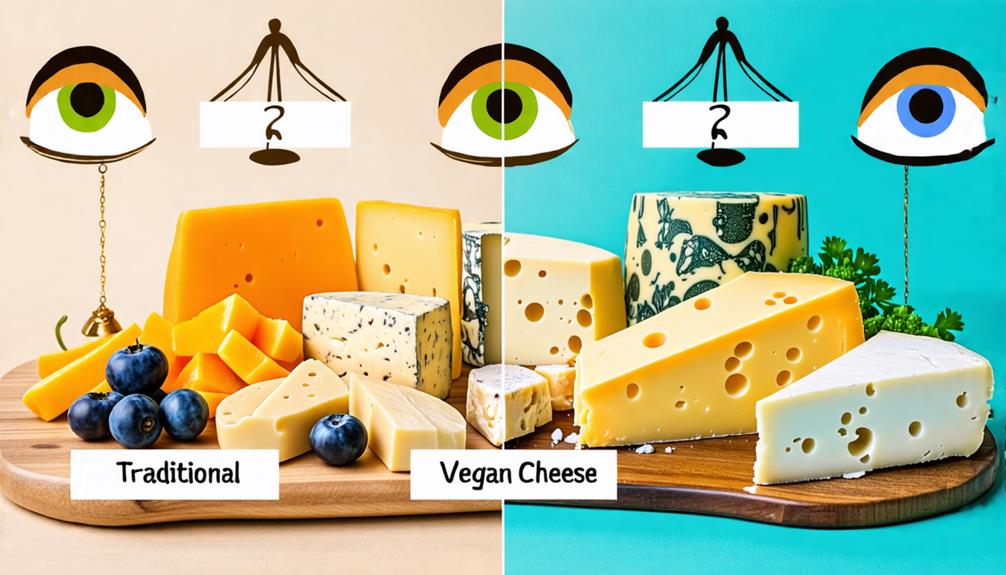
Labeling controversies surrounding vegan cheese and other dairy alternatives underscore the ongoing conflict between traditional dairy producers and the plant-based market. As consumers increasingly opt for plant-based milk options like almond and soy, the debate over proper labeling intensifies. The Food and Drug Administration (FDA) has not updated its standards in over a century, leading to widespread confusion and frustration.
Consider these key points:
- The Dairy Pride Act aims to enforce stricter labeling for milk and butter.
- Current regulations in Wisconsin restrict the term "butter" to dairy-derived products.
- The National Milk Producers Federation advocates for standards that exclude plant-based alternatives.
Dairy producers argue that using terms like "milk" and "butter" for plant-based products misleads consumers about what they are purchasing. Meanwhile, advocates for plant-based options argue that these terms help communicate the taste and texture of their products. This ongoing debate influences not only labeling practices but also consumer perceptions of both dairy and plant-based alternatives.
Nutritional Comparisons and Misconceptions
Nutritional comparisons between plant-based and dairy cheeses often reveal significant differences that can mislead consumers about their health benefits. While plant-based cheeses may be lower in saturated fat, they frequently lack vital nutrients like calcium and vitamin B12, which are abundant in dairy products. This discrepancy can cause consumer confusion, especially since many plant-based options are labeled with dairy terms, creating misconceptions about their nutritional equivalence.
It might be tempting to assume that all cheese-like products offer similar health benefits, but that's not always the case. Some plant-based cheeses contain added oils and thickeners, impacting their overall nutritional value. Despite advancements in formulation, research indicates that consumers often perceive plant-based cheeses as less nutritious than their dairy counterparts.
The FDA acknowledges these misconceptions and emphasizes the importance of clearer labeling to help consumers make informed choices. By understanding the differences in nutritional profiles and being aware of potential pitfalls in labeling, you can navigate the cheese aisle more confidently and select products that truly align with your dietary needs.
Future of Plant-Based Labeling
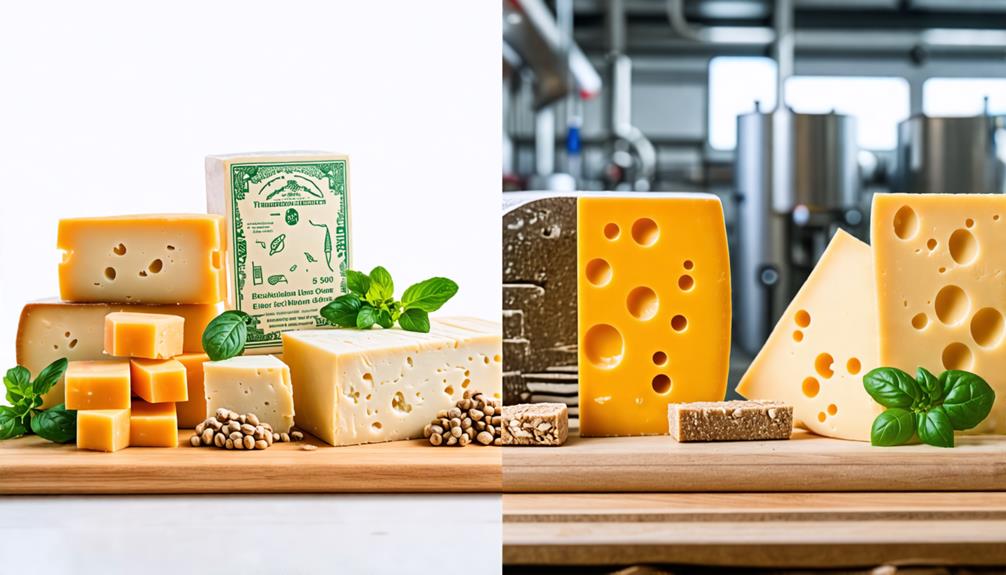
As the plant-based cheese market expands, new regulatory challenges may arise, affecting product labeling. Consumer awareness initiatives are crucial for understanding food content, particularly as transparency in labeling becomes increasingly important. Staying informed about these changes will help you make well-informed choices in this evolving market.
Regulatory Challenges Ahead
Navigating the regulatory landscape for plant-based products is becoming increasingly intricate, with growing demands for clearer definitions and standards. With over 13,000 public comments submitted to the FDA, it's evident that consumers seek transparency in labeling. The Dairy Pride Act aims to enforce stricter guidelines, potentially influencing how plant-based alternatives are perceived and purchased.
Consider these key challenges:
- Definition gaps: Existing FDA standards for dairy products, which have remained unchanged for nearly a century, do not align with modern plant-based innovations.
- State restrictions: Legislative efforts in states like Wisconsin could lead to a fragmented regulatory environment, complicating the consumer shopping experience.
- Consumer awareness: As consumers look for nutritional equivalence between plant-based and dairy products, clear labeling becomes essential.
Addressing these regulatory issues is crucial for both consumers and producers. As discussions progress, the future of plant-based labeling will depend on balancing consumer rights with fair market practices in the dairy industry.
Consumer Awareness Initiatives
Amid ongoing regulatory challenges, consumer awareness initiatives are intensifying efforts to clarify the confusion surrounding plant-based labeling, ensuring shoppers can make informed choices. Misleading labels often create uncertainty about nutritional equivalence and ingredient origins. Advocacy groups are actively voicing concerns, submitting joint comments to the FDA, and emphasizing the need for greater transparency in labeling.
In 2018, the FDA collected 13,000 public comments, highlighting significant consumer interest in clearer, more accurate labeling practices for plant-based food products. This growing demand reflects a widespread call for transparency to distinguish between traditional dairy and plant-based options.
Currently, voluntary standards fall short of sufficiently informing buyers about the nature of these alternatives, raising concerns about consumer protection. Shoppers deserve clear distinctions that enable informed purchasing decisions. Supporting these initiatives means advocating not only for better labeling but also for a market that aligns with preferences for sustainable and health-conscious products. The future of plant-based labeling hinges on these efforts to enhance consumer awareness and ensure transparency in product information.
Transparency in Labeling Practices
Consumers are increasingly demanding transparency in labeling practices to make informed choices about plant-based products. As the plant-based market grows, the need for clear and accurate information becomes more critical. Misleading labeling can create confusion, particularly regarding the absence of dairy in vegan cheese and other plant-based foods, which can erode consumer trust.
To improve transparency in labeling, consider the following:
- Clear ingredient lists that detail every component, allowing consumers to understand what they are consuming.
- Environmental impact disclosures that provide information about a product's sustainability.
- Nutritional equivalence statements that help compare plant-based options to traditional dairy products.
The FDA's outdated regulations contribute to these issues, prompting advocacy groups to push for modernization. By prioritizing transparent labeling, we can foster a marketplace that respects consumer choices, supports informed decisions, and encourages the growth of the plant-based industry. Transparency in labeling benefits consumers and strengthens the trust essential for the future of plant-based foods.
Industry Responses and Innovations
Traditional cheesemakers are rising to the challenge posed by the increasing popularity of plant-based cheese alternatives by investing in their own vegan options. With the market for these alternatives projected to reach $4.72 billion by 2026, established dairy brands recognize the need for innovation. They are enhancing their product lines to meet consumer expectations for taste and quality while addressing demands for transparency and sustainability.
The National Milk Producers Federation is advocating for stricter regulations around dairy terminology to clearly differentiate between traditional dairy and plant-based products. This push aims to limit the use of dairy terms on non-dairy labels, reflecting industry concerns over the labeling practices of plant-based cheeses.
In response to competition, traditional producers are not only defending their market share but also exploring the potential of plant-based offerings. By increasing their investment in research and development, they aim to create vegan options that can effectively compete in the market. This dual approach is essential as both sectors work to improve consumer perception and taste, ensuring they can thrive in an evolving landscape.
The Role of Consumer Advocacy
Advocating for clear labeling practices ensures you can make informed choices about plant-based cheese alternatives and their nutritional value. As a consumer, your voice is crucial in opposing labeling restrictions that might lead to misleading claims about these products.
Consider the impact of your advocacy:
- Understanding ingredients: Clear labels disclose what's truly in your food.
- Nutritional clarity: Know how plant-based options compare to traditional dairy.
- Ethical choices: Make informed decisions that align with your values.
Consumer advocacy groups actively oppose proposed labeling restrictions, arguing that such measures can confuse shoppers about the nutritional equivalence between plant-based and dairy products. By emphasizing the need for truthful and non-misleading labeling, these groups support your right to access a variety of options without ambiguity. Legal challenges against deceptive marketing practices further highlight the importance of transparency. Your advocacy not only protects your interests but also fosters a more informed marketplace, enabling consumers to make confident choices for healthier, ethical, and sustainable food.
Conclusion
The ongoing debate over vegan cheese labeling highlights the need for careful navigation by both consumers and producers. With increasing demand for plant-based options and the dairy industry's push for stricter regulations, transparency is crucial. Advocating for clear labeling and nutritional information ensures informed choices. The future of food labeling depends on balancing tradition and innovation, so stay engaged and informed as this conversation evolves.