What Are the Cheddar Cheese Caves in England?
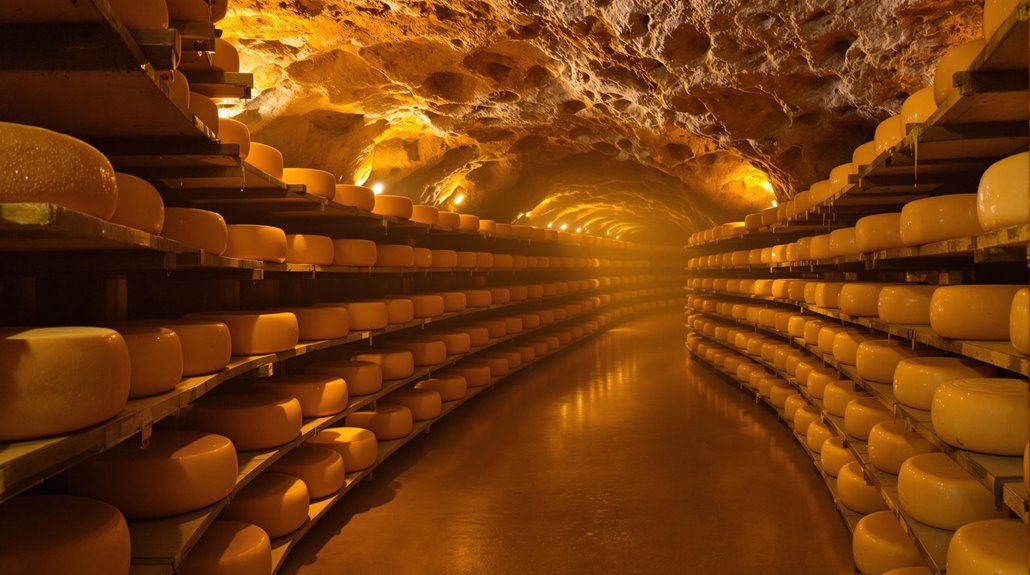
The Cheddar cheese caves are ancient limestone caverns in Somerset, England, where cheese makers have aged their products for over 850 years. You'll find these natural caves in the Mendip Hills, maintaining a perfect 11°C temperature and 100% humidity year-round. Since 2006, they've revived traditional cave-aging practices, producing award-winning Cheddars that mature on wooden boards for 3-12 months. There's much more to uncover about these extraordinary geological and culinary treasures.
The Rich History of Cheddar's Natural Cave System
The iconic Cheddar Gorge caves in Somerset, England, have played an essential role in cheese-making for over 850 years. Near Cheddar Village and the Cheddar Yeo river, these natural limestone caves formed over half a million years ago, creating the perfect environment for aging the region's famous cheese. You'll find a constant temperature of 11°C and 100% humidity throughout the cave system, conditions that cheese makers have employed since 1170.
The caves' round chambers are particularly well-suited for storing traditional cheese wheels, which can be efficiently stacked and rotated during the aging process. While industrialization temporarily halted traditional cave aging, the Cheddar Gorge Cheese Company revived this historic practice in 2006. Today, the caves serve both as a working cheese-aging facility and a popular tourist destination. As part of the protected Cheddar Complex, these caves continue to produce distinctive cave-aged cheddar with unique flavors and textures that reflect their ancient surroundings.
Perfect Conditions: Why These Caves Matter for Cheese
Natural caves have long held the secret to exceptional cheese aging, and Cheddar Gorge's limestone caverns exemplify this perfectly. Nestled in the Mendip Hills, these caves provide the ideal environment for maturing Cheddar cheese, maintaining a constant temperature of 11°C and 100% humidity throughout the year.
You'll find these outstanding conditions contribute to the cheese's unique characteristics in three key ways:
- The cave's natural atmosphere enhances flavor development during aging
- Consistent temperature and humidity levels guarantee uniform maturation
- Indigenous cave microbes impart distinctive taste profiles
Since 2006, the Cheddar Gorge Cheese Company has revived traditional cave-aged practices, returning to methods used since 1170. Their commitment to utilizing these historic caves certifies that you're experiencing Cheddar cheese with authentic character and depth that only natural cave aging can provide. The cheeses rest on wooden aging boards that naturally absorb moisture while helping to maintain the cave's precise humidity levels.
Traditional Cave Aging Process Unveiled
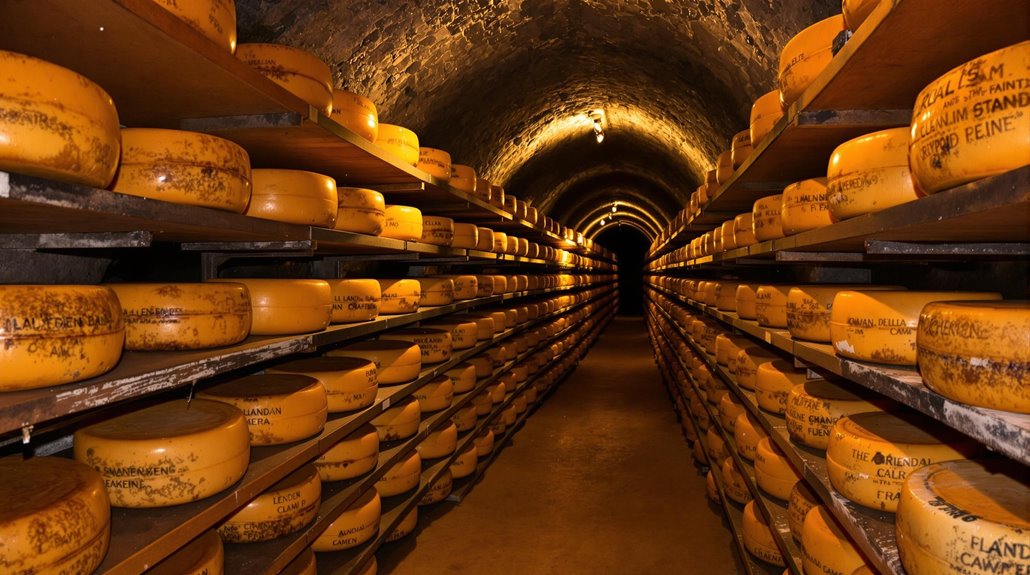
Deep within Cheddar Gorge's historic caves, expert cheesemakers follow a precise aging process that's remained largely unchanged since 1170. When you visit these caves, you'll find the Cheddar Gorge Cheese Company's prized cheddars maturing in an environment that's naturally perfect for traditional cheese production.
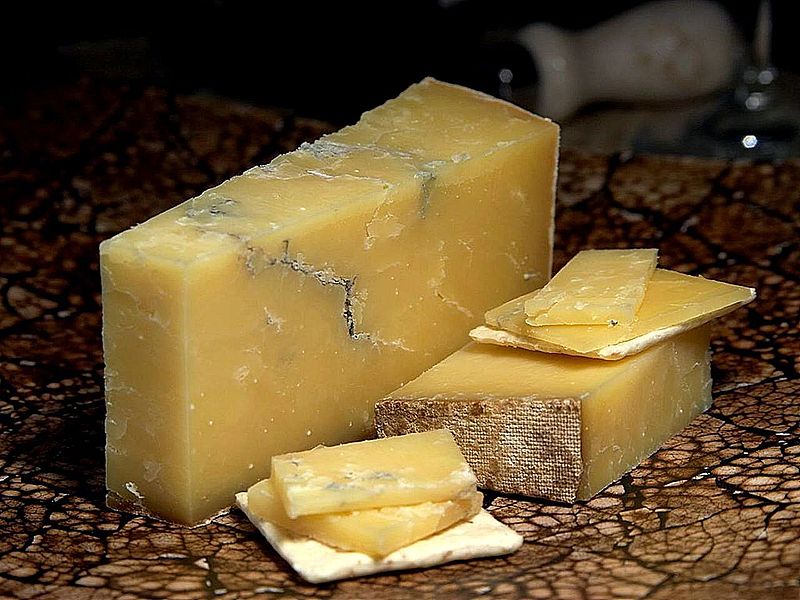
The caves maintain a consistent temperature of 11°C and 100% humidity, creating ideal conditions for maturation. You'll see how the cheesemakers carefully monitor each wheel's acidity and texture as they age for 3-12 months. While industrial production briefly interrupted this practice, the company revived cave aging in 2006. Their dedication to traditional methods has paid off - their cave-aged Cheddar has earned prestigious awards, proving that sometimes the old ways are still the best ways. The unique calcium lactate crystals that develop during cave aging contribute a subtle crunch and enhance the cheese's umami flavor profile.
The Geological Marvel Behind the Caves
Spanning over 300 million years of geological history, these astonishing caves began as limestone deposits in England's Mendip Hills. You'll uncover how an ancient underground river and glacial meltwater carved out the impressive Cheddar Gorge, stretching 3 miles long and plunging 450 feet deep.
Inside Gough's Cave, the largest of these geological wonders, you'll find:
- Spectacular formations of stalagmites and stalactites
- Crystal-clear underground pools
- A constant climate of 11°C with 100% humidity
What's even more fascinating is that these caves aren't just geological marvels - they're also historical treasures. The same environmental conditions that make these caves perfect for aging cheese also preserved the famous Cheddar Man, Britain's oldest complete human skeleton, found within these very chambers.
Modern Cave Operations and Cheese Production
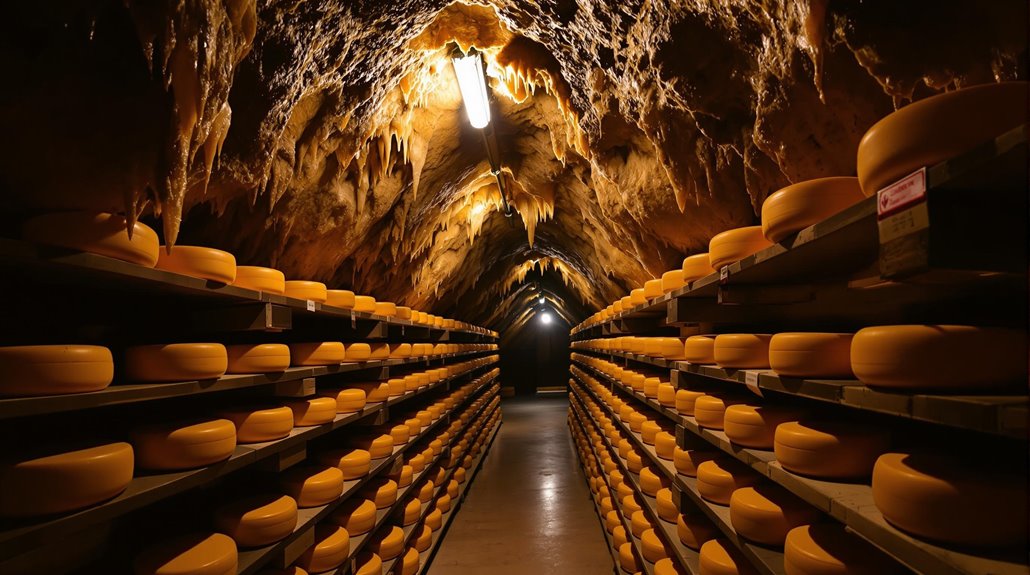
While industrial cheese production dominated the 20th century, today's Cheddar Gorge Cheese Company has revived the ancient tradition of cave aging. Since 2006, you'll find their traditional Cheddar maturing in the historic Goughs Cave, where nature provides the perfect conditions for authentic cheddaring.
Inside this natural environment at Cheddar Gorge, the cheese ages for at least 12 months at a consistent 11°C with 100% humidity. These ideal conditions allow the clothbound Cheddar to develop its distinctive smooth texture and complex flavor profile as it absorbs the cave's unique characteristics. The company's commitment to cave-aging has proven successful, with their cheese earning notable recognition, including a Gold medal at the 2023 International Cheese Awards. They've successfully merged historical methods with modern production standards.
Visiting the Historic Cheddar Cheese Caves
Today, visitors to Somerset can investigate the historic Cheddar Gorge caves where Britain's most famous cheese originated. At Gough's Cave, one of the area's premier show caves, you'll scrutinize the perfect environment where cheese is made and aged at a constant 11°C with 100% humidity.
The Cheddar Gorge Cheese Company offers fascinating experiences across from the caves:
- Watch authentic cheddar-making demonstrations at their modern facility
- Learn about the 2006 revival of traditional cave aging methods
- Roam the cave system that's been maturing cheese since 1170
When you visit, you'll walk through the same limestone corridors where cheesemakers have practiced their craft for over 850 years. The caves, managed by the National Trust, offer a unique glimpse into Britain's cheesemaking heritage amid the dramatic gorge dotted with Cheddar pink wildflowers.
Impact on British Cheese-Making Heritage
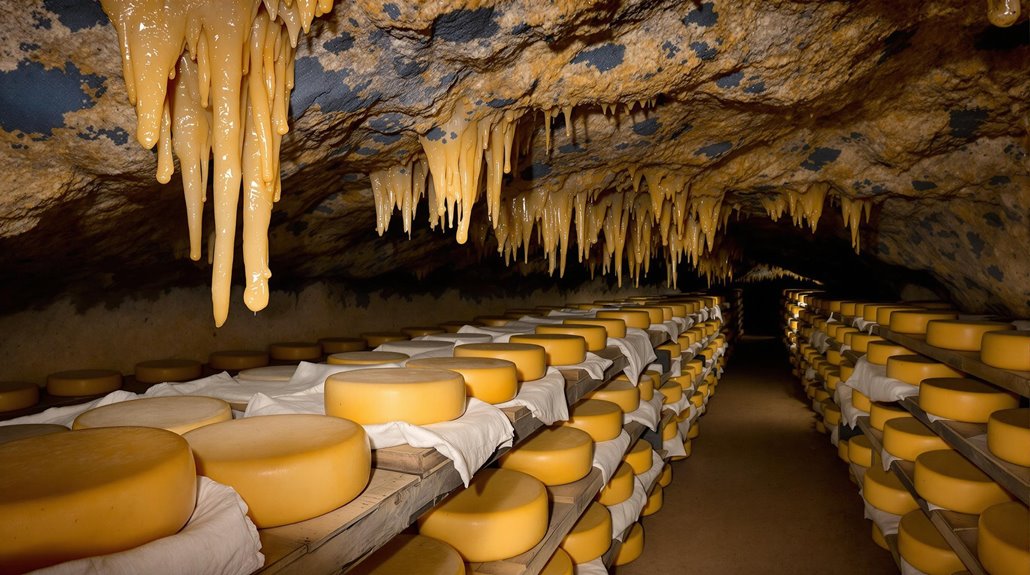
The Cheddar cheese caves stand as living monuments to Britain's cheese-making legacy, helping preserve traditional methods that have shaped the nation's most famous cheese for over eight centuries.
When you investigate the impact of these caves on British culinary heritage, you'll uncover they're more than just storage spaces. The Cheddar Gorge Cheese Company's revival of cave aging in the 2000s has played a vital role in protecting authentic cheesemaking practices. These caves' unique environment, with its consistent temperature and humidity, creates flavors you can't replicate in modern facilities. They've become essential to preserving artisanal cheese production techniques that date back to the 12th century. Thanks to these historic caves, traditional cheesemaking methods continue to thrive, ensuring future generations can experience genuine Cheddar cheese as it was meant to be.