What Cheese Do They Eat in Spain?
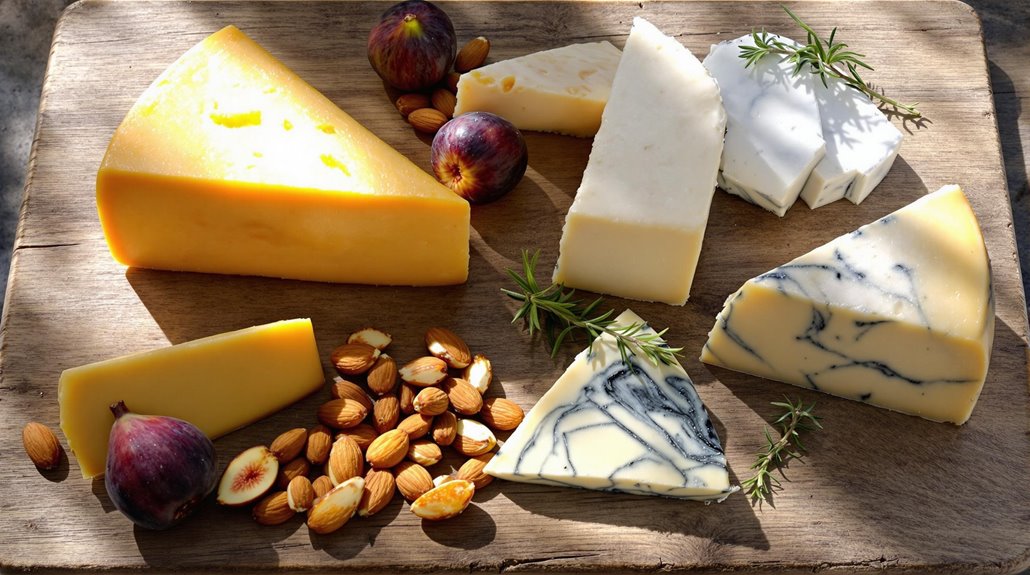
Spain's cheese culture offers you an incredible variety of textures and flavors, from the famous sheep's milk Manchego to bold blue Cabrales aged in mountain caves. You'll find over 20 protected designation cheeses, including creamy Tetilla from Galicia and wine-soaked Murcia al Vino. Whether you prefer aged, smoked, or fresh varieties, each Spanish region crafts unique cheeses using time-honored traditions. The deeper you investigate Spain's cheese heritage, the more gems you'll uncover.
Traditional Cheese-Making Regions of Spain
Spain's rich canvas of cheese-making traditions spans across its diverse scenes, from the verdant northern shores to the arid central plateaus. In the rocky interior, you'll find shepherds crafting raw sheep's milk cheeses, with Manchego being the crowning glory of the La Mancha region. The northern coastal areas, blessed with lush pastures, produce exceptional cow's milk varieties, including the bold blue cheeses from the Picos de Europa mountains.
The Basque Country gives you Idiazabal cheese, while the southeastern region of Murcia specializes in Murcia al Vino, a wine-soaked goat cheese that reflects the area's vineyards. These regional variations aren't just about geography - they're the result of centuries-old traditions shaped by local climates, available ingredients, and cultural practices that have survived even through periods of political upheaval.
Much like Italy's historic cheese presses developed in the 1st century AD, Spain's cheese-making methods have evolved through ancient technological innovations.
Protected Designation of Origin Spanish Cheeses
When you're exploring Spanish cheeses, you'll uncover an elite category known as Protected Designation of Origin (PDO) varieties. Spain boasts over 20 of these prestigious cheeses, each crafted under strict regulations to preserve their authentic character and regional heritage.
These Protected Designation of Origin cheeses showcase Spain's diverse dairy traditions through:
- Traditional production methods specific to each region
- Carefully sourced milk from designated geographical areas
- Time-honored aging processes that create unique flavors
You'll find exceptional PDO Cheeses across Spain's panorama, from Manchego in La Mancha to Cabrales in Asturias. Each cheese tells the story of its origin, whether it's the wine-soaked Murcia al Vino or the smoky Idiazábal from Basque Country. These protected varieties guarantee you're experiencing the genuine taste of Spain's cheese-making heritage. The Manchego cheese tradition dates back to ancient times, with evidence of production on the La Mancha plains predating the time of Christ.
The Art of Aging Spanish Cheeses
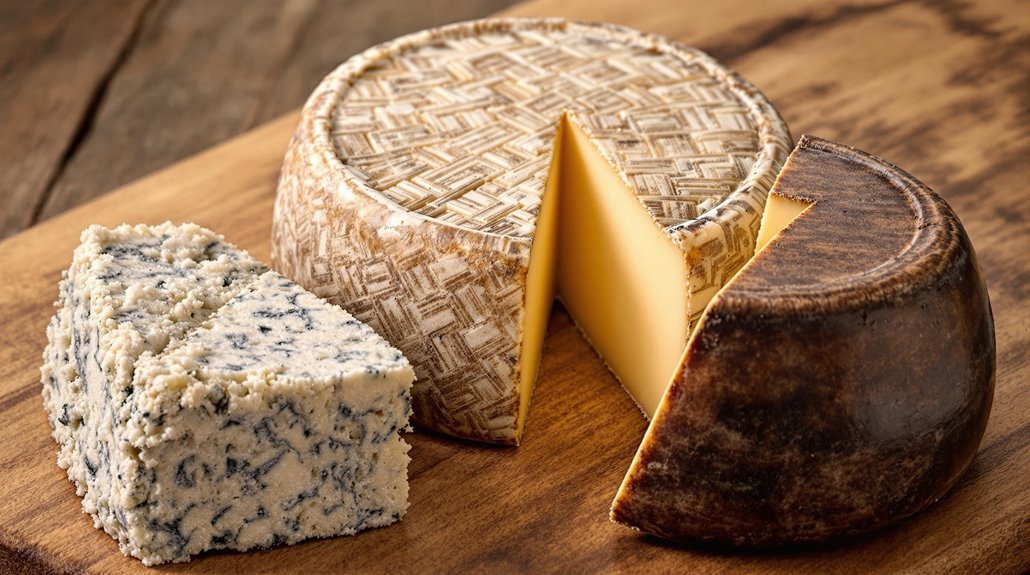
Patience defines the intricate art of aging Spanish cheeses, where time and tradition merge to create distinct flavors and textures. You'll find vital aging processes across Spain's cheese-making regions, from raw cows milk varieties that cure for at least 100 days to the famous Cabrales ripening in the natural caves of the Picos de Europa mountains.
The aging process changes these cheeses dramatically. When you taste Mahón-Menorca, you're experiencing the results of careful canvas wrapping and suspension techniques. If you're enjoying Idiazabal's distinctive taste, it's thanks to the traditional smoking method where cheesemakers hang their creations from cabin beams. Each aging technique, whether it's cave-aging, smoking, or cloth-wrapping, plays a pivotal role in developing the complex flavors that make Spanish cheeses world-renowned. The high humidity levels in Spanish cheese caves promote optimal moisture retention while allowing beneficial molds and bacteria to thrive, resulting in exceptionally flavorful cheeses.
Spanish Blue Cheese Varieties
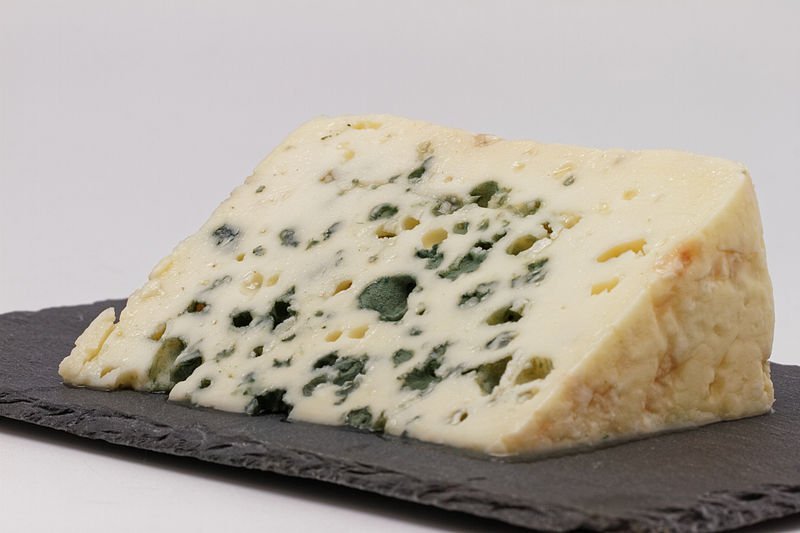
Among Europe's finest dairy traditions, Spanish blue cheeses stand as bold ambassadors of the country's artisanal proficiency. You'll find exceptional varieties like Cabrales, a sharp and tangy blue cheese from the Picos de Europa mountains in Asturias, and Valdeón, a robust cheese aged in natural mountain caves.
Spain's most remarkable blue cheese products include:
- Gamonedo - a distinctive blend of three milk types, traditionally smoked in mountain cabins
- Casar de Cáceres - a creamy variety with a liquid center from the Llanos de Cáceres region
- Picón Bejes-Tresviso - a cave-aged cow's milk cheese that develops unique penicillium mold
Each of these cheeses represents generations of expertise, with many still produced using time-honored methods in their respective regions. Their complex flavors showcase Spain's dedication to preserving traditional cheesemaking techniques.
Mountain and Cave-Aged Specialties
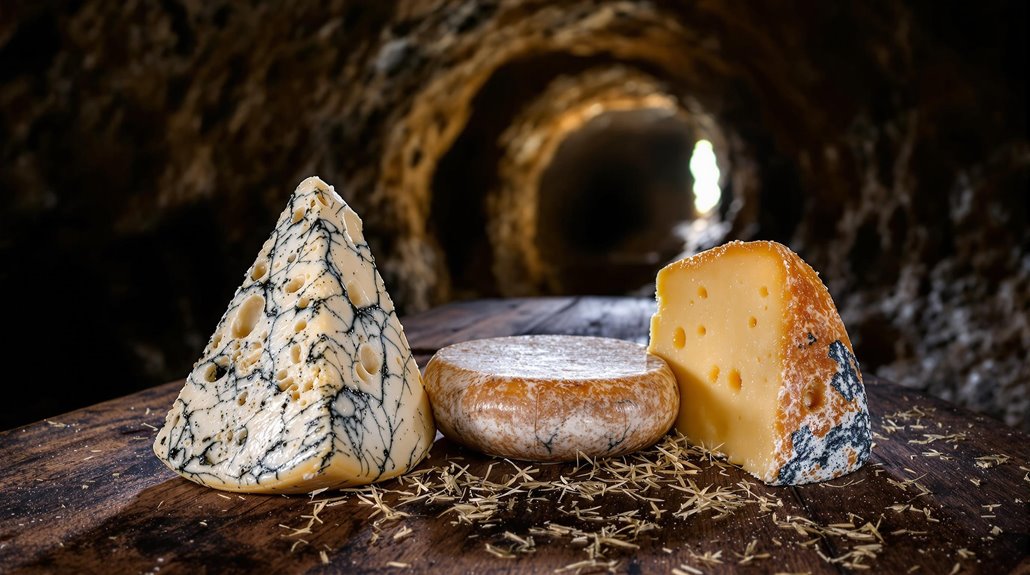
The rugged mountains and natural caves of Spain provide ideal conditions for producing some of the country's most distinctive cheeses. You'll find Cabrales aging in the limestone caves of the Picos de Europa mountains, where it develops its characteristic sharp, blue-veined profile. In the highlands, shepherds traditionally smoke Gamonedo cheese in their mountain cabins, using a blend of three different milk types.
The Basque Country and Navarre are home to Idiazábal, a sheep's milk cheese that gets its unique flavor from smoking in cabin rafters. Over in the Canary Islands, you'll uncover Majorero, made from Majorera goat's milk and often coated with paprika. Meanwhile, on Menorca, cheesemakers age Mahón using a distinctive method of wrapping and suspending the cheese in canvas cloth.
Coastal and Island Cheese Traditions
Spain's coastal and island regions produce some of its most distinctive cheeses, thanks to unique local breeds that graze on native vegetation near the sea. You'll find incredible varieties like Mahón-Menorca, a six-sided cow's milk cheese from the Balearic Islands, known for its nutty and fruity character.
When exploring Spain's coastal cheese selections, don't miss:
- Majorero cheese from Fuerteventura, made from Majorera goats' milk, offering sweet and herbal flavors
- Tetilla from Galicia, a creamy cow's milk cheese famous for its distinctive breast-like shape
- Cabrales from Asturias, a powerful blue cheese blending cow, goat, and sheep's milk, aged in mountain caves
Each of these cheeses reflects its maritime origins and the local grazing traditions that make Spanish coastal cheeses truly special.
Serving and Pairing Spanish Cheeses
Plunging into Spanish cheese service, you'll uncover a rich tradition of thoughtful pairings and presentations. Spanish cheeses are commonly served as tapas with fresh bread, crackers, or fruit, often complemented by quince paste (membrillo).
Each queso de España offers unique pairing opportunities. Try aged Manchego, a sheep's milk cheese, with a robust Tempranillo Reserva. The creamy and buttery Idiazábal, also made from sheep's milk, shines on cheese boards alongside Priorat reds. For a lighter option, pair Galicia's cone-shaped Tetilla with crisp Albariño whites from Rías Baixas. If you're feeling adventurous, sample the intense Cabrales blue cheese with sweet late-harvest wines. These pairings highlight the diverse character of Spanish cheeses while enhancing their distinct flavors and textures.
Raw Milk Cheese Heritage
Beyond the art of pairing lies a storied heritage of raw milk cheesemaking that forms the backbone of Spanish cheese culture. You'll find that Spain's commitment to raw milk cheese production spans centuries, with each region of Spain developing distinct varieties using sheep, goat, and cow's milk.
Despite facing challenges during the dictatorship era, Spanish cheesemakers preserved their craft through underground production. Today, you can experience this rich heritage through Spain's carefully protected cheese varieties. Here's what makes Spanish raw milk cheese special:
- Traditional methods passed down through generations since Roman times
- Strict PDO regulations ensuring authentic production techniques
- Region-specific characteristics influenced by local climate and terrain
When you taste Spanish cheese today, you're experiencing flavors shaped by centuries of artisanal proficiency and regional diversity.
Spanish Cheese Production Methods
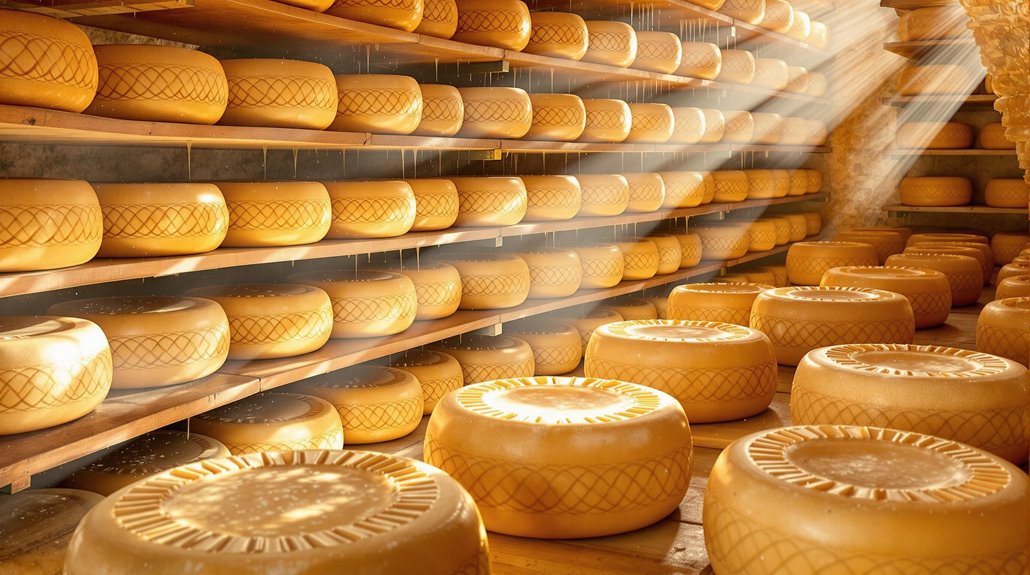
Traditional methods blend with modern innovation in Spanish cheese production, where you'll find both artisanal and contemporary approaches thriving side by side. Throughout the country, cheesemakers craft their products using time-honored techniques that have been perfected over generations.
You'll uncover that each type of Spanish cheese has its own unique production process. Some are made with raw milk, particularly in the La Mancha region, while others use pasteurized milk to meet modern safety standards. What makes Spanish cheese production exceptional is the variety of milk sources - from cow to sheep to goat - and aging techniques. Some producers age their cheeses in natural caves, a practice that's particularly important for varieties like Cabrales. These aging periods can vary enormously, from just weeks to over two years, developing complex flavors and textures.