What Cheese Is McDonald’s Cheese?
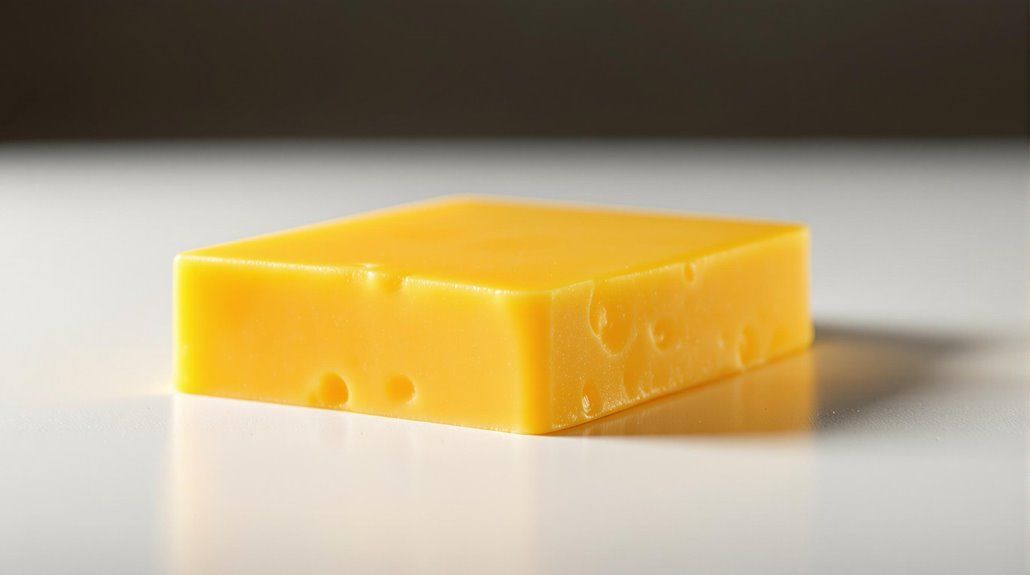
McDonald's signature cheese is a specially formulated pasteurized process cheese food that contains 51% real cheese. It's produced by Fonterra in New Zealand and uses natural coloring from annatto and paprika extracts to achieve its golden-orange hue. You'll find emulsifiers and milk proteins mixed with the real cheese to create that perfect melt-in-your-mouth consistency. There's much more to the story of how this iconic cheese became a fast-food legend.
| Category | Details |
|---|---|
| Cheese Type | Pasteurized Process Cheese Food (contains at least 51% real cheese) |
| Primary Ingredients |
|
| Coloring Agents |
|
| Manufacturer |
|
| Production Volume | Approximately 3 billion burger servings annually |
| Historical Background |
|
| Melting Characteristics |
|
| Availability |
|
| Dietary Considerations |
|
The Origins of McDonald's Cheese Recipe
When McDonald's needed a reliable cheese supplier in the 1960s, they turned to Kraft Foods to develop their signature cheese recipe. Kraft Foods created a unique pasteurized process American cheese that would deliver consistent melting and texture across all McDonald's locations in their fast food empire. James L. Kraft pioneered this type of processed cheese when he patented it in 1916, revolutionizing the cheese industry. Today, the cheese production has shifted to Fonterra, a major dairy cooperative in New Zealand. Their facility in Eltham, Taranaki, produces enough cheese to supply 3 billion burger servings annually.
The cheese you'll find on your McDonald's burger is made with a minimum of 51% real cheese, combined with water, milk proteins, emulsifiers, and flavorings. While it may not qualify as "real cheese" by traditional standards, this specially formulated product delivers the signature taste and melt that McDonald's customers have come to expect.
Real vs. Processed: Understanding McDonald's Cheese Composition
Although McDonald's refers to their cheese as "American cheese," the product is technically a pasteurized process cheese food that contains only 51% real cheese. The remaining composition includes emulsifiers, additives, and milk proteins that undergo extensive food processing to achieve specific melting properties.
Under FDA regulations, McDonald's cheese doesn't meet the standards for authentic cheese due to its processed nature. When you're eating their burgers, you're consuming a processed cheese product that contains additives like sodium citrate, citric acid, and soy lecithin. These ingredients help maintain the cheese's consistency and texture, but they've sparked debates about cheese quality and nutrition.
If you're looking for healthy cheese alternatives, you might want to examine unprocessed, real cheese options that don't contain artificial additives or extensive processing. Similar to other processed cheeses, McDonald's cheese contains cellulose from wood pulp to create its characteristic smooth consistency.
Natural Ingredients and Coloring Methods
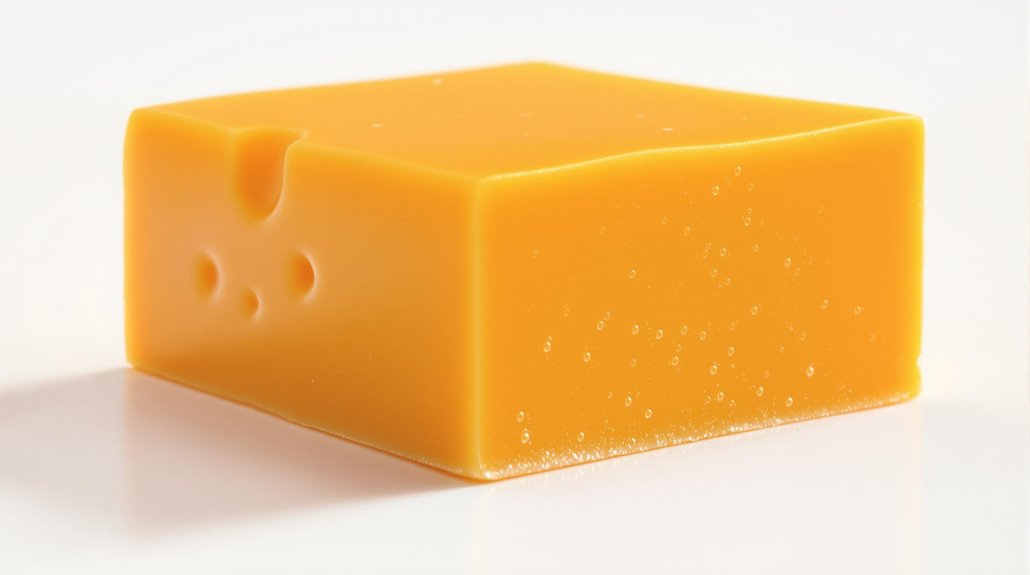
The signature orange hue of McDonald's cheese comes entirely from natural sources, specifically annatto and paprika extracts. When you're biting into your favorite McDonald's burger, you'll taste cheese that gets its iconic color from plant-based ingredients rather than artificial additives.
The natural pigments used in the cheese are derived from two primary sources. The first is the seed of the Achiote tree, which provides the annatto extract. The second comes from capsicum fruit, which gives the paprika extract. Together, these non-artificial ingredients create the distinctive orange color you've come to associate with McDonald's cheese. This commitment to using natural coloring methods demonstrates that you don't need artificial ingredients to achieve that familiar golden-orange appearance in processed cheese products. Similar to traditional cheesemaking, where beta-carotene in milk contributes to the natural yellow coloring, McDonald's relies on plant-derived pigments for consistent coloration.
McDonald's Cheese Production Process
Behind every slice of McDonald's signature cheese lies a sophisticated production process managed by their trusted dairy supplier, Fonterra. At their state-of-the-art facility in Eltham, Taranaki, New Zealand, Fonterra produces enough cheese to supply 3 billion McDonald's burgers annually.
The production starts with real cheese as the primary ingredient, making up at least 51% of the final product. Fonterra then adds milk, cream, emulsifiers, and stabilizers to create the perfect melt-in-your-mouth consistency you've come to expect. To achieve that iconic golden hue, they use natural coloring agents like annatto and paprika instead of artificial dyes. This processed cheese product is specifically engineered to melt evenly and consistently on every McDonald's burger, ensuring you get the same memorable taste at any location worldwide.
Finding the Perfect McDonald's Cheese Alternative
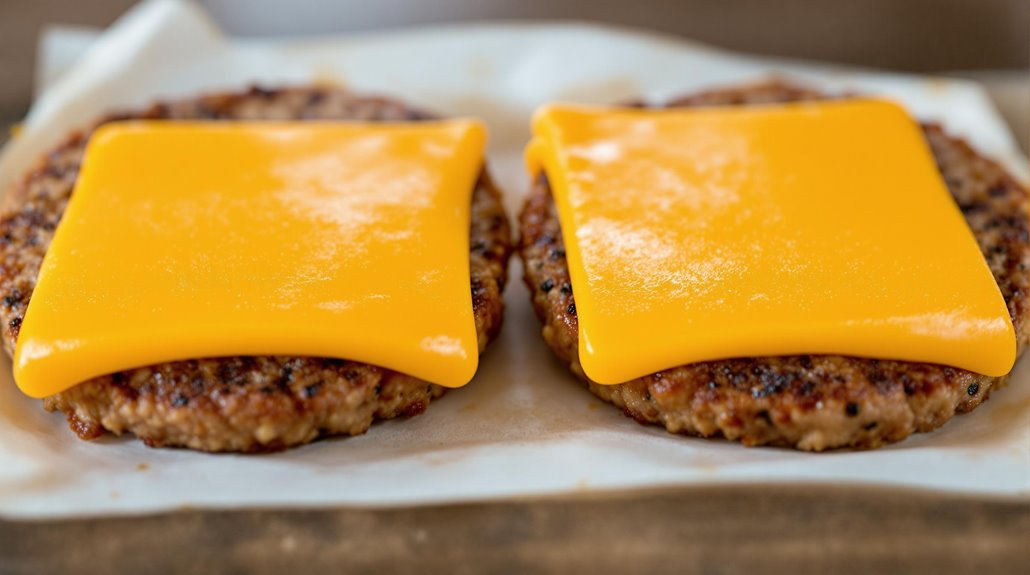
For those seeking dairy-free options that match McDonald's signature cheese taste, several plant-based alternatives come remarkably close. According to former corporate chef Mike Haracz, Walmart's store brand Great Value Deluxe slices offer an almost identical taste and texture to McDonald's American Cheese, sharing many of the same ingredients.
To achieve that distinct taste when making your own McDonald's cheese copycat at home, you'll need to focus on proper tempering cheese techniques. Start by letting your chosen alternative reach room temperature before melting it on your burger. You can even stack two slices, just like McDonald's does, for that authentic experience. While the exact formula remains proprietary, these alternatives can help you recreate the classic McDonald's cheese experience at home.
Essential Tips for Melting McDonald's-Style Cheese
When melting McDonald's-style cheese to perfection, commanding the essential tempering process makes all the difference. You'll need to let your cheese sit at room temperature for about an hour, guaranteeing a smooth melting experience. If you skip this critical step, your cheese may melt irregularly, leading to a gritty or clumpy texture in the final product.
To create the perfect dupe for the beloved McDonald's cheese experience, focus on the temperature of the cheese before cooking. By allowing it to warm up properly, you'll avoid the common pitfalls that can ruin your homemade version. Whether you're crafting a Big Mac-style burger or another McDonald's-inspired creation, proper tempering ascertains your processed cheese will deliver that signature creamy melt that fans know and love.