What Is Chhurpi Cheese From Nepal?
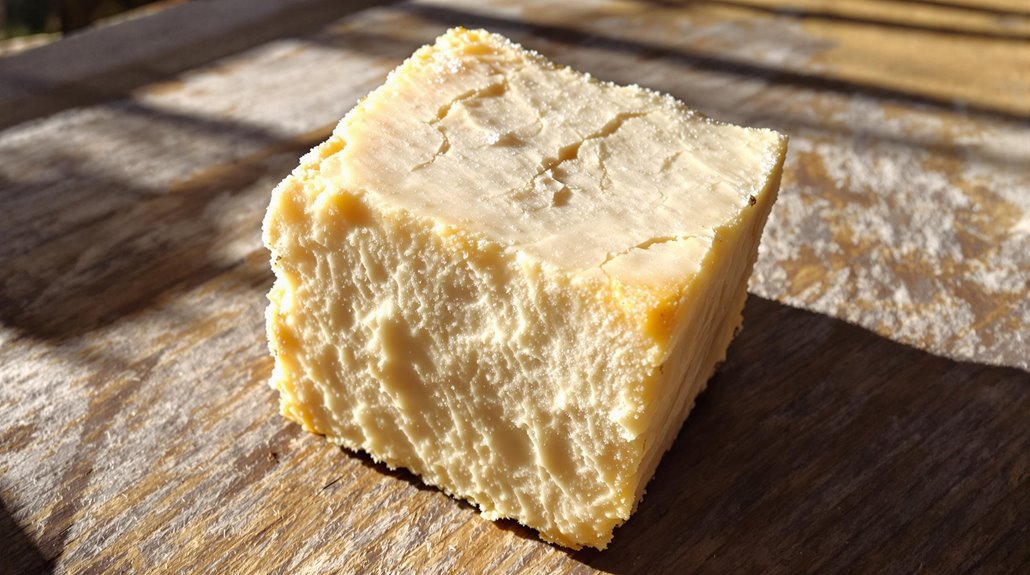
You'll find chhurpi, known as the world's hardest cheese, in Nepal's Eastern Himalayas. This traditional delicacy comes in two forms: a soft variety for cooking and a rock-hard smoked version that can last decades. Made from chauri (yak-cow hybrid) milk, chhurpi packs an impressive 63% protein content and serves as a crucial energy source for mountain communities. Its fascinating passage from ancient preservation technique to global commodity reveals an extraordinary tale of cultural ingenuity.
The Origins and Cultural Significance of Chhurpi
Deep in the Eastern Himalayas, chhurpi cheese emerged as an essential product of pastoralist communities who relied on chauri, a yak-cow hybrid, for their sustenance. You'll find this traditional cheese in two forms: a hard variety that's smoked and can last for decades, and a soft variety for immediate consumption.
The status of chhurpi producers in the Himalayan region reflects an ancient way of life that's perfectly adapted to high-altitude living. When you investigate the cultural significance of this unique cheese, you'll uncover it's more than just a food item - it's a testament to human ingenuity in preserving yak milk in remote areas where fresh supplies are limited.
This cheese has become integral to nomadic life, serving as both a reliable food source during long journeys and a valuable trading commodity. Similar to Chura Kampo cheese, the traditional production methods ensure the nutritional integrity of this protein-rich food remains intact.
Traditional Production Methods and Techniques
While modern cheese-making relies heavily on automation, the traditional production of chhurpi remains a labor-intensive art that's been passed down through generations of Himalayan herders. The process begins with yak milk from chauri, which you'll find is laboriously churned for hours before being mixed with whey and acidic agents to create curds.
You'll uncover two distinct varieties through the traditional production process. Soft chhurpi undergoes fermentation for a tangy flavor, making it perfect for curries and soups. The hard chhurpi variant requires additional steps - the curds are dried, smoked, and aged in animal skin for 6-12 months. This extensive process results in an incredibly durable cheese with an astounding shelf life of up to 20 years when stored properly. The softer version is particularly versatile and can be used as filling for momos and mixed into various chutneys.
Soft Vs Hard Varieties of Chhurpi
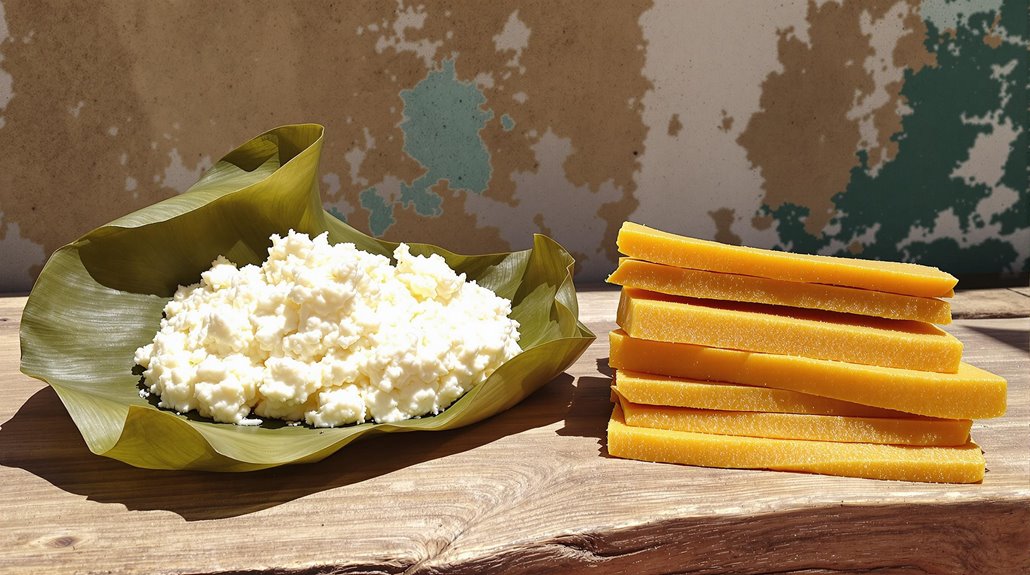
The two distinct varieties of chhurpi showcase remarkably different characteristics in both their preparation and usage. Soft chhurpi, made from cow's milk, offers a neutral taste and serves as a versatile protein source that you'll find in curries and pickles. It's a staple ingredient that's easy to incorporate into various dishes. Similar to Chura Kampo cheese, hard chhurpi requires extensive sun drying to achieve its solid texture. In contrast, hard chhurpi, made from yak's milk, undergoes an intensive fermentation and aging process that alters it into an incredibly durable cheese.
You can store it for up to 20 years, and some varieties are aged for 4-5 years to enhance their flavor. While soft chhurpi works well in cooking, you'll typically chew the hard variety like gum. Both types are incredibly nutritious, containing 63-67% protein, though they serve distinctly different culinary purposes.
Nutritional Benefits and Health Properties
Rich in essential nutrients, chhurpi stands out as a powerhouse of protein, containing up to 63% protein content alongside critical B-vitamins. You'll find this Yak cheese particularly beneficial if you're lactose intolerant, thanks to its remarkably low moisture and lactose content.
As an excellent source of energy, hard Chhurpi provides substantial carbohydrates and moderate fat levels, making it a popular variety among mountain communities. Chhurpi producers and exporters often highlight its organic nature, which comes from the chauri's high-altitude grazing on natural herbs and grass. The cheese's unique nutritional profile, combining high protein with low fat content, offers potential cardiovascular benefits by helping reduce atherosclerosis risk. It's packed with essential vitamins B6, B12, and folic acid, making it a nutritionally complete food choice.
Modern Market Dynamics and Global Trade
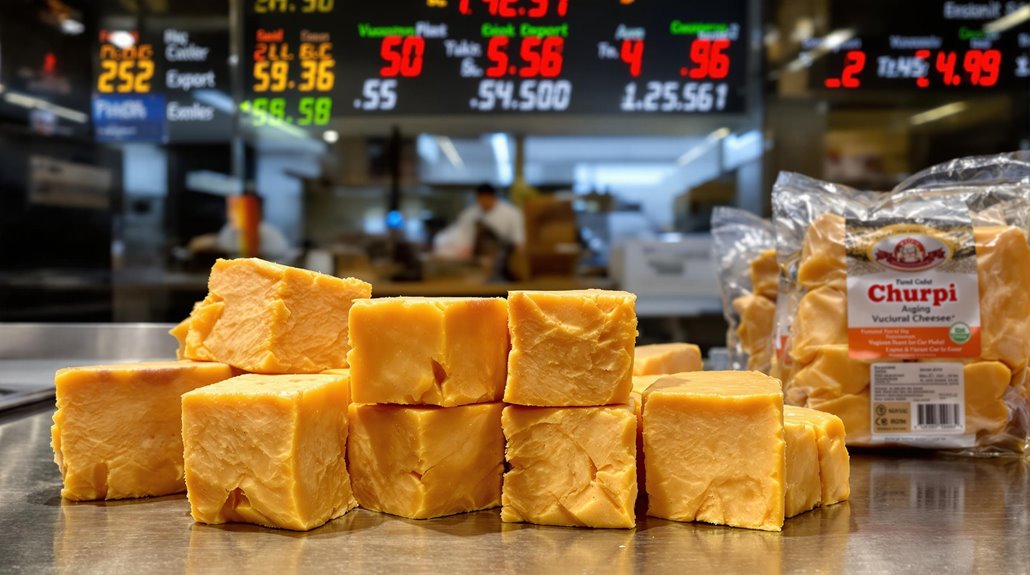
Beyond its impressive nutritional profile, chhurpi has found surprising success in global markets, particularly in Western countries' pet food industries. With nearly 90 million dogs in the USA alone as of 2017, the present status of chhurpi trade shows significant potential for growth.
You'll find that modern technology has revolutionized how this traditional cheese reaches international consumers. ICT and e-commerce platforms have made it easier to market what's considered the world's hardest cheese, especially in emerging markets like India. The trade prospects of chhurpi continue to expand as producers in Nepal's Ilam district and Kathmandu-based exporters adapt to digital marketing strategies. Social networks have become instrumental in promoting this ethnic commodity, bridging the gap between traditional production methods and modern distribution channels.
Storage, Preservation, and Consumption Methods
Since chhurpi's remarkably hard texture demands specific storage conditions, you'll need to keep it in a cool, dry place to maintain its quality. Traditionally, Nepalese households store this hardened cheese in yak skin containers, where it's left to ferment and develop its distinctive flavor profile.
When stored properly, chhurpi can last for several months, altering into an increasingly solid mass over time. You'll find that the cheese slowly softens in your mouth as you consume it, which is why many people choose to suck on it like candy rather than bite directly into it. While modern storage methods now include airtight containers and vacuum sealing, many still prefer traditional preservation techniques to maintain the authentic taste and texture that's made this cheese a Himalayan staple.
Challenges and Opportunities for Chhurpi Producers
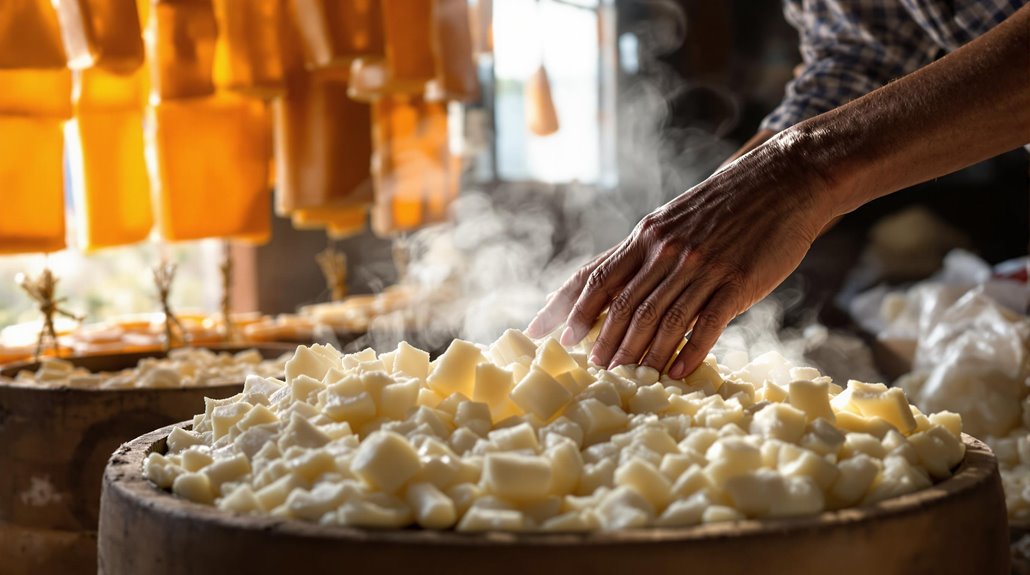
Traditional Chhurpi producers face significant logistical challenges in their high-altitude operations. You'll find that remote locations and limited infrastructure make it difficult to transport this hardest cheese to larger markets. The process to make Chhurpi requires strenuous manual labor, with producers spending hours churning milk from their chauri herds.
While varieties of Chhurpi are primarily cheese consumed in local communities, there's growing potential for market expansion. The product's impressive shelf-life and nutritional worth make it an attractive substitute for vegetables in protein-deficient regions. It's increasingly being used as a substitute for conventional protein sources in international markets. However, producers must balance traditional production methods with modern socioeconomic demands. They're adapting their practices while maintaining the authentic qualities that make this unique cheese precious to consumers.