What Is Cotija Cheese? Mexican Fresh Cheese Origins & Flavor Profile
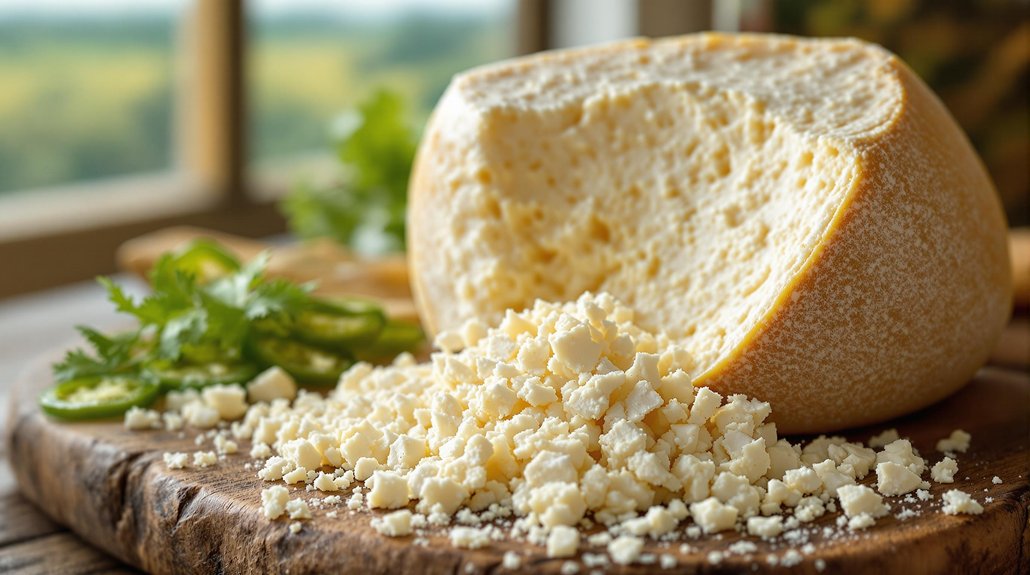
Cotija cheese is a traditional Mexican cheese named after the town of Cotija in Michoacán. You'll recognize it by its crumbly texture and robust, salty flavor that intensifies as it ages. Fresh Cotija resembles queso fresco, while aged versions develop a harder texture similar to Parmesan.
It's commonly sprinkled on tacos, elote, and salads, adding a savory punch to dishes. Discover how this versatile cheese can transform your everyday Mexican recipes into authentic culinary experiences.
The Story Behind Cotija: From Michoacán to Your Table
Three centuries of cheesemaking tradition are packed into every crumbly morsel of Cotija cheese. Originating in the town of Cotija in Michoacán, Mexico, this distinctive cheese has been crafted using traditional methods passed down through generations.
You'll find this versatile Mexican cheese enhancing countless dishes across Mexico and beyond. Whether sprinkled over tacos, enchiladas, or grilled corn, Cotija's tangy profile transforms everyday meals into authentic culinary experiences.
What makes aged Cotija special is its seasonal production—the prized Cotija de Montaña is made only from July to October when cows graze on lush mountain pastures. The raw cow's milk is carefully curdled, drained, pressed, and aged for months, developing its signature crumbly texture and bold, salty flavor. Cotija comes in two main varieties: the fresher Queso Fresco version and the aged, firmer Queso Añejo that provides a rich, savory dimension to traditional dishes.
How Cotija Cheese Is Made: Traditional Production Methods
Beneath the rustic beauty of Michoacán's mountains lies a meticulous cheese-making process that hasn't changed much in centuries. This distinctive cheese, often used as a topping for many Mexican dishes, is made using techniques known throughout the town of Cotija.
The traditional production method creates the signature texture through these time-honored steps:
- Raw cow's milk is curdled using natural enzymes
- Whey is carefully drained from the forming cheese
- Artisans mill the curds into small pieces by hand
- The prepared curds are pressed into large 28 kg cylinders
- Wheels age for months in the dry mountain air at elevations up to 1,700 meters
You'll taste the results of this patient process in every crumbly, salty bite—a monument to generations of cheesemaking expertise.
Fresh vs. Aged Cotija: Understanding the Differences
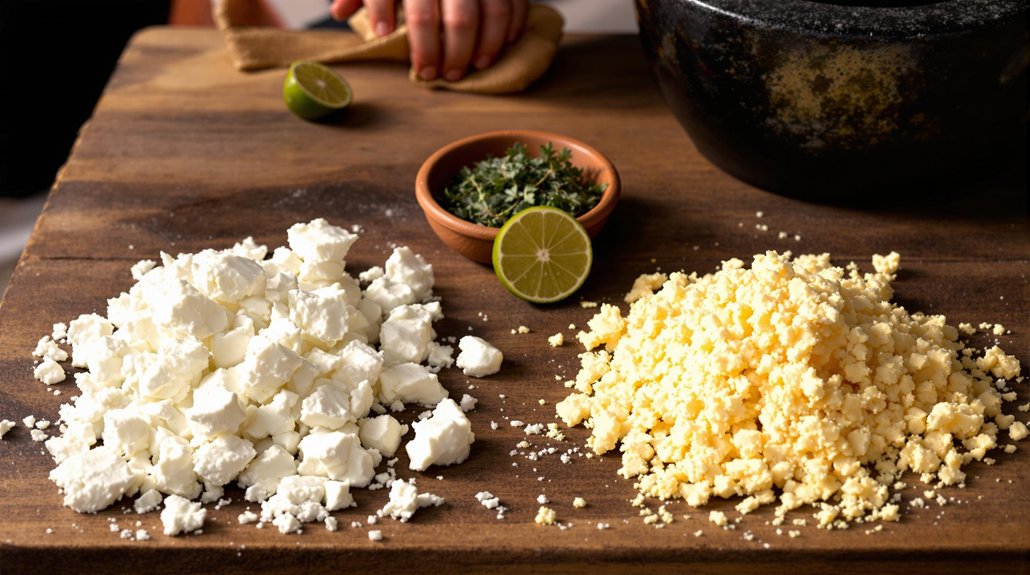
Many cheese lovers wonder if all Cotija is created equal—and the answer reveals a fascinating spectrum of flavor and texture. Fresh Cotija Cheese resembles Queso Fresco with its soft, white appearance and mild, slightly tangy profile—similar to Feta cheese. You'll find it's perfect for crumbling over tacos and salads.
Traditional cheese-making techniques transform Cotija through aging, which can last weeks to months. The aged version develops a pale yellow color, harder texture, and concentrated saltiness that's reminiscent of Parmesan cheese. This drier, more granular form is typically grated over dishes as a finishing touch.
When substituting in recipes, use feta for fresh Cotija, while the aged version can replace Parmesan or Romano when you need that distinctive salty punch.
Flavor Profile and Texture: What Makes Cotija Unique
Cotija's distinct personality extends far beyond the fresh versus aged varieties, creating an unmistakable flavor experience in Mexican cuisine. This specialty cheese is known for its salty, tangy profile that intensifies with age.
You'll notice its firm texture makes it perfect for crumbling or grating over your favorite dishes, while its color and firm consistency resembles Parmesan when fully aged.
- Delivers a robust, savory punch that slightly softens when heated
- Features a crumbly yet firm texture ideal for topping dishes
- Develops a pale yellow-to-white interior with a hard, dry rind when aged
- Offers a pungent aroma that complements spicy Mexican flavors
- Provides a distinct flavor that cuts through and enhances bold ingredients
Culinary Uses: Popular Ways to Enjoy Cotija Cheese
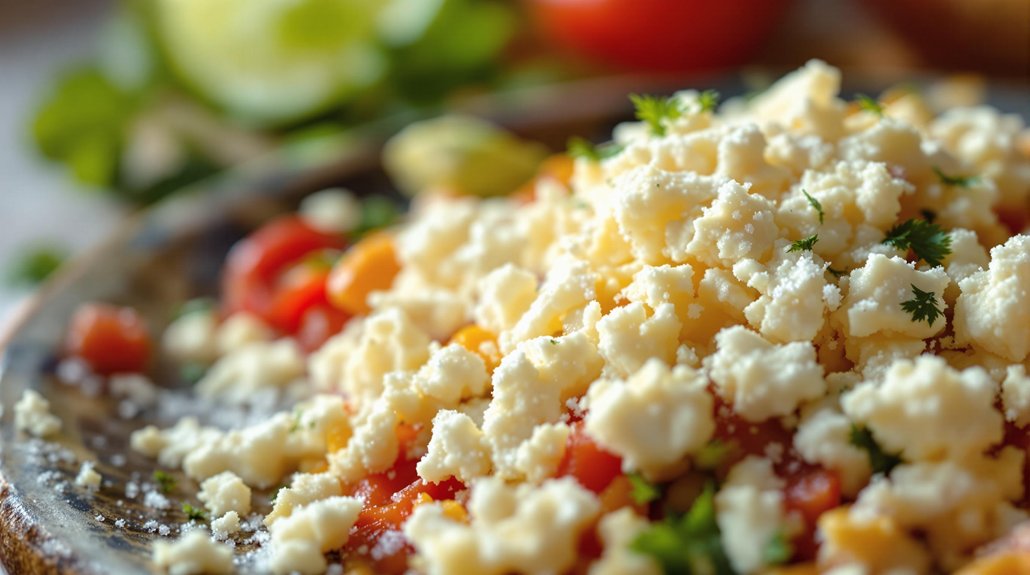
From street food favorites to home-cooked classics, Cotija cheese elevates Mexican cuisine with its distinctive salty punch and crumbly texture. This aged cheese made from cow's milk is often used as a topping for tacos, salads, and soups, adding both flavor and visual appeal to a variety of Mexican dishes.
You'll find Cotija serves as a great topping when grated over roasted vegetables or grilled meats. The cheese pairs well with creamy dips and spreads for appetizers, and provides the perfect filling for stuffed chiles or bell peppers. When you're looking to experiment, try substituting Cotija for feta or queso fresco in your favorite recipes—its crumbly consistency and unique flavor will transform ordinary dishes into extraordinary ones.
Health Benefits and Nutritional Information of Cotija
When looking into the nutritional profile of Cotija cheese, you'll find it packs quite a punch for your health. This cheese made from cows' milk and used in Mexican cuisine offers several advantages when incorporated into your diet.
Cotija cheese provides approximately 15% of your daily calcium needs per ounce, supporting bone health and stronger tooth enamel. With 7 grams of protein per ounce, it helps reduce inflammation and may prevent heart disease.
Similar to Parmesan in texture but with unique Cotija taste, it delivers about 120 calories per serving. Contains 10 grams of total fat, including 6 grams of saturated fat. Compared to other cheese in Mexican cuisine, Cotija's nutritional profile makes it a healthier option while still delivering authentic flavor.
Cotija Substitutes: Alternatives When You Can't Find the Real Thing
Running out of Cotija cheese doesn't mean you have to compromise on your Mexican dishes. Several readily available cheeses can step in admirably. Feta offers a similar crumbly texture and tangy profile, while Queso Fresco provides a fresher alternative with comparable consistency. For dishes requiring aged Cotija's firmer texture, try Parmesan or Ricotta Salata, which deliver that essential salty punch.
Don't overlook Queso Duro, a Salvadoran cheese that works beautifully in traditional Mexican recipes. If you're avoiding dairy altogether, Nutritional Yeast or Miso Paste can provide that umami depth without animal products. Remember that substitutions might alter your dish's flavor balance, so adjust your seasoning accordingly to maintain authenticity. With these alternatives, you'll still capture the essence of your favorite Mexican cuisine.
Pairing Cotija: Complementary Foods and Beverages
Discovering the perfect pairings for Cotija cheese elevates any Mexican dining experience from ordinary to extraordinary. This popular cheese, often called the "Parmesan of Mexico," brings an intense umami punch that complements a variety of dishes beyond traditional queso applications.
Sprinkle Cotija over spicy tacos and enchiladas where its saltiness balances heat beautifully. Top sweet summer fruits like watermelon and mango for a surprising sweet-savory contrast. Use it on street corn (elote) where it cuts through the sweetness of fresh corn kernels. Add to pasta dishes as an alternative to Parmesan when you want a bolder flavor profile. Serve alongside a crisp Mexican lager or margarita that refreshes your palate between bites.
Unlike Cream Cheese, Cotija doesn't melt—it maintains its crumbly texture, making it perfect for finishing dishes.