What Is Mexican Cheese Called?
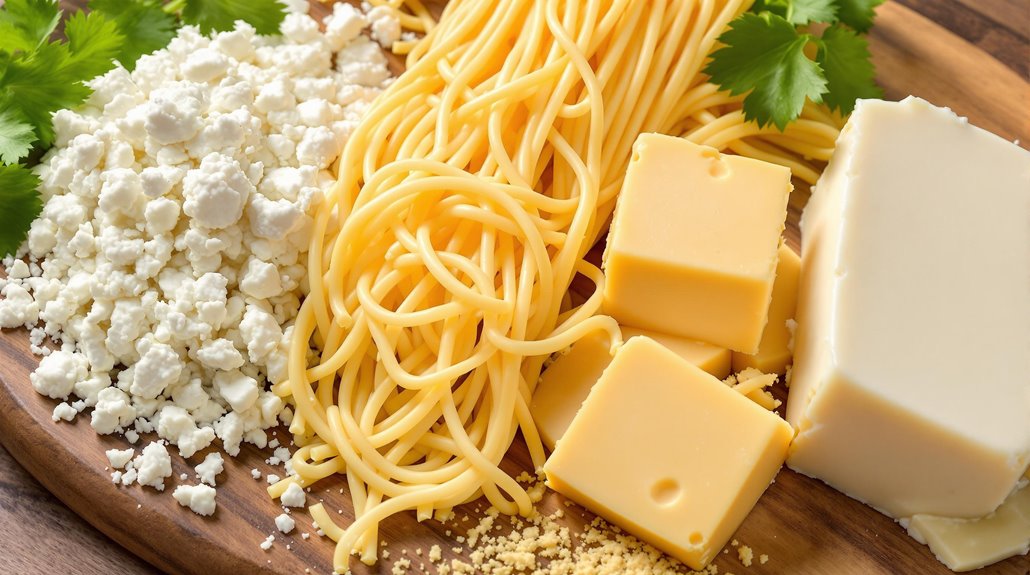
Mexican cheese isn't just one type - you'll find over 40 unique varieties to investigate. The most common ones include fresh queso fresco (crumbly), aged cotija (salty), and melting cheeses like Oaxaca (string cheese) and Chihuahua. While some Mexican cheeses have familiar substitutes like Monterey Jack, authentic varieties offer distinct flavors and textures you won't find anywhere else. There's a whole world of Mexican cheese waiting to be uncovered.
Traditional Mexican Fresh Cheeses
The world of traditional Mexican fresh cheeses offers a diverse array of textures and flavors that define authentic Mexican cuisine. You'll find queso fresco, a soft and crumbly cheese that adds a mild, fresh taste to your dishes. Panela, often called Queso Blanco, won't melt when heated, making it perfect for grilling. If you're looking for something similar to ricotta, requesón provides a creamy texture ideal for fillings. Don't forget about crema, which isn't technically a cheese but serves as an essential tangy topping.
For plunging purposes, you'll want to try queso de Oaxaca (also known as quesillo), a string cheese that's perfect for quesadillas. Other varieties include Queso Asadero, queso quesadilla, and Queso Menonita, each bringing unique characteristics to Mexican dishes. Traditional queso fresco is often wrapped in banana leaves to enhance its authentic flavor profile and maintain freshness.
Popular Aged Mexican Cheese Varieties
Mexico's most beloved aged cheeses pack intense flavors and distinctive textures that enhance traditional dishes. You'll find several types of aged Mexican cheese that differ from fresh varieties like Queso Fresco.
Cotija cheese stands out as one of the most common aged options, offering a strong, salty taste that's perfect for topping dishes. Queso Añejo, similar to Parmesan, provides a hard, dry texture ideal for grating. If you're making quesadillas, try Queso Manchego, made with cow's milk and resembling sharp cheddar. Queso Chihuahua, also known as Menonita, works wonderfully in cheese dips, while Queso Enchilado adds a spicy kick to enchiladas thanks to its paprika coating. Each of these aged varieties brings its own unique character to Mexican cuisine.
Unlike North American cheese varieties, Mexican cheeses are typically aged for just days or served completely fresh, contributing to their distinct characteristics.
Regional Mexican Cheese Specialties
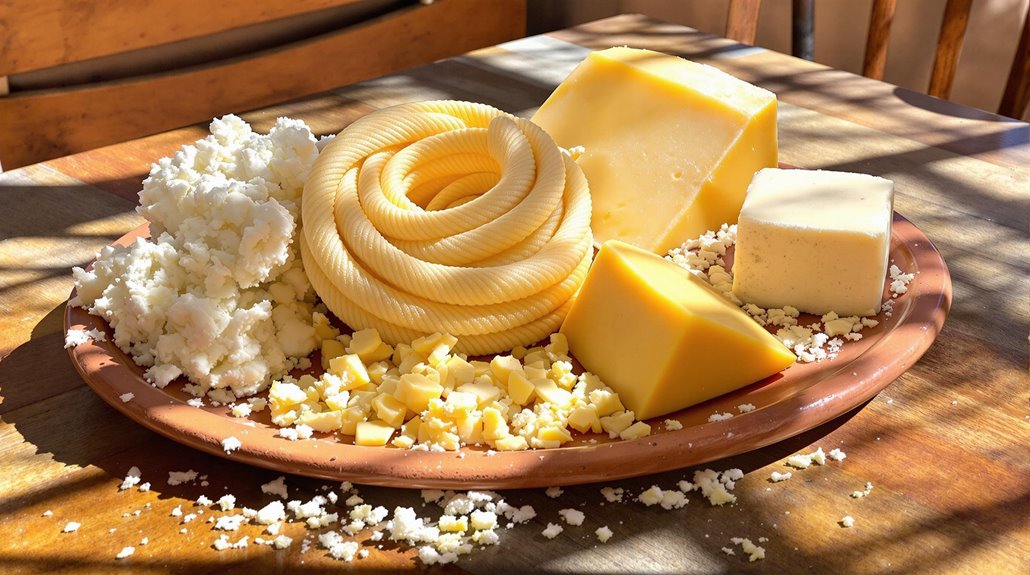
Across different regions of Mexico, you'll uncover unique cheese varieties that reflect local traditions and ingredients. In the state of Chihuahua, you'll find its namesake cheese, a semi-soft variety that's similar to manchego cheese but made with cow's milk instead of sheep's milk.
Along the coastal regions, you'll locate fresh cheese varieties like Queso Fresco, which has a mild, salty flavor and crumbly texture. While many Common Mexican Cheeses are made from cow's milk, some regional Mexican cheese specialties incorporate goat's milk, creating distinct flavors unique to their areas.
Each region produces its own version of white cheese, adapting traditional recipes to local tastes and available ingredients. From the mountains to the coast, these regional variations contribute to Mexico's rich cheese-making heritage. Similar to how pasteurized milk cheese can be made using different techniques and ingredients, Mexican cheese varieties showcase the diversity of regional dairy traditions.
Mexican Melting Cheeses for Cooking
When preparing authentic Mexican dishes, you'll want to become proficient in the art of working with melting cheeses that give dishes their signature gooey, stretchy texture. Several Mexican cheeses are specifically made with cow's milk to achieve the perfect melt, similar to Monterey Jack cheese.
Queso Oaxaca, a white string cheese with a mild flavor, melts beautifully in your favorite Mexican dishes. If you're looking for a firmer option, try Queso Chihuahua, which creates excellent cheese dips. Queso Asadero, also known as queso quesadilla, offers a creamy texture perfect for melting. Mexican Manchego, not to be confused with its Spanish namesake, is a light yellow cheese that's easy to shred and melt. These melting cheeses are essential ingredients when you're crafting authentic quesadillas, enchiladas, or other heated dishes.
Understanding Mexican Cheese Substitutes
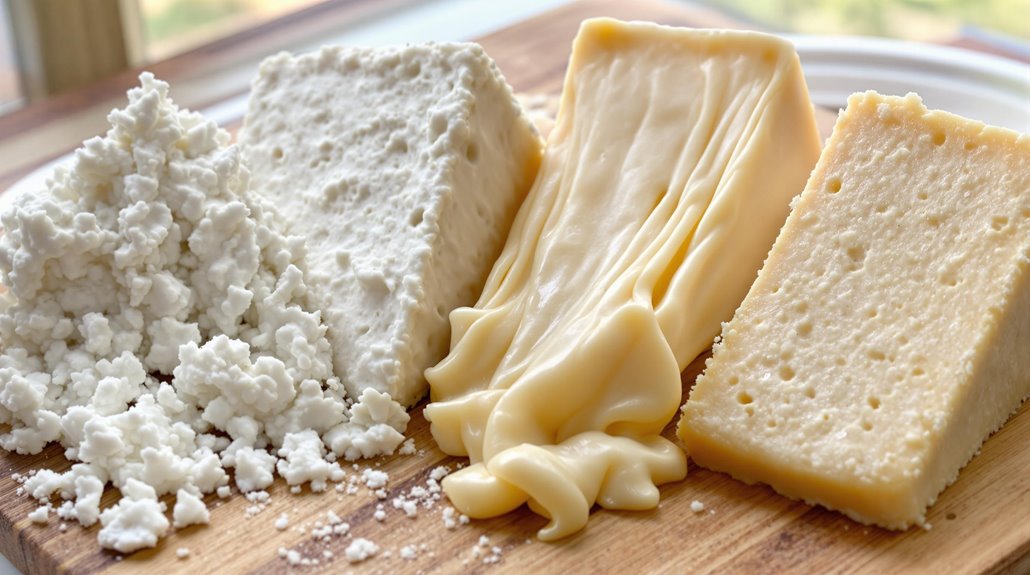
Finding authentic Mexican cheeses outside of Mexico can be challenging, but several readily available alternatives can effectively mimic their distinct qualities. When you can't find queso Oaxaca, you'll often see Monterey Jack or cheddar cheese used as substitutes, particularly in melting applications. What's interesting is that Mexican queso manchego isn't the same as Spanish Manchego - it's actually more similar to Monterey Jack, and in Central America, you'll find queso tipo manchego as a common variant.
For traditional Mexican dishes that call for queso fresco, queso añejo, or cotija, you'll want to be selective with substitutions. While Tex-Mex recipes often rely on Monterey Jack and cheddar, authentic Mexican cuisine typically features queso Chihuahua, queso asadero, and other distinctly Mexican varieties that offer unique flavors and textures.