What Is Pimento Cheese?
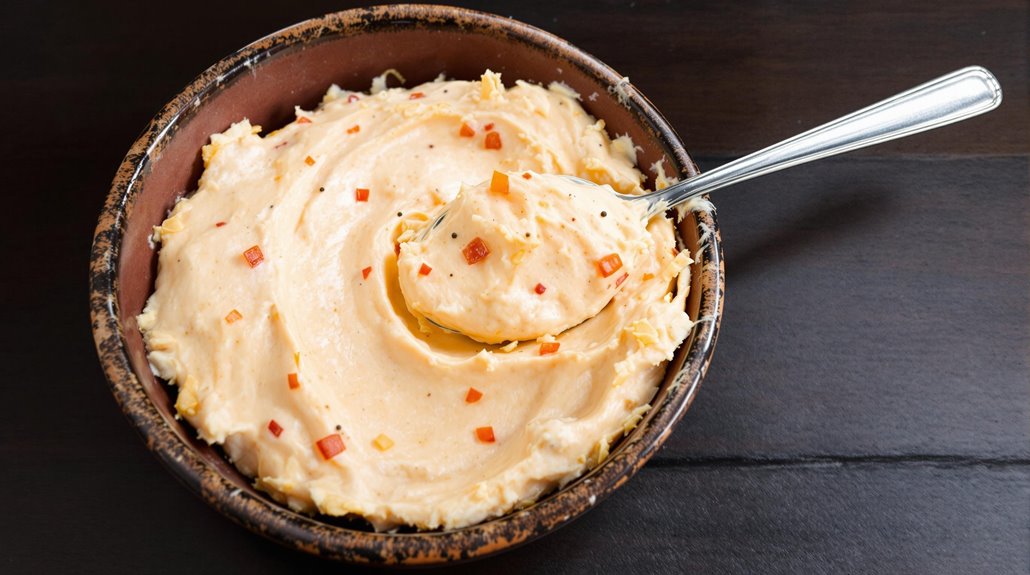
You'll find pimento cheese, often called the "caviar of the South," to be a rich and creamy spread that combines sharp cheddar cheese, mayonnaise, and sweet pimento peppers. It's perfect on crackers, sandwiches, or as a dip for vegetables. While it originated in the early 1900s as a Northern creation, this beloved comfort food has become a Southern staple that's now enjoyed nationwide. There's much more to explore about this versatile cheese spread's fascinating path and regional variations.
The Origins of Pimento Cheese
While many associate pimento cheese with Southern cuisine today, this creamy spread actually got its start in the Northern United States during the early 1900s. You'll find the first published recipe in a 1908 Good Housekeeping magazine, which called for combining soft cream cheese with minced pimientos. The following year, Eva Green Fuller shared her own version using Neufchatel cheese and pimentos in her cookbook.
Northern food companies quickly recognized the spread's potential and began producing commercial versions by 1910, marketing it as their regional specialty. What started as a homemade cheese spread in Northern kitchens didn't become known as Southern fare until after World War II. That's when the combination of cheese and pimiento peppers gained significant popularity throughout the South, eventually becoming a regional staple. The spread's widespread adoption coincided with the period when factory-made cheese became the preferred choice over traditionally-made cheese in America.
Essential Ingredients and Components
Modern pimento cheese consists of three fundamental ingredients that form its signature taste and texture: sharp cheddar cheese, mayonnaise, and pimento peppers. The shredded cheddar provides the rich, bold foundation, while mayonnaise binds everything together and adds smoothness. The sweet, mild pimento peppers contribute both flavor and their distinctive reddish-orange color to the spread.
You'll often find cream cheese added to enhance the spread's creaminess and contribute a tangy dimension. Depending on regional preferences and personal taste, you can customize your pimento cheese with additional seasonings. Common additions include garlic powder, onion powder, and cayenne pepper for heat. Some variations even incorporate horseradish or pickled ingredients for extra zip. Whether you're spreading it on bread or using it as a dip, these components work together to create this beloved Southern staple. The sharp cheddar used in pimento cheese can range from mild to sharp in flavor, similar to traditional English cheddar varieties.
Traditional Southern Preparation Methods
Traditional Southern pimento cheese preparation embodies simplicity and authenticity through hand-grating blocks of sharp cheddar cheese. When making homemade pimento cheese, you'll want to avoid over-processing the ingredients to maintain its characteristic texture. Use a hand mixer or wooden spoon to combine your shredded cheddar with mayonnaise and diced pimentos. Just like with homemade fresh cheese, maintaining clean tools and equipment is essential for the best results.
To create the perfect Southern pimento cheese recipe, follow these key steps:
- Hand-grate the cheddar cheese rather than using pre-shredded varieties
- Mix ingredients until just combined, maintaining a coarse texture
- Chill the mixture to allow flavors to develop
- Avoid adding cream cheese, which isn't traditional and alters the consistency
You can enhance your pimento cheese recipe with regional additions like hot sauce or Worcestershire sauce, but remember that simplicity is the hallmark of authentic Southern preparation.
Serving Suggestions and Pairings
From sophisticated cocktail parties to casual picnics, pimento cheese shines as one of the South's most versatile spreads. You'll find endless ways to serve this beloved staple, whether you're spreading it on crackers and vegetables or altering it into a decadent grilled cheese sandwich.
For game day gatherings, try using pimento cheese as a sandwich filling or topping for burgers and hot dogs. It's also perfect when paired with sliced cucumber or celery for a revitalizing crunch. While you can find pre-made versions in grocery stores, homemade pimento cheese offers the flexibility to adjust seasonings like Worcestershire sauce to your taste. At prestigious events like the Masters Tournament, where it's been a concession favorite since the 1940s, pimento cheese sandwiches remain an iconic refreshment that showcases this spread's enduring appeal.
Regional Variations Across America
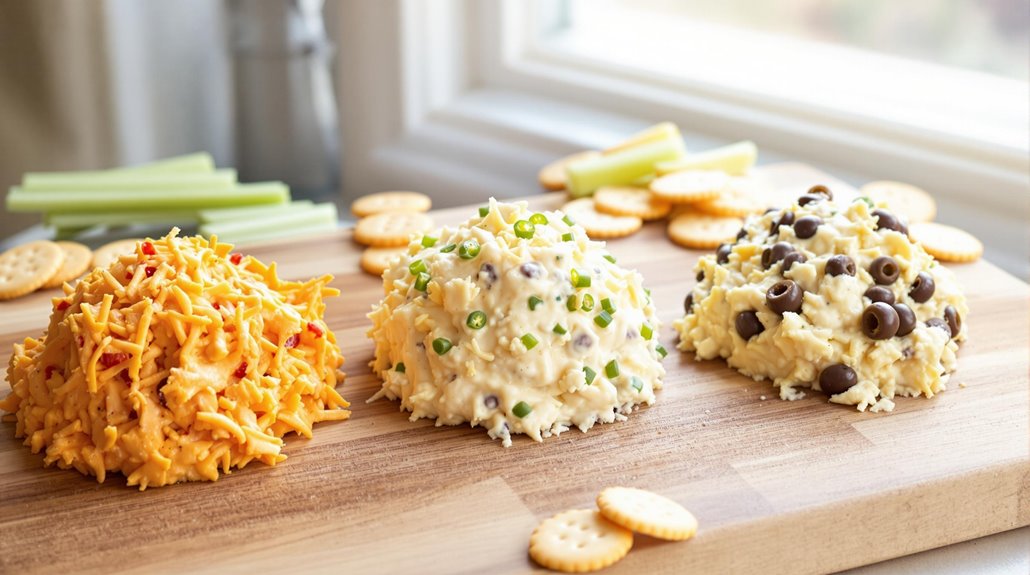
While the South claims pimento cheese as its own, each region of America has adapted this beloved spread to match local tastes and ingredients. From New York delis serving pimento loaf to store bought varieties in every supermarket, you'll find unique interpretations across the country.
Regional variations showcase distinct flavors and ingredients:
- Southern-style keeps it simple with chopped pimentos, sharp cheddar, and mayo - perfect on fried green tomatoes
- Texas adds heat with jalapeños and hot sauce for a spicy kick
- West Coast versions experiment with artisanal cheeses like gouda
- Northern recipes incorporate more cream cheese for a smoother texture
Whether made with jarred pimentos in a New England kitchen using tangy Neufchâtel, or spiced up in a Southwestern home, each region's take on pimento cheese reflects local culinary traditions.
Cultural Impact and Modern Popularity
As humble pimento cheese evolved from a simple spread to a cultural phenomenon, its influence has stretched far beyond Southern kitchen tables. You'll now find this popular Southern staple featured in upscale restaurants nationwide, where chefs reimagine the classic pimento cheese spread in creative ways while staying true to its roots of cheese, mayo, and red peppers.
The dish's status as associated with Southern cuisine has only grown stronger, particularly through its connection to prestigious events like the Masters Tournament, where pimento cheese sandwiches are legendary. While debates rage over how to make pimento cheese "the right way," this beloved spread's national resurgence in the 2010s proves its enduring appeal. Southern pimento cheese has transformed from a regional favorite into an American comfort food classic that continues to enchant new audiences.
Storage Tips and Best Practices
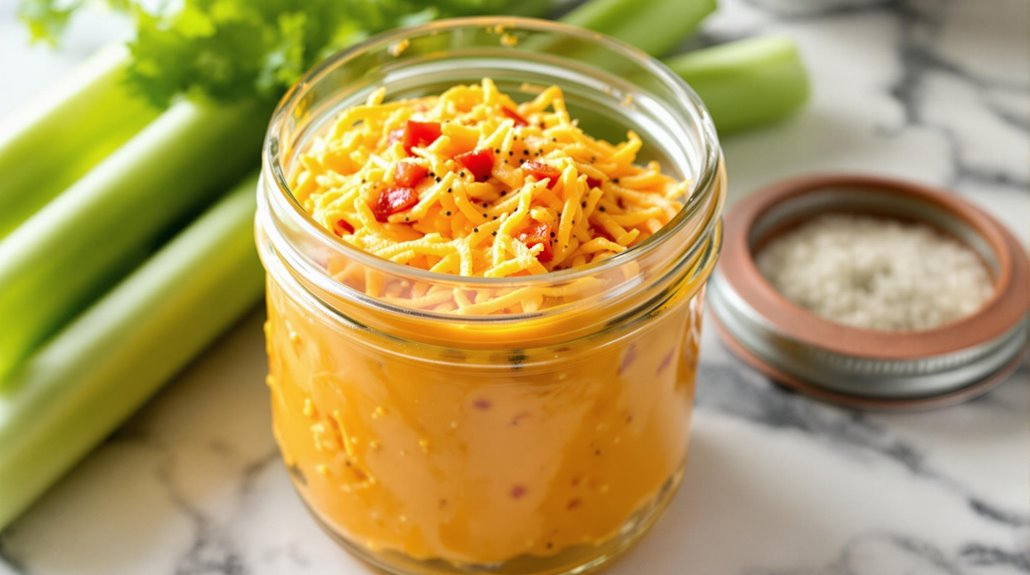
Preserving your pimento cheese properly can help you enjoy this Southern favorite longer. While typically made with cream cheese and a teaspoon ground cayenne pepper, pimiento cheese storage needs vary based on whether it's homemade or store-bought. You might find that commercially made pimento cheese lasts up to 4 weeks after opening, thanks to added preservatives.
For ideal freshness, follow these essential storage guidelines:
- Keep homemade pimento cheese refrigerated in an airtight container for up to 10 days
- Store store-bought varieties according to the package's privacy policy and expiration date
- Place pimento cheese in shallow containers to maintain proper temperature
- Consider freezing for up to 3 months, though texture may change upon thawing
Creative Recipe Adaptations
Looking to enhance your pimento cheese game beyond the basic spread? You'll love how versatile this Southern staple can be in your kitchen. Alter your burgers by adding a dollop of pimento cheese mixed with ground black pepper and minced garlic, or create a spicy flavor by incorporating diced jalapeño pepper into your spread.
Try baking it in a bread bowl with bell pepper for a crowd-pleasing dip, or add a teaspoon onion powder to create pimento cheese puffs. You can even heighten classic dishes by using it as a filling for fried green tomatoes or swirling it into scrambled eggs. For an extra-indulgent twist, top your baked potatoes or macaroni and cheese with this creamy spread, or create the ultimate grilled cheese sandwich with your homemade pimento cheese mixture.