What Is Queso Fresco? Mexican Fresh Cheese Origins & Uses
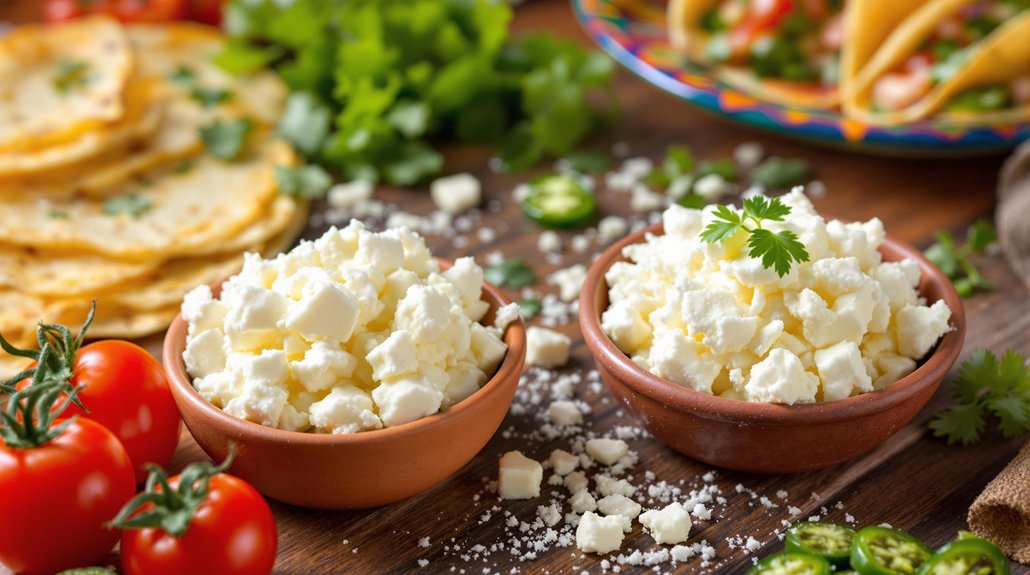
Queso fresco ("fresh cheese") originated when Spanish settlers introduced cheesemaking to Mexico in 1585. This white, crumbly cow's milk cheese won't melt when heated, making it perfect for topping tacos, enchiladas, and soups. You'll recognize it by its mild, slightly tangy flavor and soft texture. With less fat and sodium than aged cheeses, it's also a healthier option. Discover how this simple farmer's cheese became a cornerstone of authentic Mexican cuisine.
The Origins and History of Queso Fresco
While cheese-making traditions existed in the Americas before European contact, queso fresco as we grasp it today traces its roots to 1585, when Spanish settlers introduced dairy production techniques to Mexico. This simple farmers cheese didn't require the complex aging methods of European varieties, making it accessible for local production.
After Mexico gained independence in 1821, queso fresco production expanded tremendously throughout the country. The cheese's versatility and mild flavor quickly earned it a special place in Mexican cuisine.
Today, queso fresco continues to be one of Mexico's most beloved cheeses. Its name literally translates to "fresh cheese," reflecting its simple preparation and minimal processing. You'll find this traditional Mexican cheese starring in countless dishes, from tacos to enchiladas to salads.
This creamy white cheese made of whole milk can vary in saltiness and is commonly sold wrapped in corn husk or banana leaf.
What Makes Queso Fresco Unique
Queso fresco stands apart from other cheeses through its distinctive characteristics that have made it a cornerstone of Mexican cuisine. Unlike aged varieties, this fresh cheese maintains a soft, crumbly texture that crumbles easily between your fingers while resisting melting when heated—a quality that makes it perfect for topping hot dishes.
Made primarily from cow's milk (sometimes blended with goat's milk), queso fresco offers a mild, slightly tangy flavor profile that complements rather than overwhelms other ingredients. Its simple production method using rennet or acidic agents like lemon juice reflects its humble farmhouse origins. Similar to Indian paneer cheese, queso fresco does not melt due to the specific way milk proteins bond together during its creation process.
You'll find queso fresco used extensively throughout Mexican cooking, sprinkled over everything from street tacos to enchiladas, where it provides cooling contrast to spicy elements and adds textural interest to each bite.
Traditional Production Methods
Dating back to the 16th century, traditional queso fresco production emerged when Spanish settlers introduced cheesemaking techniques to Mexico.
Unlike South American aged cheeses, fresco is often made through a remarkably simple process. Producers begin with raw cow's milk (or sometimes a blend with goat's milk), then add rennet or acidic ingredients like lemon juice or vinegar to trigger curdling.
The curds are carefully drained and pressed into rounds or blocks without any aging process. This minimal intervention preserves the cheese's distinctive snowy white appearance and creates its signature soft, crumbly texture—somewhat similar to feta but with its own unique character.
Making queso fresco at home remains popular throughout Mexico, where families continue to value its fresh, milky taste and traditional preparation methods.
Nutritional Profile and Health Benefits
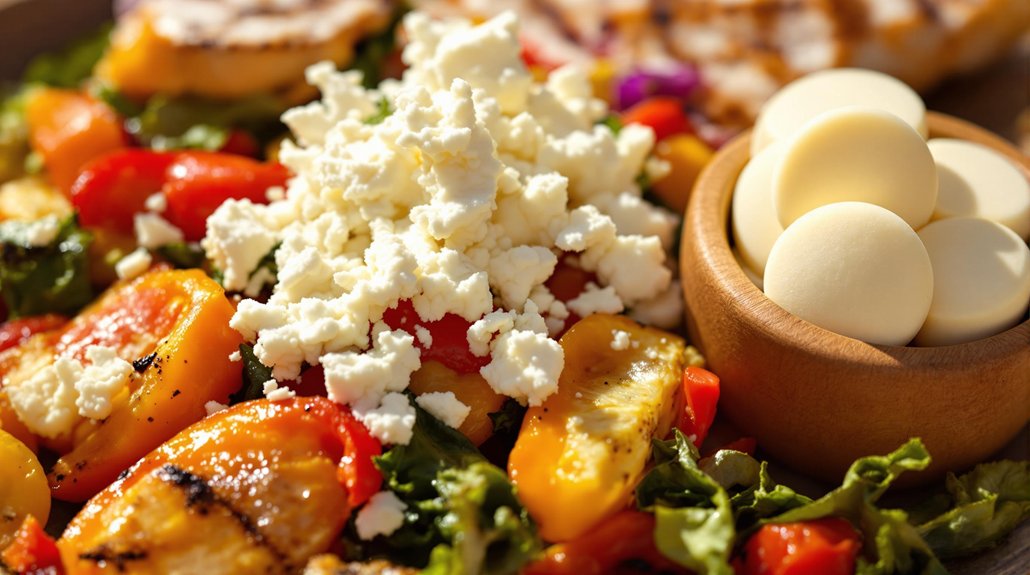
Beyond its culinary versatility, queso fresco offers an impressive nutritional profile that attracts health-conscious consumers. Made from cow and goat milk, this fresh cheese provides a low-fat, low-calorie alternative to aged cheese varieties without sacrificing flavor.
You'll benefit from queso fresco's protein content—approximately 6-7 grams per serving—which helps maintain muscle mass and supports cellular functions. If you're watching your sodium intake, you'll appreciate that queso fresco contains less salt than many other cheeses.
The cheese's calcium content is particularly remarkable, contributing to bone strength and helping prevent osteoporosis. Unlike aged cheeses, queso fresco doesn't undergo prolonged aging, resulting in lower levels of saturated fat and cholesterol. This makes it an excellent choice for those balancing taste with nutritional goals.
Queso Fresco vs. Queso Blanco: Understanding the Differences
Despite their similar appearance and frequent interchangeable use in recipes, queso fresco and queso blanco represent distinct Mexican cheese varieties with subtle but remarkable differences. The primary distinction lies in their production method: queso fresco requires rennet and cultures to form curds, while queso blanco needs only milk and an acidifying agent like lemon juice or vinegar.
If you're following a lacto-vegetarian diet, you'll want to choose queso blanco, as queso fresco typically contains animal-sourced rennet. The milk composition also differs—queso fresco traditionally uses cow's milk, whereas queso blanco often incorporates both cow's and goat's milk.
Interestingly, many home recipes labeled as "queso fresco" skip the rennet and cultures, technically making them queso blanco. For most culinary applications, you can use these cheeses interchangeably without noticeable differences.
Popular Culinary Uses in Mexican Cuisine
While its production methods distinguish it from other Mexican cheeses, queso fresco truly shines in its versatility across traditional dishes. You'll find this fresh cheese crumbled atop tacos and enchiladas, where it provides a cooling counterbalance to spicy elements while adding a milky freshness.
Unlike queso blanco, which holds its shape when heated, queso fresco's crumbly texture makes it perfect for incorporating into dips and spreads, including guacamole and pico de gallo. You can also slice or cube it for soups, casseroles, and breakfast dishes to add creamy richness.
When you're making chiles rellenos or quesadillas, queso fresco works beautifully as a filling, melting just enough while maintaining its distinctive character. Its ability to complement bold flavors makes it an essential ingredient in authentic Mexican cuisine.
Storing and Preserving Your Queso Fresco
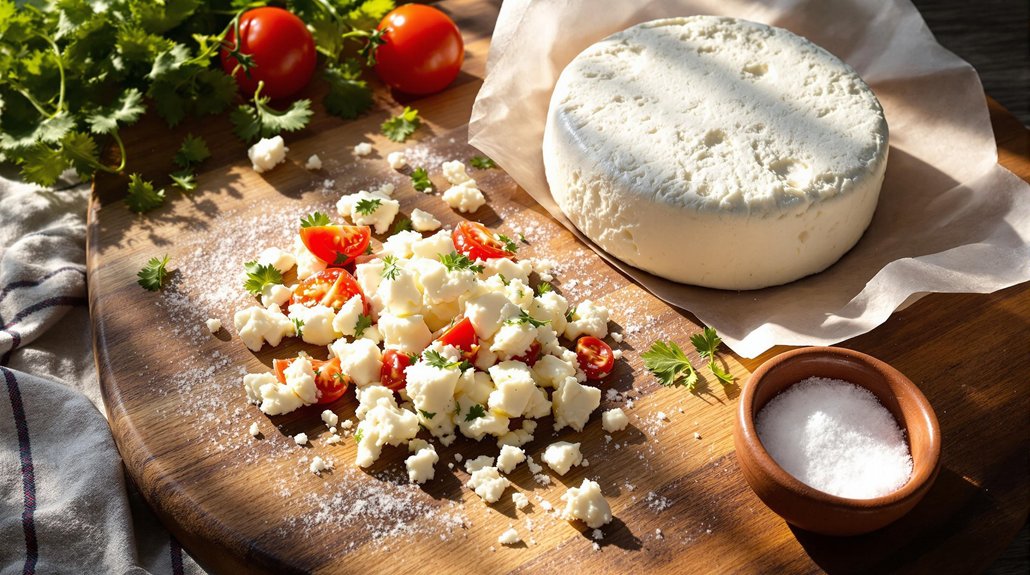
To keep your queso fresco at its best, tuck it away in the refrigerator where it'll remain fresh for up to one week. Wrap it tightly in plastic wrap or place it in an airtight container to prevent it from drying out and absorbing other food odors.
If you've made queso fresco at home, you can extend its shelf life by submerging it in its own whey or a brine solution. This traditional preservation method helps maintain the cheese's moisture and flavor.
While freezing isn't ideal as it can make the texture grainy, you can freeze queso fresco if necessary. Just wrap it securely and use it within 2-3 months. Remember that previously frozen cheese works better in cooked dishes where textural changes are less noticeable.
Finding Quality Queso Fresco or Making It at Home
Finding excellent queso fresco boils down to two main options: sourcing it from authentic retailers or crafting it in your own kitchen. For store-bought varieties, look to specialty Mexican markets or Latin American grocers where award-winning brands like Cesar's Cheese and W&W Dairy are often available. Authentic queso fresco from Oaxaca, Mexico or Wisconsin-produced versions offer exceptional quality.
Can't find queso fresco? Several substitutes work well: feta, paneer, ricotta salata, or crumbly aged goat cheese can pinch-hit in your recipes. Alternatively, try making queso blanco at home with just milk, vinegar, and cheesecloth. The process is straightforward: heat milk, add acid to curdle it, drain the resulting curds, and press into your desired shape. You'll get fresh Mexican cheese with the authentic taste and texture you're craving.
Perfect Pairings and Complementary Flavors
Why does queso fresco work so brilliantly in Mexican cuisine? It's all about balance. The cheese's mild, milky flavor provides a perfect counterpoint to the heat found in many Mexican dishes. When you sprinkle crumbly queso fresco over enchiladas or tacos, you're creating textural contrast against their soft, unctuous elements.
You'll notice how queso fresco's subtle acidity cuts through the heaviness of stews, beans and other hearty Mexican fare, preventing them from becoming overwhelming. It complements vibrant Mexican ingredients like cilantro and tomatillo salsa, enhancing their fresh, herbal notes rather than competing with them. The cheese's creamy quality cools and balances bold flavors, making it an essential finishing touch that ties together complex flavor profiles with its simple, fresh character.