What Is the Missouri Cheese Cave Mystery?
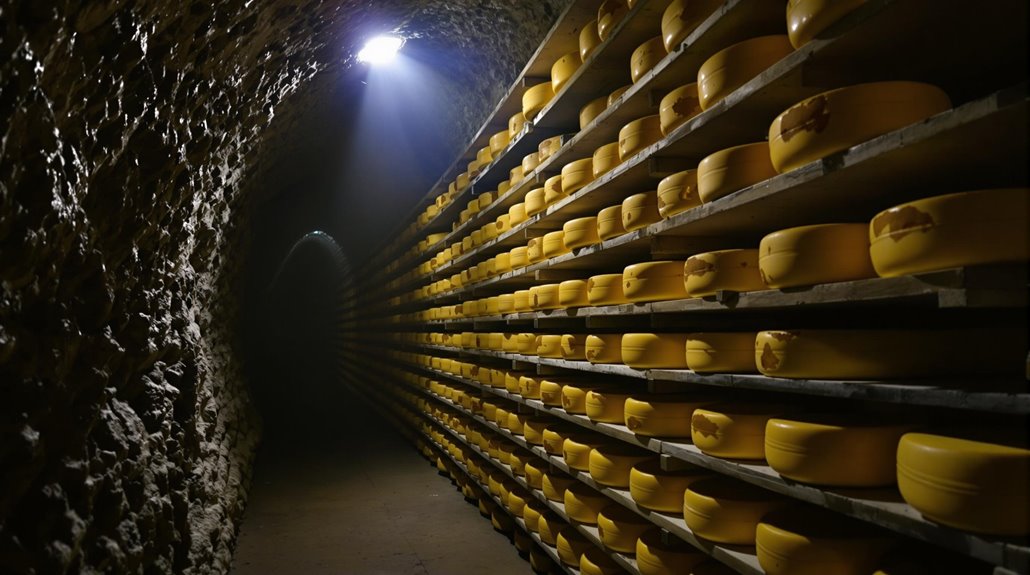
Deep beneath Springfield, Missouri, you'll find a vast network of limestone caves that once housed over a billion pounds of government surplus cheese in the 1980s. These naturally climate-controlled caverns maintained perfect temperatures in the low 60s, making them ideal for preserving America's massive dairy surplus. While the current owners deny any cheese storage today, the caves' mysterious legacy and persistent rumors of underground cheese mountains continue to enthrall curious minds.
The Underground Limestone Legacy of Springfield
Springfield's limestone caves stand as a symbol of human ingenuity and geological fortune. You'll find these impressive caverns were initially carved out through mining operations, creating a vast network of underground spaces that would later serve an unexpected purpose.
What makes these caves extraordinary is their natural climate control system. They maintain temperatures in the low 60s with perfect humidity levels, creating an ideal storage environment that caught the government's attention. The caves provided the essential 75-99% relative humidity needed for proper cheese preservation. This geological marvel transitioned from a simple mining site into a pivotal agricultural storage facility in the 1980s when the federal government needed space to store surplus cheese. Today, while you won't find mountains of government cheese there anymore, these caves continue to play an essential role in America's food storage infrastructure, proving that sometimes the best solutions lie right beneath our feet.
From Mining Tunnels to Government Cheese Storage
While many know Missouri's caves for their natural beauty, these massive limestone caverns took on an unlikely role in the 1980s as America's premier cheese vault. After President Carter's $2 billion investment in the dairy industry created a massive milk surplus, the government needed somewhere to store the excess cheese. The Missouri cheese caves, with their sprawling 3.5 million square feet of space and natural climate control, provided the perfect solution. The caves' conditions allowed for optimal cheese preservation methods, including specialized temperature and humidity controls that rivaled modern plastic packaging technology.
You'd find a constant temperature in the low 60s and moderate humidity throughout these converted mines, making them ideal for preserving surplus cheese. Under President Reagan's administration, this stored cheese later helped feed Americans through the Temporary Emergency Food Assistance Program. Though the current owners of Springfield Underground deny any connection to the government's cheese storage program, the caves' role in this unique piece of history remains fascinating.
The Great Dairy Surplus of the 1970s and 1980s

The government's cheese storage solution arose from a much larger agricultural crisis brewing in the 1970s. Under President Carter's policies, dairy farmers began producing far more milk than Americans could consume, leading to a massive surplus. By the 1980s, you would've found the government sitting on an astounding 1.4 billion pounds of excess cheese.
To address this overwhelming stockpile, the government launched the Temporary Emergency Food Assistance Program (TEFAP), distributing the surplus to low-income families. While some recipients welcomed the free cheese, others felt stigmatized by the program. The surplus ultimately altered American eating habits, as Dairy Management Inc. worked to incorporate the excess cheese into popular foods. This effort helped quadruple the nation's cheese consumption between 1970 and 2000. Much of this surplus was processed American cheese, which had become a household staple due to its convenience and long shelf life.
Inside the Mysterious Cave Operations
Deep beneath the rolling hills of Springfield, Missouri, a network of limestone caverns holds one of America's most intriguing food storage mysteries. The missouri caves, once home to an estimated 1.4 billion pounds of underground cheese, continue to spark speculation about what really lies within their depths.
While the Springfield Underground facility's owners deny storing government cheese today, they've converted these caverns into sophisticated climate-controlled storage spaces for major food companies. You'll find a stark contrast between the facility's documented past as a warehouse for the government's massive dairy surplus and its current operations. Despite official denials, persistent rumors suggest that mountains of aging cheese still exist somewhere in these mysterious chambers, leading many to wonder what secrets these limestone walls still keep.
Beyond the Government Cheese Era
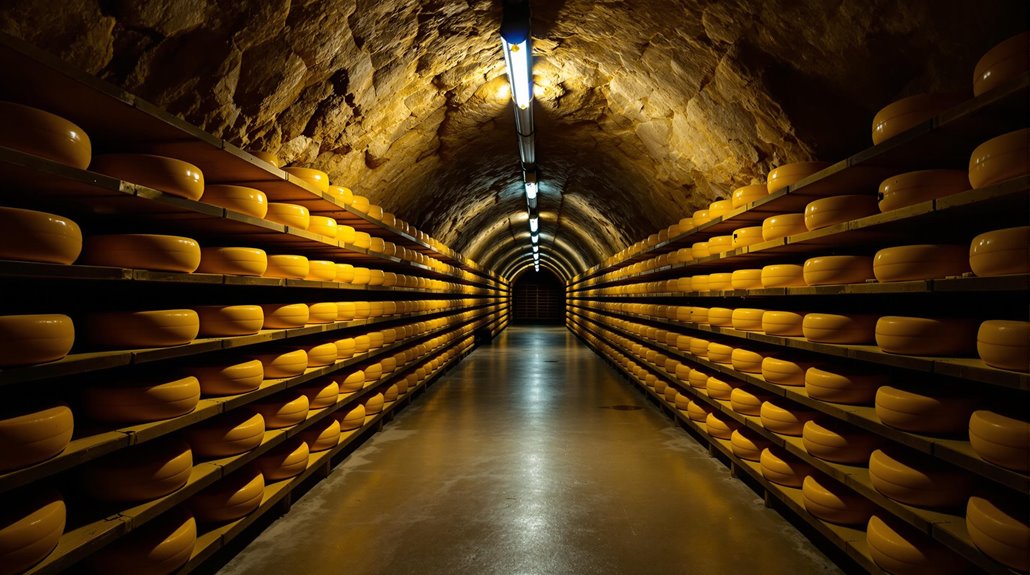
Modern operations within Springfield's underground maze tell a vastly different story than its government cheese legacy. The former limestone mines have transitioned into a sophisticated storage facility that capitalizes on the natural underground temperature to preserve various commercial products.
You'll find that today's cavern operations focus on three key aspects:
- Climate-controlled environments perfect for storing perishable goods
- Vast underground spaces that accommodate diverse product inventories
- Strategic distribution capabilities for multiple commercial clients
While you might still hear whispers about hidden government cheese stockpiles, the reality is much more practical. The caves have evolved into an essential commercial hub, though they haven't lost their allure. They stand as a chronicle to how innovative thinking can turn an agricultural solution into a thriving business venture.
The Cultural Impact and Lasting Legends
Lasting folklore surrounding Missouri's cheese caves has metamorphosed a government storage solution into something approaching modern mythology. You'll find references comparing these subterranean vaults to Indiana Jones' mysterious "Hangar 52," as the caves captured America's imagination during President Jimmy Carter's era.
The sheer magnitude of stored milk products - 1.4 billion pounds of blocks of government cheese - created an everlasting impression on American culture. If you grew up during the 1980s, you might remember families receiving these processed dairy products through federal assistance programs. While some recipients felt stigmatized, the cheese caves have become a cultural touchstone, spawning countless jokes and nostalgic stories. Today, even though the caves serve different purposes, they remain a powerful symbol of agricultural surplus and complex government policies that shaped a generation's relationship with food assistance.