What Was Government Cheese in the United States?
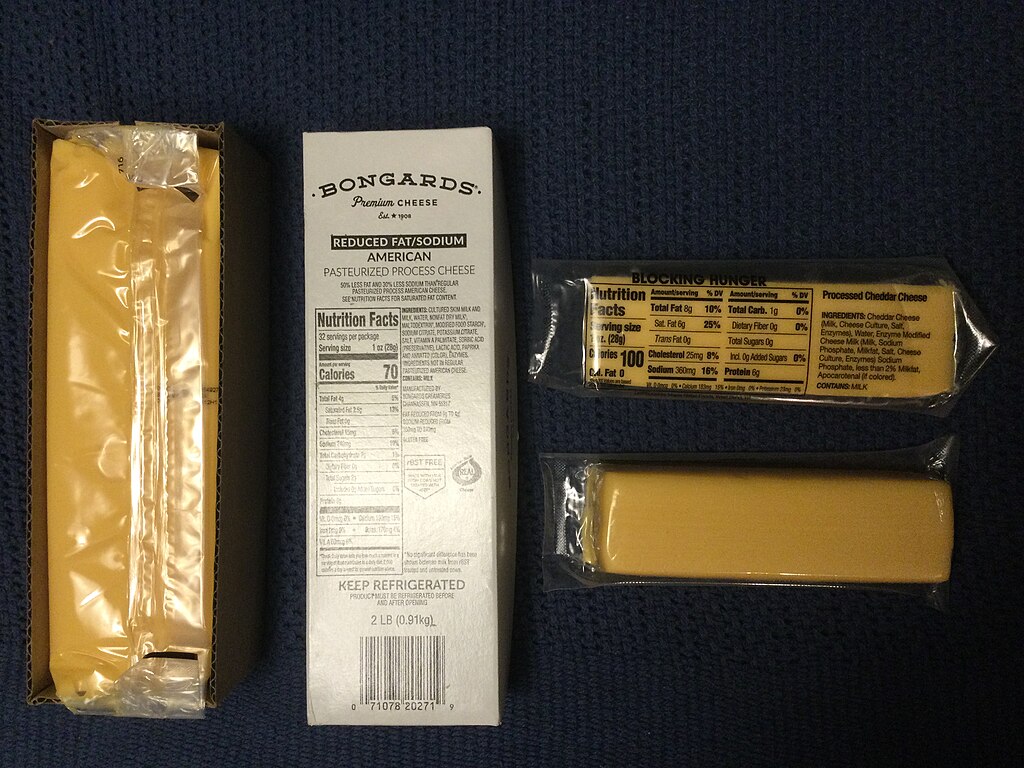
Government cheese was a processed dairy product you'd receive through U.S. welfare programs in the 1980s. It emerged from massive dairy surpluses when the government bought excess milk to support struggling farmers, leading to a stockpile of over 560 million pounds of cheese. President Reagan launched a distribution program to address both the storage crisis and hunger needs. The controversial program's impact on American agriculture and society runs deeper than its distinctive orange-yellow blocks.
Image: Septagram, USDA Commodities Cheeses, CC BY-SA 4.0
Origins of the Dairy Surplus Program
While dairy farmers struggled during the Great Depression, the Agricultural Act of 1949 set in motion what would become known as government cheese. The legislation enabled the Commodity Credit Corporation to purchase dairy products, creating a massive federal stockpile.
You might wonder how this stockpile grew so large. In 1973, dairy prices surged 30%, prompting the government to implement new subsidy policies in 1977. Over the next four years, they invested $2 billion in the dairy industry. This generous support encouraged dairy farmers to produce more milk than the market needed. The result? The government accumulated over 500 million pounds of cheese, butter, and dehydrated milk powder. Agriculture Secretary John R. Block drew attention to the issue when he displayed moldy, deteriorating blocks of cheese to the press.
This surplus challenge emerged during a time when mass production techniques had already transformed cheese-making from a traditional craft into an industrial process.
The Great Cheese Stockpile Crisis
By 1981, the government's cheese storage problem had reached absurd proportions. You'd find over 560 million pounds of cheese stockpiled in warehouses, caves, and storage facilities across America. The caves kept the massive blocks of processed cheese at ideal temperatures, but storage costs were skyrocketing. The quality control measures implemented in commercial cheese production made this surplus product safe for long-term storage. President Reagan faced mounting pressure to address this dairy dilemma. The surplus cheese, which cost taxpayers around $1 million daily to store, became a political liability.
Reagan's administration realized they couldn't just let this abundance spoil or continue paying for storage. In December 1981, Reagan announced a solution: distributing the surplus cheese to needy Americans through food banks and welfare programs. This decision marked the beginning of what you'd come to know as "government cheese" distribution.
Reagan's Distribution Initiative
Reagan's 1981 announcement set in motion one of America's largest food assistance efforts. When Ronald Reagan ordered the distribution of 30 million pounds of government cheese to elderly and low-income Americans, he aimed to address both mounting dairy surpluses and hunger needs.
The program's implementation revealed complex social fluidity you might not have expected. While many recipients welcomed the free dairy products, the distinctive smell and texture of government cheese became a cultural symbol that often carried stigma. You'd find that some recipients felt embarrassed by the handouts, which critics argued reinforced negative stereotypes about welfare recipients.
The cheese distributed was similar to the processed cheese products that James L. Kraft had patented in 1916 and popularized across America.
Social Impact and Public Reception
The social impact of government cheese stretched far beyond its intended role as a simple food assistance program. You'd find it stirred complex emotions among recipients - while some felt stigmatized by the welfare association, others fondly remembered its unique characteristics.
The cheese's distinctive color, smell, and texture made it instantly recognizable, often reinforcing existing stereotypes about food assistance recipients. Critics argued that the program perpetuated harmful "welfare queen" narratives instead of providing more nutritious food options. The debate around government cheese reflected deeper societal tensions about public aid and poverty.
Food writers have mixed opinions about its taste - some recall its salty, sharp flavor as outdated, while others praise its cooking versatility. The program ultimately highlighted the challenges of balancing affordable food distribution with social dignity and nutritional value.
Manufacturing and Storage Methods
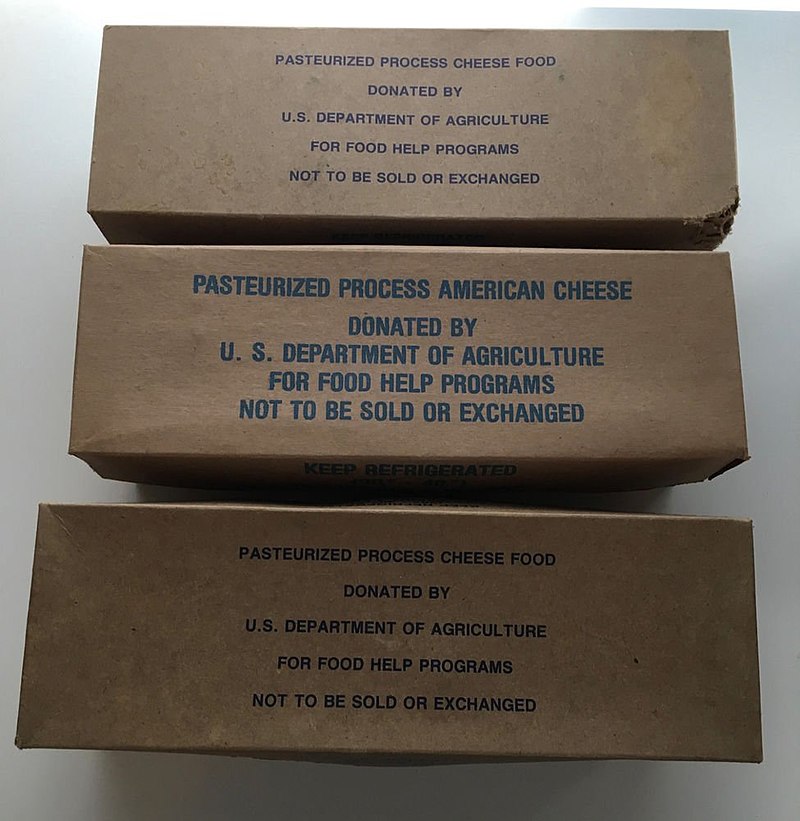
Image: @fightfor15, Government cheese, CC BY-SA 4.0
From massive underground caves to converted limestone mines, government cheese storage facilities stood as monuments to America's dairy surplus. You'd find these cavernous spaces maintained at a precise 36°F to preserve the massive stockpile of dairy products.
The government's approach to cheese manufacturing and storage focused on maximizing shelf life through strategic processing methods:
- Using processed cheese instead of natural varieties to extend preservation
- Incorporating dehydrated milk powder as a key ingredient
- Maintaining temperature-controlled environments in repurposed underground spaces
- Stockpiling over 1.4 billion pounds at peak capacity
This unique storage system allowed the government to maintain its enormous cheese reserves for extended periods, supporting various programs from military operations during World War II to school lunches and welfare distributions throughout the following decades.
Economic Effects on American Agriculture
While massive storage facilities kept America's cheese mountains preserved, agricultural policies created lasting ripples throughout the farming economy. You'll find that government cheese wasn't just a welfare program - it fundamentally shaped American agriculture for decades to come. The dairy industry's response to government subsidies in the 1970s led to chronic overproduction, as farmers maximized their milk output to capture federal support payments.
This cycle reconfigured the agricultural milieu, as dairy farmers became increasingly dependent on government programs. The effects continue today, with the dairy industry producing far more than consumers demand. You can see the legacy of these policies in the current 1.4 billion-pound cheese surplus, demonstrating how the government cheese era permanently modified farming practices and agricultural economics in America.
Legacy in Modern Food Assistance Programs
Looking back at food assistance programs today, you'll find clear traces of the government cheese era's influence. Many modern food banks still distribute processed cheese products that remind recipients of the original government cheese program.
The legacy continues through several key aspects:
- Food banks regularly include processed cheese in emergency assistance packages
- Recipients often have mixed feelings about cheese distribution, with some seeing it as a poverty stigma
- The nutritional debate around processed cheese in food assistance programs remains active
- Current agricultural policies still influence dairy surplus management and distribution
While today's food assistance programs have evolved, they're still contending with many of the same challenges that existed during the government cheese era. The intersection of agricultural policy and nutrition assistance continues to shape how America feeds its most vulnerable populations.