When Was Sakura Cheese Invented?
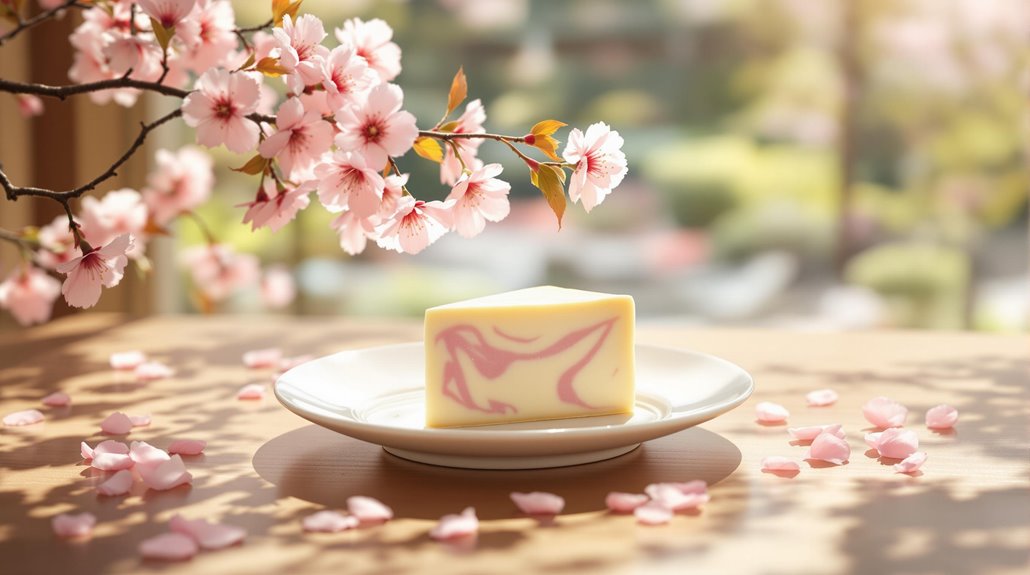
Sakura Cheese was invented in 1974 when Shinichiro Miyajima founded Kyodo Gakusha Shintoku Farm in Hokkaido, Japan. You'll find this unique cheese combines European cheese-making techniques with distinctly Japanese ingredients, including Yachi Yanagi sake and Dutch myrtle dusting. Each wheel is carefully wrapped in bamboo leaves from the farm's own grounds. The cheese's excellence was later confirmed when it won gold at the Mountain Cheese Olympics - just one chapter in its extraordinary story.
The Birth of Japanese Artisanal Cheese
The emergence of Japanese artisanal cheese traces its roots to Hokkaido, where Shinichiro Miyajima founded the Kyodo Gakusha Shintoku Farm in 1974. This pioneering venture came at a time when Japan's dairy culture was still developing, considering that cheese consumption was nearly nonexistent at the start of the 20th century, with Japanese people consuming only 0.9g per capita annually in 1900. The delicate balance of floral cherry blossom notes combined with creamy textures has made this cheese a symbol of cultural fusion in modern Japanese cuisine.
You'll find that the farm's signature creation, Sakura Cheese, represents a unique fusion of European cheese-making traditions with Japanese ingredients. This camembert-style cheese, washed in local sake and dusted with Dutch myrtle and Sasayuki, exemplifies Japan's innovative approach to dairy craftsmanship. The farm's success culminated in winning a gold medal at the Mountain Cheese Olympics in Switzerland, marking a significant milestone for non-European cheese production.
Origins at Kyodo Gakusha Shintoku Farm
Nestled in Hokkaido's pristine terrain, Kyodo Gakusha Shintoku Farm became the birthplace of Sakura Cheese thanks to its unique environmental advantages. You'll find that the farm's volcanic soils and naturally filtered waters create ideal conditions for cheesemaking, contributing to its award-winning products.
Since its establishment by Shinichiro Miyajima in 1974, the farm has perfected its signature Sakura Cheese, a camembert-style creation that's lovingly washed in Yachi Yanagi sake and dusted with Dutch myrtle and Sasayuki. The farm's dedication to quality earned them a gold medal at the Mountain Cheese Olympics in Switzerland. Beyond Sakura Cheese, you'll explore their seasonal Shintoko, a Gruyère-type cheese that's carefully aged for over 10 months, showcasing the farm's diverse cheesemaking talents. The cheese is presented with a traditional touch as each wheel is wrapped in bamboo leaves from the farm's own grounds.
Traditional Ingredients and Production Methods
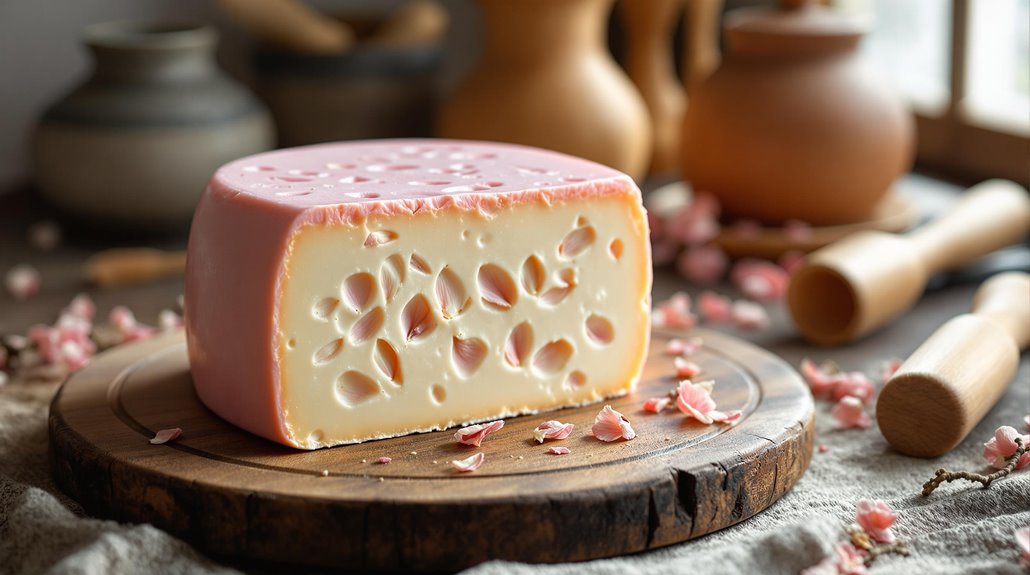
Making authentic Sakura Cheese requires carefully selected local ingredients and time-honored techniques passed down through generations at Kyodo Gakusha Shintoku Farm.
You'll find this gold medal winner from the Mountain Cheese Olympics crafted in the pristine environment of Hokkaido, where volcanic soils and naturally filtered waters create ideal cheesemaking conditions. The cheese's distinctive character comes from a careful washing in Yachi Yanagi sake, followed by a dusting of Dutch myrtle and Sasayuki. The farm's artisans wrap each cheese in bamboo leaves harvested from their own land. Their specialized knowledge extends beyond Sakura Cheese to include Shintoko, a seasonally produced Gruyère-style cheese that's aged for over 10 months. It's this combination of local ingredients and precise production methods that sets their cheeses apart.
Like traditional farmhouse cheeses, their small-batch production ensures superior quality control and consistency throughout the aging process.
The Significance of Bamboo Leaf Wrapping
Among the most distinctive features of Sakura Cheese, its bamboo leaf wrapping stands as a symbol to Japanese culinary traditions and sustainable practices. You'll find this unique packaging approach sets it apart in the soft cheese category, as each piece is carefully wrapped in bamboo leaves harvested directly from the Kyodo Gakusha Shintoku Farm where it's produced.
The bamboo wrapping isn't just for show - it's a time-tested method that helps maintain the cheese's distinctive flavor and texture. You're experiencing a pivotal element of the farm's cheesemaking success when you unwrap your Sakura Cheese, as the locally sourced bamboo leaves contribute to its artisanal character. This traditional packaging method reflects the producer's commitment to authentic Japanese practices while preserving the cheese's unique qualities.
Historical Context of Cheese in Japan
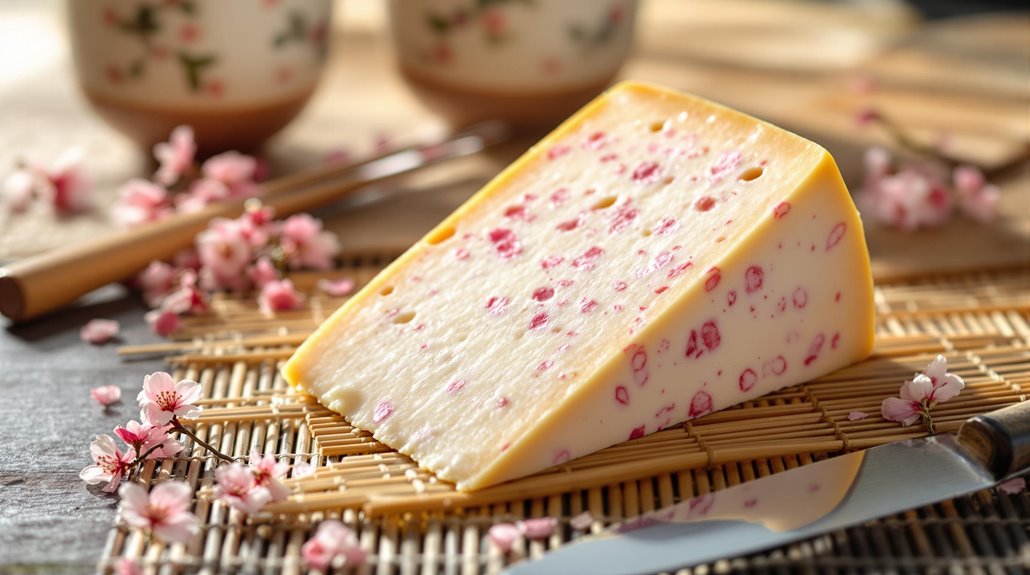
While cheese has become a staple in modern Japanese cuisine, its presence in the country's culinary history is relatively recent. You'll find that before 1900, Japanese people consumed merely 0.9g of cheese per person annually, despite early exposure to Mongolian-style cheese through Chinese and Korean influences.
The Meiji period marked a turning point when Japan's national nutrition policy promoted cheese consumption. As dairy science advanced, Japanese farms began utilizing the country's volcanic soils and naturally filtered water sources to develop unique cheese varieties. This extraordinary change has been transformative - Japan has evolved from having minimal cheese consumption to becoming the world's third-largest cheese importer. Today, you can experience distinctly Japanese creations like Sakura Cheese and Shintoko, which represent the successful fusion of traditional Japanese elements with Western cheese-making techniques.
Mountain Cheese Olympics Achievement
A historic milestone in Japanese cheese-making occurred when Sakura Cheese captured gold at the Mountain Cheese Olympics in Appenzell, Switzerland. You'll find it extraordinary that a Japanese cheese managed to outperform European competitors in the soft cheese category, as the competition traditionally showcases European dairy excellence.
This victory proved impactful for Sakura Cheese's reputation in Japan. While cheese wasn't a traditional part of Japanese cuisine, the prestigious Mountain Cheese Olympics accolade helped change local perceptions. You can trace how this international recognition elevated Sakura Cheese's popularity among Japanese consumers, who previously had limited exposure to cheese products. The gold medal served as a turning point, demonstrating that Japanese cheese-making could compete with centuries-old European traditions.
Popular Sakura Cheese Recipes
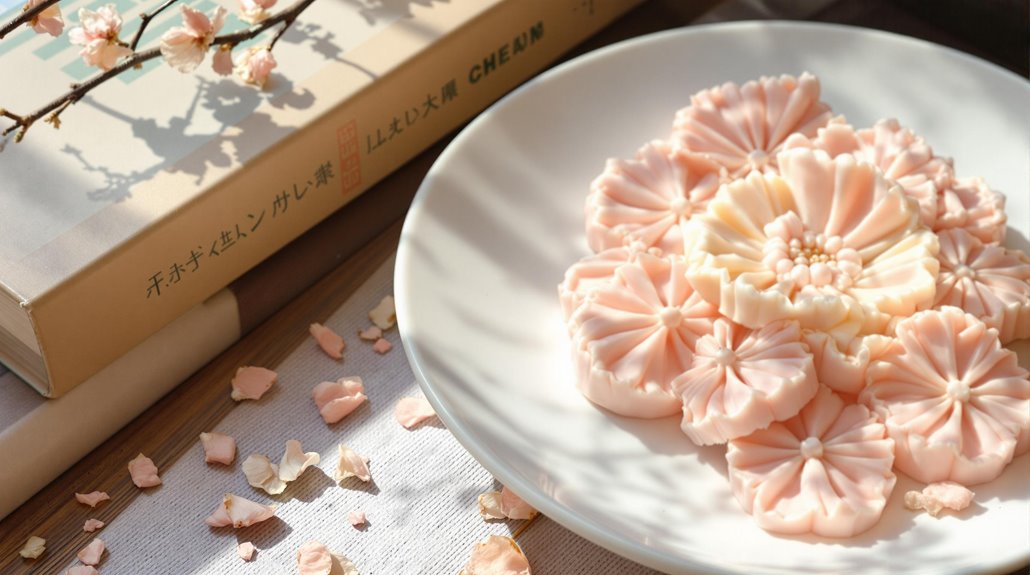
Food enthusiasts worldwide have accepted Sakura Cheese's versatility through an array of creative recipes. Unlike traditional Gruyère-type cheese that emerged in Europe before World War II, Sakura Cheese has found its way into both sweet and savory Japanese dishes. You'll find charming Sakura Cheese Muffins combining salted cherry blossoms with cream cheese, and no-bake cheesecakes infused with sakura liqueur. For a savory twist that's worthy of Olympics-level culinary competition, try the Sakura Shrimp Pizza, which pairs perfectly with daikon radish sprouts and nori seaweed. This innovative cheese isn't limited to traditional applications - you can incorporate it into modern fusion dishes that blend Japanese and Western cooking styles, making it a versatile ingredient in your kitchen repertoire.
Global Impact and Recognition
Building on its culinary versatility, Sakura Cheese has earned prestigious international recognition. You'll find its breakthrough moment came at the Mountain Cheese Olympics in Appenzell, Switzerland, where it claimed a gold medal in the soft cheese category - an extraordinary achievement for a non-European cheese maker.
This victory proved transformative for Japan's cheese industry. As the world's third-largest cheese importer, Japan has seen substantial growth in consumption in Japan, with Sakura Cheese leading the charge in domestic production. You'll notice how this international acclaim has helped establish Japan's reputation in artisanal cheese-making. The competition's exposure opened new doors for Sakura Cheese in the global market while simultaneously enhancing its popularity among Japanese consumers, showcasing the evolution of Japan's cheese-making traditions.
Modern Production and Distribution
Modern Sakura Cheese production centers primarily at the Kyodo Gakusha Shintoku Farm in Hokkaido, where traditional methods meet contemporary standards. The cheese's distribution has expanded considerably since becoming the first Japanese cheese to win gold at the Mountain Cheese Olympics in 2004.
You'll find that Sakura Cheese production follows these distinctive steps:
- Starting with milk from cows raised on Hokkaido's volcanic soils and naturally rich pastures
- Creating the base using traditional camembert-style techniques
- Washing the cheese in local sake during the aging process
- Finishing with a delicate dusting of Dutch myrtle and Sasayuki
As Japan's cheese consumption continues to rise, making it the world's third-largest cheese importer, Sakura Cheese maintains its position as a premium domestic product in the market.