Brick Cheese Explained: History, Texture & Popular Culinary Uses
Brick cheese, born in Wisconsin in 1877, gets its name from the actual bricks used to press the curds during production. You'll find it has a semi-soft texture with small holes and excellent melting properties. Its flavor ranges from mild when young to assertively tangy when aged. It's perfect for Detroit-style pizza, grilled cheese sandwiches, and pairs wonderfully with both wine and beer. Discover why this American original continues to captivate cheese enthusiasts nationwide.
The Birth of Brick Cheese: Wisconsin's 1877 Innovation
While many American cheeses have European roots, brick cheese stands as a truly American original, born in Wisconsin in 1877. This distinctive creation came from cheesemaker John Jossi, who sought to develop a milder alternative to pungent limburger cheese.
Jossi's innovation involved pressing cheese curds with actual bricks to drain the whey, giving true brick cheese its characteristic rectangular shape. Unlike cheddar, brick cheese undergoes surface ripening with Brevibacterium linens bacteria, creating its unique flavor profile that balances mild and tangy notes.
Wisconsin quickly became the epicenter of brick cheese production, with Widmer's Cheese Cellars continuing these traditional methods today. This Wisconsin innovation helped establish the state's reputation as an artisanal cheese powerhouse, proving that American cheesemaking could rival its European counterparts. As one of the 500 cheese varieties produced in Wisconsin, brick cheese represents the state's long-standing commitment to quality and innovation in dairy products.
How Brick Cheese Got Its Name: The Story Behind the Bricks
Unlike many cheeses named for their place of origin, brick cheese earned its straightforward name from the actual bricks used in its production. When John Jossi created this Wisconsin specialty in 1877, he innovatively employed clay-fired bricks to press the cheese curds at a slightly higher temperature than other varieties, extracting excess moisture and forming its characteristic rectangular shape.
These literal bricks gave the pale yellow cheese its name while simultaneously developing its distinctive texture and flavor profile. As the cheese ages, its color deepens, and aged brick cheese develops a more pronounced taste than its younger counterpart.
Today, most manufacturers have modernized their processes, but Widmer's Cheese Cellars remains committed to tradition, still using the original technique of real bricks to press their brick cheeses—preserving both the name's origin and authentic production method. For those interested in making cheese at home, it's best to start with simple fresh cheeses before attempting more complex varieties like brick cheese.
From Mild to Wild: The Aging Process of Brick Cheese
Beyond its unique brick-pressed origins, what truly sets this Wisconsin cheese apart is its remarkable transformation as it ages. You'll notice brick cheese evolves from a mild flavor when young to an assertively tangy flavor as it matures.
When fresh, the cheese is slightly softer with a pale yellow color and open texture that melts beautifully. The starter culture produces lactic acid, which develops the cheese's foundational character.
Brevibacterium linens, the bacteria that gives the cheese its distinctive aroma, colonizes the surface during aging. Over months, the ivory interior darkens while the rind develops an orange hue with more complex flavors.
Pair younger varieties with a weiss beer, while aged versions complement a rich brown ale's maltiness.
Brick Cheese Production: Traditional Methods & Modern Techniques
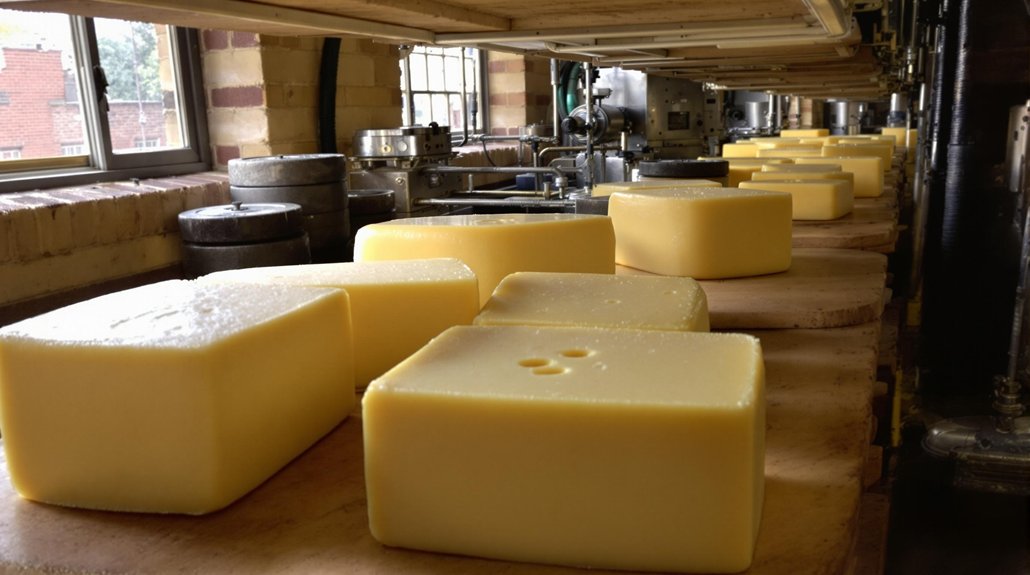
Although Wisconsin's unique cheese heritage spans generations, traditional brick cheese production stands as one of its most fascinating culinary treasures. You'll find that authentic brick cheese is still produced in Wisconsin using methods dating back decades, with Widmer's Cheese Cellars among the few producers maintaining this craft.
To make brick cheese, cheese makers heat milk in steel vats, add starter cultures, then coagulate with rennet. After cooking the curds, they use actual bricks to press and drain the whey—a practice that gives this cheese its name. Young brick cheese offers a mild flavor, but the magic happens when Brevibacterium linens develops on the rind during aging, creating a distinctive pungent character.
While most production has modernized, Widmer's still crafts 360,000 pounds annually using bricks, including specialty varieties with caraway or jalapeño.
The Signature Texture & Flavor Profile of Brick Cheese
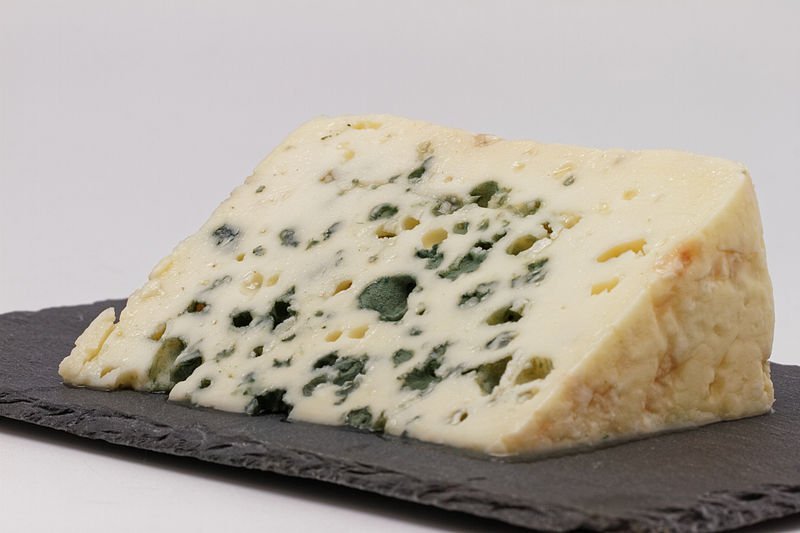
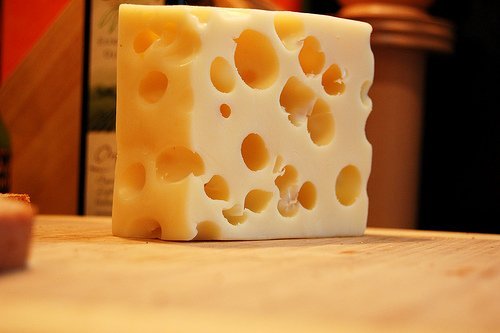
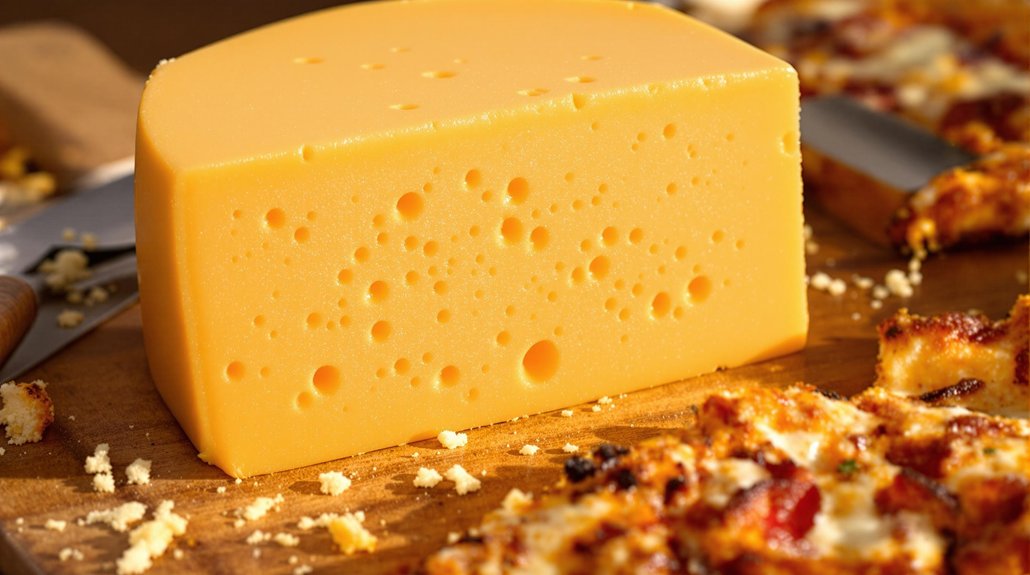
You'll immediately notice brick cheese's distinctive semi-soft texture when you slice into it, with its small, characteristic holes that give it exceptional melting properties. This unique profile comes from higher cooking temperatures than regular cheddar and a marginally higher fat content.
When young, brick cheese has a slightly sweet, mild flavor that's considered ready for consumption immediately. As cheese goes through aging:
- Develops a nutty, tangy character
- Acquires a pungent aroma from smear-ripening
- Maintains excellent melting capabilities
- Features an open texture that slices well
- Creates exceptional grilled cheese sandwiches
The versatility of this Wisconsin original makes it perfect for numerous Cheese Recipes, especially Detroit-style pizza where it melts well while maintaining its distinctive character that can't be easily substituted.
Detroit-Style Pizza's Secret Ingredient: Why Brick Cheese Reigns Supreme
The secret to Detroit-style pizza's irresistible charm boils down to one essential component: brick cheese. You can't replicate authentic Detroit-style pizza without this distinctive cheese, whose creamy texture and tangy flavor define the regional specialty. Brick cheese's slightly higher fat content and modified protein structure allow it to melt perfectly, creating that signature gooey stretch when you pull a slice.
What truly sets brick cheese apart is its surface ripening process. The Brevibacterium linens bacteria responsible for its development contribute a pungent aroma and intense flavor that harmonize beautifully with other toppings. While some recipes suggest substitutes, they simply can't match brick cheese's unique melting ability and flavor profile. It's this irreplaceable combination that makes brick cheese the undisputed champion of Detroit-style pizza.
Beyond Pizza: Creative Culinary Applications for Brick Cheese
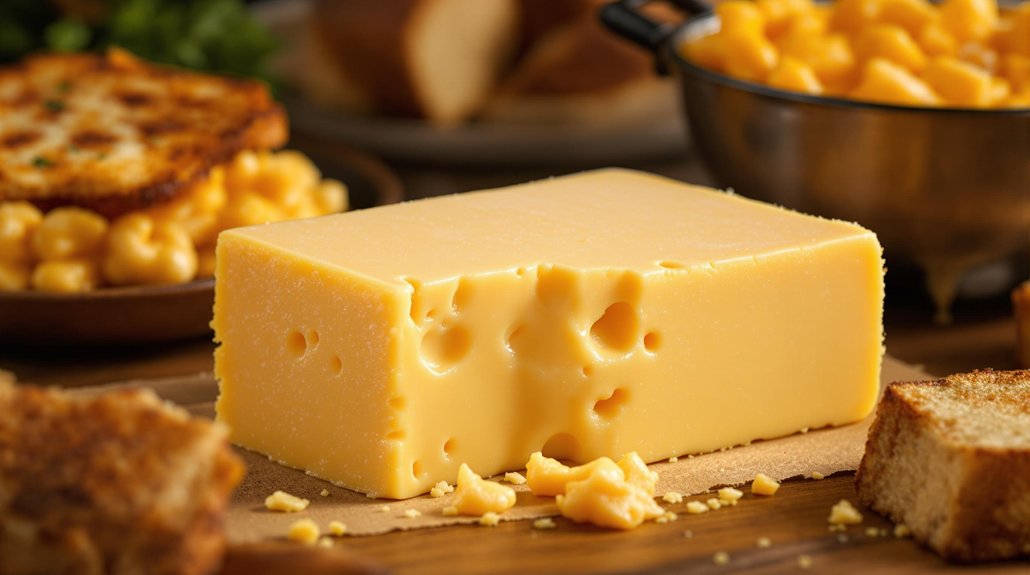
While Detroit-style pizza may have put brick cheese on the map, this versatile dairy delight shines brilliantly across numerous culinary applications. Discover Your Next Favorite way to use this semi-soft cheese that makes everything taste better, from comfort foods to elegant pairings.
- Transform your grilled sandwich into the world's best cheese melt with thinly sliced brick cheese
- Elevate your mac and cheese with its superior melting properties and subtle tangy flavor
- Top burgers for a creamy contrast that pairs well with bold flavors
- Create Midwestern comfort food by melting it over polenta with tomato sauce
- Enjoy aged varieties on a cheese board alongside stouts and red wines
Many retailers who offer online cheese shopping can deliver this culinary gem directly to your door. Explore these Pairing Ideas to experience the best of brick cheese beyond pizza.
Finding the Perfect Substitute When Brick Cheese Isn't Available
Despite its growing popularity, brick cheese isn't always readily available in every grocery store, leaving many home cooks searching for alternatives that can deliver similar flavors and textures. For a milder, pale option with softer taste, try Monterey Jack, mozzarella, or mild Muenster—supermarket staples that work beautifully in most recipes.
If you're after brick cheese's distinctive character, explore smear-ripened options like Limburger or Époisses. While these "stinky cheese" varieties are bolder, they capture brick's complexity. Cheddar offers a different profile but remains a versatile substitute, especially when cheese pairing requires good meltability.
Remember that aged Muenster delivers a more pronounced flavor while Taleggio has a sweet, tangy quality. Your substitute choice should align with your specific culinary application—whether for pizza, sandwiches, or cheese boards.
Pairing Brick Cheese: Complementary Beverages & Foods
Bringing out the best in brick cheese requires thoughtful pairing with complementary beverages and foods that enhance its distinctive flavor profile. You'll find this versatile cheese works beautifully with a range of wine options - fruity reds like Beaujolais, Pinot Noir, or Syrah, as well as whites with tropical notes such as Sauvignon Blanc and Chardonnay.
Beer enthusiasts aren't left out - pale ale, Bock, lager, and even stout all complement brick cheese's bold character.
For food pairings, consider:
- Hearty rye bread with spicy pub mustard
- Grilled cheese sandwiches with sautéed onions
- Burgers topped with melted brick cheese
- Macaroni and cheese with a brick cheese base
- Pizza and potatoes au gratin for savory comfort food options
Preserving Tradition: Artisanal Producers Keeping Brick Cheese Alive
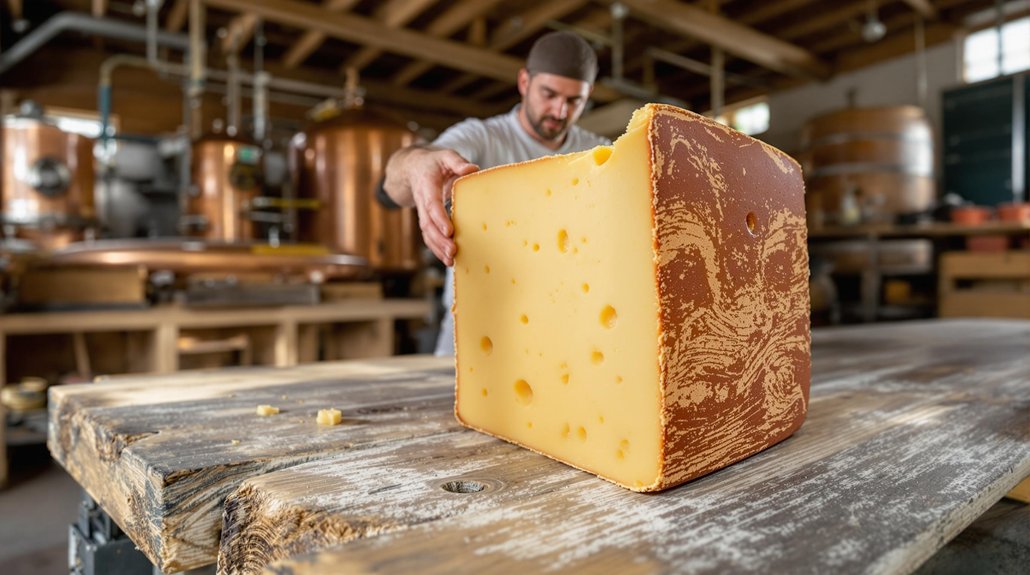
In an era of mass-produced foods, dedicated artisanal cheesemakers are fighting to preserve the authentic traditions of brick cheese production. Widmer's Cheese Cellars stands at the forefront, maintaining techniques dating back to 1877 when this Wisconsin cheese was first created.
You'll find their award-winning aged cheddar and authentic brick cheese featured in WMMBs monthly newsletter and Wisconsin Cheese Awards delivered straight to enthusiasts. Unlike mass-produced American Cheddar, Widmer's handcrafts 360,000 pounds annually using the same open vats and actual bricks for pressing that Joe Widmer's grandfather established in 1922.
Explore our directory of Wisconsin cheesemakers and retailers to discover why this region produces some of the world's best cheese. These artisanal producers guarantee brick cheese's unique character continues to thrive in its birthplace.