Goat Cheese Guide: Varieties, Nutritional Benefits & Flavor Uses
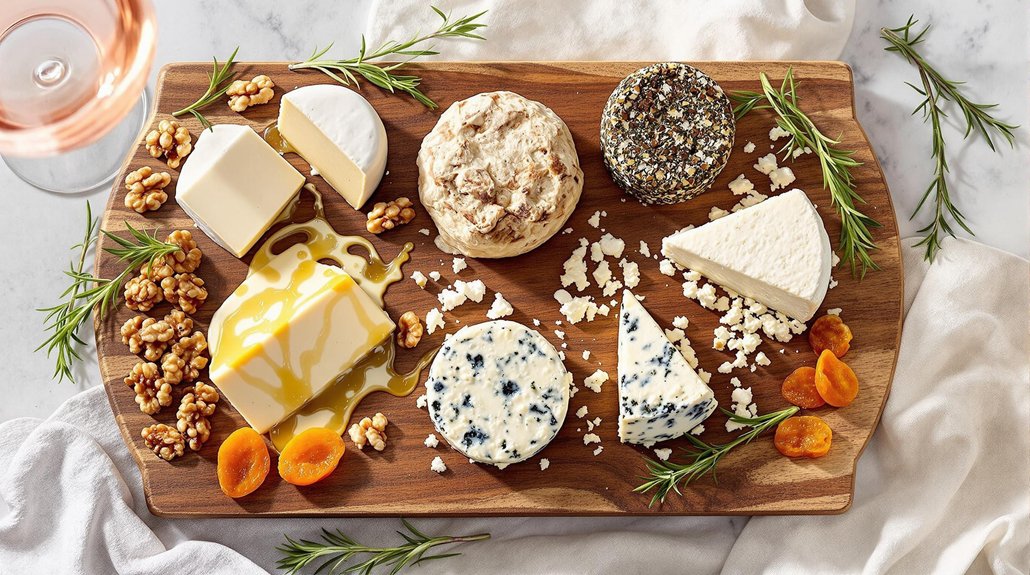
Goat cheese offers a distinctive tangy profile that ranges from fresh, creamy chèvre to complex aged varieties with nutty, earthy flavors. You'll find it's easier to digest than cow cheese due to lower lactose levels, while still providing essential nutrients like calcium, protein, and riboflavin. Use fresh goat cheese in salads and appetizers, while aged varieties shine on cheese boards or melted into dishes. The following guide unpacks everything from selection to creative pairings for this versatile dairy delight.
The Difference Between Goat Cheese and Cow Cheese
When you bite into goat cheese, you'll immediately pick up on its distinctive tangy profile that sets it apart from cow cheese. This natural tanginess comes from goat's milk's unique fat composition - shorter, lighter, and more evenly distributed fats that create a fresher taste experience.
If you're lactose intolerant, you'll find cheese made from goats easier to digest because it contains less lactose than cow's milk dairy. The fat molecules in goat cheese are also more homogenized, making them less likely to trigger allergic reactions common with cow's milk products.
One thing to note: goats are seasonal lactators, so you'll notice flavor variations in fresh goat cheese throughout the year, with limited availability during winter months when milk production naturally decreases. Unlike sheep cheese which offers a richer, buttery taste, goat cheese is characterized by its tart and earthy flavor profile that many cheese enthusiasts appreciate.
Fresh Goat Cheese: Characteristics and Popular Types
Although all goat cheeses share certain qualities, fresh chèvre stands out for its distinctively smooth, creamy texture and bright, citrusy tang. This fresh goat cheese delivers a flavor profile that varies throughout the year, as goats are seasonal lactators, affecting the cheese's taste subtleties.
When shopping, you'll find various forms including basic chèvre and creative variations rolled in herbs, nuts, fruits, or edible flowers. Crumbled goat cheese offers a slightly drier texture while maintaining the characteristic tanginess.
Remember to keep your fresh goat cheese refrigerated due to its high moisture content and bacterial levels. Unlike aged varieties, fresh chèvre's delicate composition requires proper storage to maintain its quality and safety. You'll enjoy this versatile cheese spread on crackers, crumbled over salads, or melted into warm dishes.
Fresh goat cheese is made through a similar process to other fresh cheeses where lactic acid bacteria convert lactose into acid to create its distinctive texture.
Aged Goat Cheese: Development and Flavor Profiles
Many aged goat cheeses undergo a pressing process lasting at least 10 days, which considerably reduces moisture and bacteria while developing more complex flavor profiles. Unlike cheeses made from cows, aged goat cheese transforms from tangy and bright to nutty, earthy, or buttery as it matures.
You'll find aged goat cheese in various textures—from hard varieties resembling Gouda to those with fluffy centers and gooey exteriors. These aged cheeses typically have less apparent acidity than fresh chevre, which some consider milder despite their intensified flavors.
The unique fat structure of goat cheese contributes to its distinctive flavor and texture evolution during aging. Some varieties feature an edible ash coating that prevents excessive drying while maintaining cleanliness—a traditional method that enhances both preservation and fat content management.
Nutritional Composition and Health Benefits
Despite its small serving size, goat cheese packs a remarkable nutritional punch that extends far beyond its creamy texture and distinctive flavor. Derived from goat milk, it's rich in essential vitamins and minerals including calcium, protein, and heart-healthy fats that support bone health and cellular function.
If you're among those with lactose intolerance, you'll appreciate that goat cheese contains lower levels of lactose and A1 casein than cow's milk cheese, making it easier to digest. The probiotics present promote gut health, boost immunity, and reduce inflammation.
The nutritional benefits don't stop there—goat cheese is an excellent source of riboflavin (vitamin B2), pivotal for energy production and cell repair. Its satisfying protein and fat content may help you feel fuller longer, potentially supporting weight management goals.
Digestibility Advantages for Lactose Sensitivity
Individuals with lactose sensitivity often shy away from dairy products, but goat cheese stands out as a digestive-friendly alternative. Made from goat's milk, this dairy product contains less lactose than cow's cheese, making it easier for your body to process without discomfort. The A2 casein protein found in goat cheese is also less inflammatory than the A1 casein in cow's milk.
- Less Lactose Content - People with lactose intolerance can typically enjoy small amounts of goat cheese without experiencing digestive issues
- Rapid Energy Source - The unique fatty acids in goat cheese digest more quickly, providing immediate energy
- Anti-Inflammatory Properties - Goat cheese is a good source of selenium and contains proteins that cause less inflammation than cow's milk alternatives
How to Select and Store Quality Goat Cheese
The art of selecting quality goat cheese begins with understanding its visual and aromatic characteristics. Look for fresh chevre with a clean aroma, creamy white color, and smooth texture without liquid separation or discoloration in its packaging.
With aged varieties, expect a harder consistency and more robust, complex flavor profile. When shopping, you'll find goat cheese is fresh year-round at cheese shops and gourmet markets, though winter months may limit availability of some varieties.
Don't hesitate to ask a cheesemonger for recommendations and samples—this hands-on approach helps you discover which flavors and textures best match your preferences. The diverse world of goat cheese offers something for everyone, from mild and creamy to sharp and crumbly options.
Cooking Applications: From Appetizers to Desserts
Goat cheese shines as a culinary chameleon once you've selected your perfect variety. Unlike cheese made from cow's milk, this tangy delight made from goat milk offers versatility from starters to sweet finishes.
Try spreading Young Goat varieties onto crostini for an effortless appetizer, or substitute goat cheese when making cheesecake for a sophisticated twist. The creamier types function similarly to cream cheese in many recipes but deliver a more distinctive flavor profile.
- Salad Enhancer - Crumble aged goat cheese onto mixed greens with walnuts and dried cranberries
- Pasta Perfection - Stir soft goat cheese into hot pasta for an instant creamy sauce made using minimal ingredients
- Dessert Innovation - Fold honey-sweetened goat cheese into tart fillings for balanced sweetness
Global Varieties and Regional Specialties
Where in the world can you find the most distinctive goat cheeses? France's Loire Valley produces renowned varieties that showcase how goat cheese is made differently than cow's milk products. Spain's Catalonia offers Mato, a fresh white cheese traditionally crafted from goat's milk, while Greece's brined Feta is often made from goat's milk, sheep's milk, or a blend rather than from cows.
American artisans have developed their own standouts, including California's Humboldt Fog, Vermont's Fresh Chevre, and Wisconsin's Goat Cheddar. The diversity of goat cheeses extends beyond geography to texture and flavor profiles—from soft, bloomy rinds with citrus notes to complex washed rinds with their signature orange exterior and funky character. Each region's climate, traditions, and techniques create unique expressions of these versatile dairy treasures.
Pairing Goat Cheese With Wines, Fruits, and Honey
Perfect pairings can elevate goat cheese from a simple appetizer to an extraordinary culinary experience. Unlike cows milk cheese, the distinctive tanginess of goat cheeses creates unique pairing opportunities. The benefits of goat milk containing less lactose make these cheeses accessible to more people, while their versatile flavor profiles complement various accompaniments.
- Wine Selection - Light, crisp wines like sauvignon blanc enhance fresh Types of Goat Cheese, while aged varieties like Valencay pair beautifully with full-bodied reds.
- Sweet Complements - Drizzle honey over fresh chevre to balance its acidity, or serve with figs and dried apricots to contrast its creaminess.
- Salad Integration - Make goat cheese the star of your salad by crumbling it over greens with toasted walnuts, pears, and tangy balsamic vinaigrette.