Homemade Cheese Basics: Simple Fresh Cheeses You Can Make in Your Kitchen
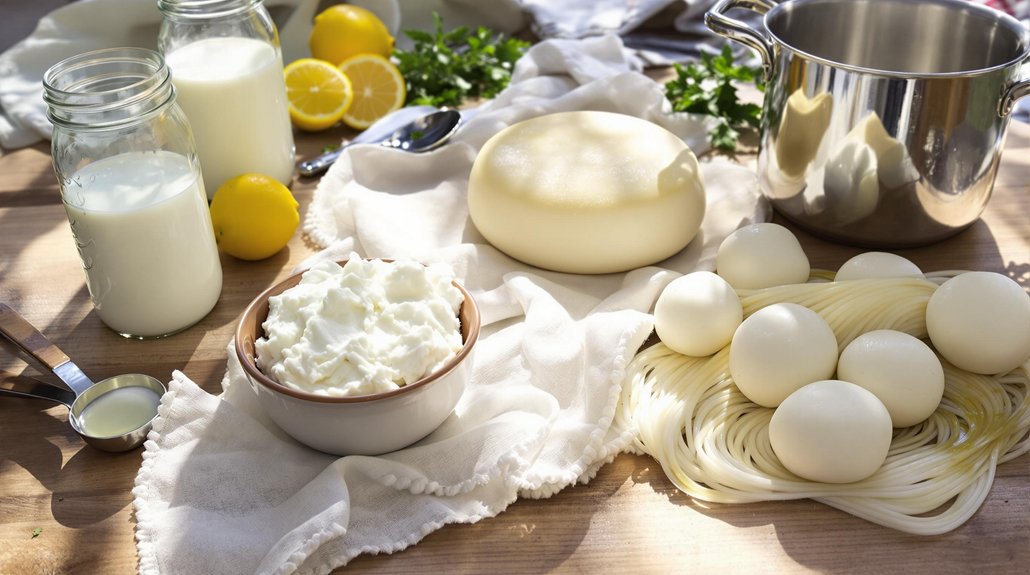
You can make simple fresh cheeses at home with basic equipment like a large pot, thermometer, and cheesecloth. Start with whole milk (avoid ultra-pasteurized) and transform it into curds by adding acid like vinegar or lemon juice. Cottage cheese, paneer, and queso fresco are excellent beginner options requiring minimal steps. Each cheese develops from the same curdling process but takes on unique textures based on handling techniques. The complete cheesemaking journey awaits below.
Essential Equipment for Home Cheesemaking
Before you plunge into the rewarding world of home cheesemaking, you'll need to gather a few key pieces of equipment. The foundation of your setup is a large pot for heating milk to the proper temperature for coagulation. A reliable thermometer—either digital or analog—is essential to monitor temperature throughout the cheesemaking process.
Don't forget a sturdy strainer and cheesecloth, which work together to separate the curds from the whey—a critical step in creating your homemade cheese. For handling hot cheese during stretching and shaping, you'll appreciate having gloves on hand to protect your fingers. Always maintain cleanliness of tools to ensure safe and successful cheese production.
With these five basic tools, you're well-equipped to begin transforming simple ingredients into delicious fresh cheeses in your own kitchen.
Understanding Milk Types for Different Cheeses
While equipment forms the foundation of cheesemaking, the milk you choose ultimately determines your cheese's character and quality. Cow's milk is the most common option, but goat's milk and sheep's milk each offer distinctive flavors for your homemade cheeses.
Whole milk yields the best results, whether you're using pasteurized milk or raw milk (if legally available in your area). Avoid ultra-pasteurized milk, as it won't coagulate properly. Similarly, non-homogenized milk performs better than homogenized milk because intact fat globules enhance texture development.
The milk fat and milk protein content substantially impact your final product. Higher fat content creates creamier cheese, while lower fat options produce firmer results. Remember that the animal breed also affects composition - Jersey cow's milk, for instance, contains more protein than Holstein, resulting in higher cheese yields.
For beginners, starting with fresh cheeses like cottage or ricotta is recommended as they require minimal aging and have higher moisture content, making them easier to produce successfully.
The Science Behind Curdling Milk
Have you ever wondered why milk transforms from a smooth liquid into those chunky, solid masses we call curds? This magical transformation is the foundation of all cheesemaking and happens when you add an acidic coagulant like vinegar or lemon juice to heated milk. The acid disrupts the proteins' natural state, causing them to clump together.
When making homemade fresh cheese, you'll notice three distinct stages:
- Heating the milk to prepare proteins for coagulation
- Adding your acidic ingredient to trigger curdling
- Separating the solid curds from the liquid whey
Step-by-Step Guide to Making Simple Cottage Cheese
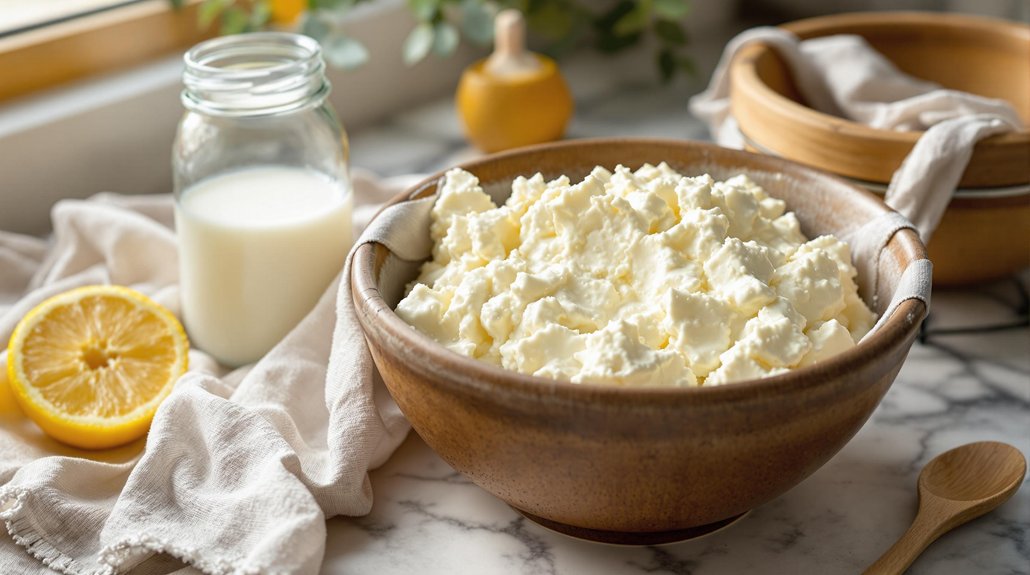
Once you understand the science of curdling, making your own cottage cheese at home becomes surprisingly straightforward. You'll need just a few ingredients: fresh milk, white vinegar or lemon juice, and a piece of cheese cloth.
Start by bringing your milk to a gentle boil in a pot. Remove from heat and stir in the white vinegar, watching as curds immediately begin to form. Let this mixture sit for 10 minutes, then strain through a cheese cloth to separate the curds from the whey.
This simple recipe yields a homemade cottage cheese with a texture and flavor that store-bought varieties can't match. The entire process takes less than 30 minutes, making it an easy weekend project that rewards you with fresh, preservative-free cottage cheese for snacks or baking.
Crafting Homemade Paneer and Queso Fresco
Moving beyond cottage cheese, two other fresh cheeses stand out as perfect next steps in your homemade cheese journey: paneer and queso fresco. These white, fresh cheeses require similar techniques to Making Cheese at home but deliver distinctive results. While you'll eventually want to make homemade mozzarella, these simpler versions offer immediate satisfaction.
- The Basic Process - Heat milk, add apple cider vinegar or lemon juice, separate curds, and strain.
- Paneer Perfection - Press the curds firmly for a cheese that holds its shape when cooked, unlike a recipe for Homemade Ricotta.
- Mexican Queso Fresco - Add salt to your curds before pressing for an authentic version of Mexican Queso that crumbles beautifully over enchiladas.
You'll appreciate how these fresh cheeses showcase pure milk flavors while complementing your favorite dishes.
Stretching Techniques for Perfect Mozzarella
Unlike paneer and queso fresco, mozzarella requires a critical additional step that transforms it from ordinary curd into that gloriously stretchy cheese we love. To make this soft cheese, you'll heat the milk curd to 160°F/71°C, then knead it to develop its characteristic elasticity. This farmers cheese becomes incredibly easy to shape once you've mastered this technique.
After stretching, immerse your creation in cool water for 10 minutes, then add ice for another 5-20 minutes to set its form. Don't forget to incorporate salt during the stretching process for enhanced flavor. Store your finished mozzarella in leftover whey or salt water to maintain moisture.
Before grating, chill it in the fridge or freeze briefly to prevent it from becoming too soft, making it easier to remove excess whey.
Storing and Serving Your Freshly Made Cheeses
The effort you've put into crafting delicious homemade cheeses deserves proper storage and serving techniques to showcase their fresh flavors. Fresh homemade cheeses typically keep in your refrigerator for up to a week when properly wrapped or sealed in airtight containers. You can even use whey from your cheesemaking process to store fresh mozzarella, maintaining its soft, pliable texture.
Whether you've made cheese from milk from the store or goat's milk, here are serving suggestions to enjoy your creations:
- Serve cheese curds as a snack or transform them into poutine
- Use easy-to-make ricotta, quark, or labneh in desserts with fresh fruit
- Incorporate cottage cheese, paneer, or queso fresco into main dishes like lasagna or enchiladas