What Is the Trick to Keeping Mac and Cheese Creamy?
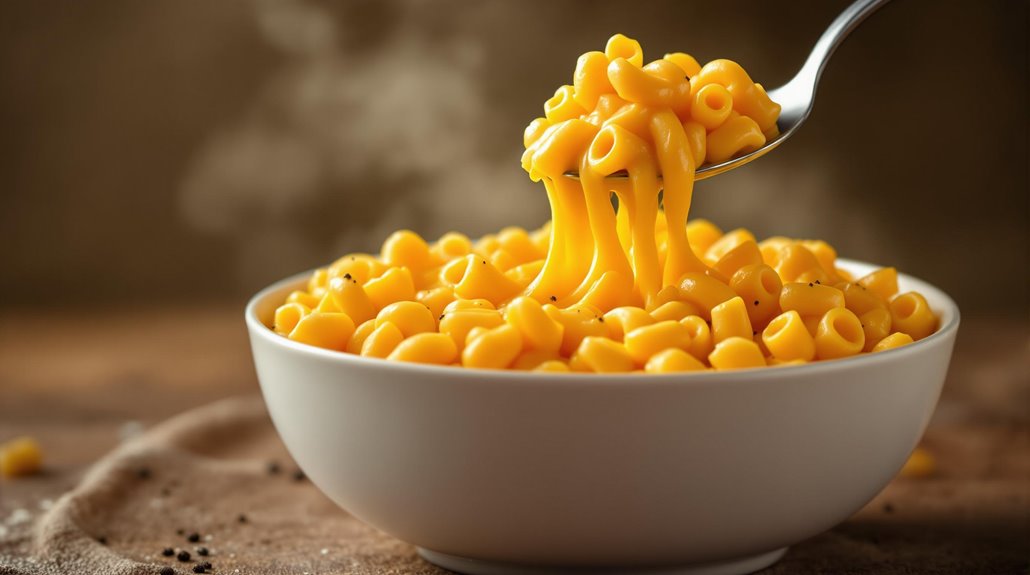
To keep mac and cheese creamy, you'll want to start with a proper roux using equal parts butter and flour, then gradually whisk in whole milk and heavy cream. Add freshly grated cheese (never pre-shredded) in small batches while keeping the heat low, and incorporate a spoonful of cream cheese for extra silkiness. When serving or reheating, stir in a splash of warm milk to maintain the perfect consistency. These foundational techniques are just the beginning of your expedition to mac and cheese perfection.
Essential Ingredients for Ultra-Creamy Mac and Cheese
Three key ingredients alter ordinary mac and cheese into an ultra-creamy signature dish. First, combine whole milk and heavy cream as your liquid base - this duo creates a richer foundation than milk alone. Next, incorporate cream cheese or mascarpone into your creamy sauce; these soft cheeses add a silky texture that transforms the dish's consistency. Finally, use freshly grated cheese and add it gradually while whisking. You'll want to melt it in stages to prevent graininess and maintain the perfect thickness.
For an extra amplification of creaminess, try cooking your pasta directly in milk instead of water. The noodles will absorb the dairy as they cook, creating an even more luxurious dish. This technique guarantees every bite is velvety smooth and deeply satisfying. Avoid using pre-shredded cheese varieties in your sauce, as their anti-caking agents can prevent proper melting and affect the final texture.
The Perfect Cheese Sauce Base
Building the perfect cheese sauce starts with a well-executed béchamel base and thoughtful cheese selection. You'll want to begin by creating a roux-based béchamel using butter and flour, which provides the stable foundation your sauce needs to stay creamy and emulsified.
For the best results, combine complementary cheeses like cheddar and Gruyère, adding them gradually while whisking over low heat. You'll prevent graininess by incorporating the cheese in small batches into your warm béchamel. Don't rush this process - keeping the temperature low helps the cheese melt evenly and maintains a smooth consistency. To guarantee an extra silky finish, you can add a spoonful of cream cheese or mascarpone to your sauce.
This combination of techniques guarantees your cheese sauce stays velvety and lump-free. Similar to au gratin potatoes, the key to achieving the creamiest texture lies in carefully combining your flour, butter, and milk before incorporating the cheese.
Mastering the Roux Technique
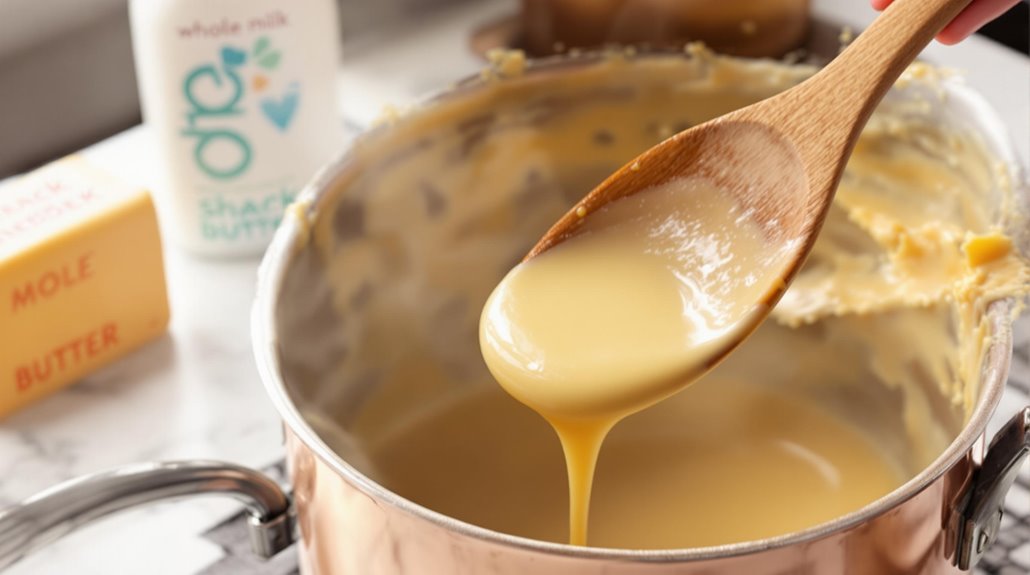
A perfect béchamel sauce starts with controlling the roux, which serves as the foundation for your mac and cheese's creamy texture. Creating this butter and flour mixture requires attention to detail and proper technique to achieve that silky-smooth consistency you're after. Just like making fresh cheese at home, mastering the base requires carefully measured ingredients and proper temperature control.
- Maintain equal parts butter and flour for the ideal sauce thickness
- Cook until the mixture turns light golden-brown, stirring constantly
- Whisk the milk in gradually to prevent unwanted lumps
- Add cheese slowly after your béchamel sauce has thickened
Choosing and Combining the Right Cheeses
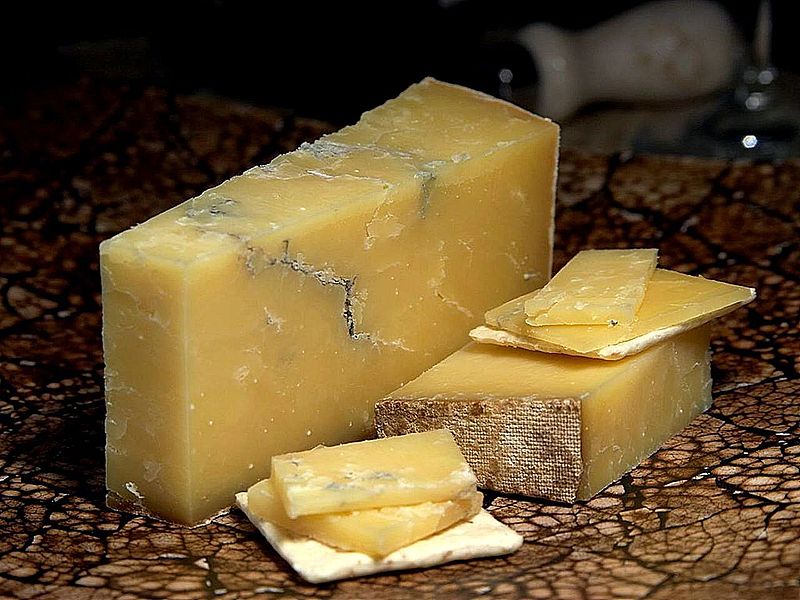
The secret to exceptional mac and cheese lies in selecting and blending the right combination of cheeses. You'll want to start with a flavorful sharp white cheddar as your base, then complement it with nutty Gruyère and creamy cream cheese for depth and richness. Instead of using pre-packaged products, grate your cheese at home to guarantee it melts seamlessly into your sauce.
When you're incorporating the shredded cheese into your sauce, add it gradually in small portions, letting each batch melt completely before adding more. This technique prevents clumping and certifies a silky-smooth texture. For extra creaminess, you can add a splash of heavy cream or half-and-half. Don't forget to include a small amount of starch in your sauce to maintain the perfect consistency.
Pasta Selection and Cooking Methods
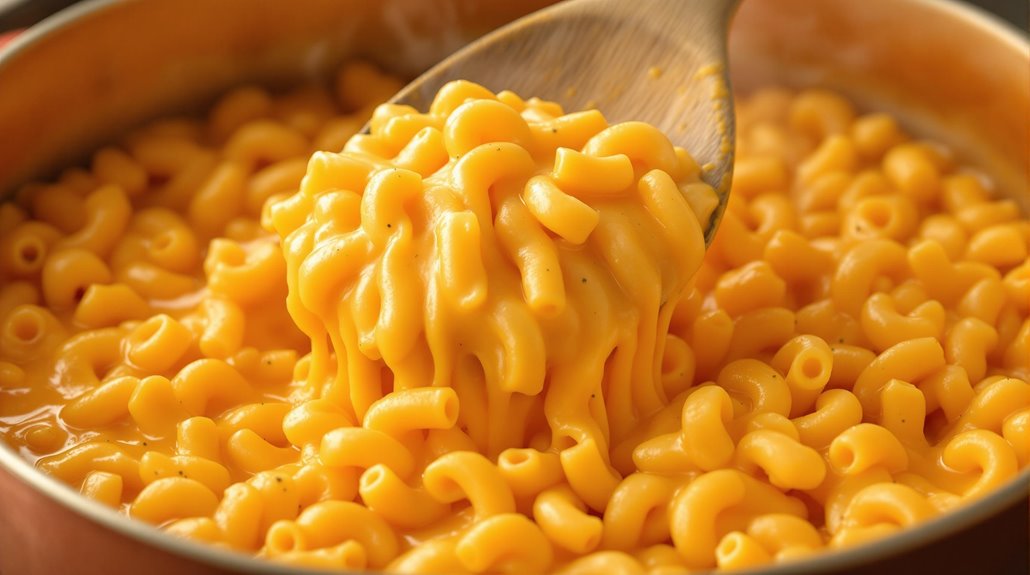
While choosing the right cheese blend sets a strong foundation, proper pasta selection and cooking techniques enhance your mac and cheese to restaurant quality. You'll want to select smaller pasta shapes like elbow macaroni or shells that effectively capture and hold the cheese sauce in their crevices.
- Cook your pasta in a mixture of milk and water rather than plain water to help create a creamier final dish
- Keep the pasta al dente during cooking - slightly firm noodles won't become mushy or absorb too much liquid while baking
- Rinse your cooked pasta in cold water to remove excess starch that could make your sauce grainy
- Toss your hot pasta with a small amount of butter before adding the cheese sauce to prevent noodles from clumping together
Tips for Maintaining Creaminess While Serving
Maintaining creamy mac and cheese during serving requires careful attention to temperature and timing. To keep the mac and cheese warm and perfectly creamy throughout your meal, use a slow cooker or chafing dish set to low. You'll want to stir it occasionally to prevent the sauce from separating.
Right before serving, add a splash of milk or cream to restore the silky texture and prevent the dish from drying out. It's best to serve your mac and cheese immediately after preparation since the pasta will continue absorbing the sauce over time. If you're working with leftovers, gently reheat them on the stovetop with a bit of milk, stirring frequently until the mixture returns to its original creamy consistency. Remember to cover leftovers tightly to maintain moisture when storing.
Make-Ahead Strategies for Creamy Results
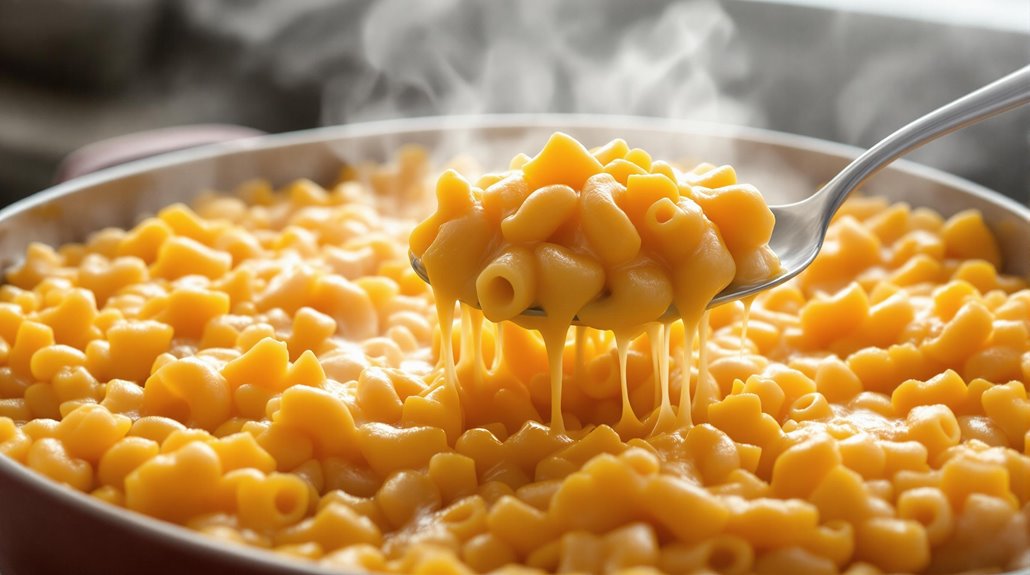
Smart planning lets you enjoy creamy mac and cheese even when time is tight. You'll get the best results by preparing components separately and assembling them just before serving. A béchamel-based cheese sauce is your best choice, as it reheats beautifully without becoming grainy.
- Make your cheese sauce up to 3 days ahead and store it in the refrigerator
- When ready to serve, reheat the sauce over low heat with a splash of milk
- Cook your mac fresh rather than storing it in the baking dish
- Combine the hot pasta with your warmed sauce right before serving
Troubleshooting Common Texture Issues
Three common texture problems can plague even experienced mac and cheese makers: grainy sauce, excessive thickness, or unwanted separation.
To prevent the cheese sauce from becoming grainy, you'll want to add your cheese gradually in small batches while whisking continuously. If your sauce is too thick, you're likely using too much cheese or overcooking your roux. Make adjustments by carefully measuring your ingredients and monitoring cooking time.
For extra creaminess, try cooking your pasta in milk instead of water, and use a combination of milk and cream in your sauce. You can also stir in a spoonful of full-fat yogurt to enhance both texture and flavor. These techniques will help you achieve that perfect creamy cheese sauce every time.